 Environment

School violence remains a concern as conflicts spill outside the classroom
1.
|
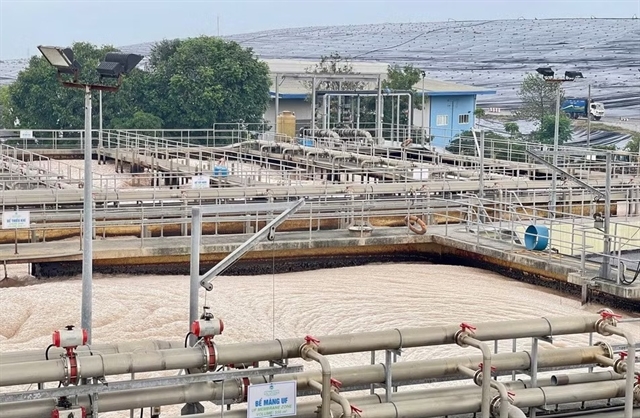
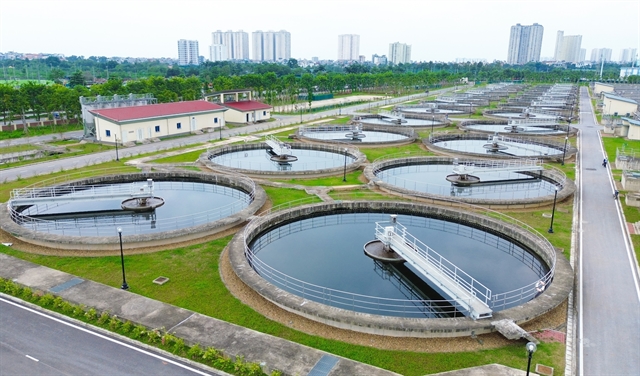
| Microbial basin for wastewater treatment prior to entering the MBR membrane filtration system at Đa Phước Waste Treatment Complex in HCM City. — VNA/VNS Photos Hồng Đạt |
HCM CITY — HCM City is resolving administrative bottlenecks for waste-to-energy projects while refining its at-source waste sorting scheme to reduce landfill reliance and treat 90 per cent of its domestic waste using advanced technologies by 2030.
According to the city’s Department of Agriculture and Environment, the collection, transport, and treatment of municipal solid waste across the city remain stable.
The city collects and processes nearly 13,500 tonnes of household waste daily, but only around 38 per cent is currently treated using new technologies or recycled, leaving approximately 58.7 per cent destined for landfills.
Mounting waste volumes and shrinking landfill space have made technological transformation and systemic restructuring urgent priorities.
Nguyễn Hồng Nguyên, deputy director of the department, said the 90 per cent target by 2030 was established in the Resolution of the first municipal Party Congress for the 2025-30 tenure.
“However, projects transitioning from landfills to waste-to-energy conversion have lagged behind schedule due to administrative hurdles and incomplete investor dossiers.”
The department is currently expediting procedures with relevant agencies to support two major tech-conversion projects operated by Vietstar Joint Stock Company and Tâm Sinh Nghĩa Investment Development Joint Stock Company, aiming for trial operations by December.
Two other facilities currently under construction are expected to open between late 2026 and early 2027.
|
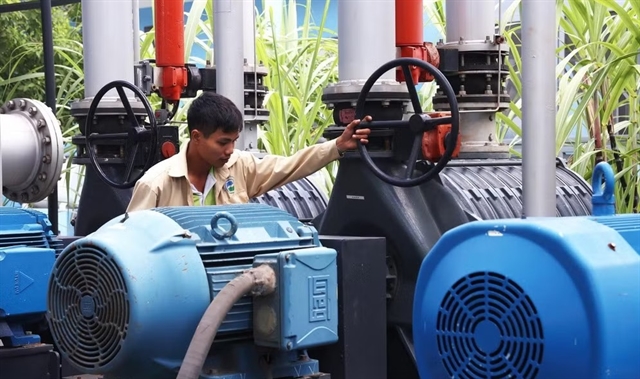
| Landfill gas-to-energy collection system operated by Vietnam Waste Solutions at Đa Phước Waste Treatment Complex in HCM City, capturing methane for power generation and odour control. |
Local authorities are finalising investment procedures for three industrial and hazardous waste recycling facilities in Châu Pha, managing the Tóc Tiên Concentrated Waste Treatment Complex, and proposing an output expansion for the Tóc Tiên waste-to-energy plant from 1,000 to 1,500 tonnes per day.
At the Đa Phước Waste Treatment Complex, Vietnam Waste Solutions (VWS) has submitted a proposal for a waste-to-energy project with a capacity of 3,000 tonnes per day, which is awaiting appraisal and licensing.
VWS currently operates a leachate treatment system with a daily capacity of 3,000 cubic metres, recycling treated water, capturing landfill gas for electricity generation, and controlling odour.
However, an 8,000-square-metre sorting and recycling line at Đa Phước is operating below capacity due to an irregular supply of pre-sorted waste, underscoring the need for synchronised source sorting across households.
To incentivise waste reduction, the city introduced volume- or weight-based collection and treatment fees starting September 1.
The city plans to finalise waste management regulations and introduce mandatory source sorting alongside dedicated collection logistics in 2027, ensuring sorted materials are not re-mixed during transport.
Experts have pointed out existing limitations in collection vehicles, transfer stations, and the informal waste sector, which remains fragmented and loosely integrated into the formal municipal management system.
In the first nine months of 2026, environmental authorities inspected 48 waste treatment facilities during trial operations and conducted joint inspections on 18 additional facilities within industrial and high-tech zones, issuing 63 administrative penalty decisions.
For the remainder of 2026, the department will focus on completing the 2026-30 environmental protection programme, adjusting spatial planning for the Tây Bắc and Đa Phước treatment complexes, and synchronising collection chains.
These steps aim to push the city's modern waste treatment and recycling rate past 45 per cent by the end of 2026 before hitting the ultimate 90 per cent goal by 2030. — VNS
Environment
 Environment
 Environment
 Environment
 Environment
 Environment
 Environment
 Environment
 Environment
 Environment
 Environment
 Environment
 Environment
 Environment
 Environment