 Environment
Việt Nam's top leader sends condolences to Spain over deadly train accident
1.
|
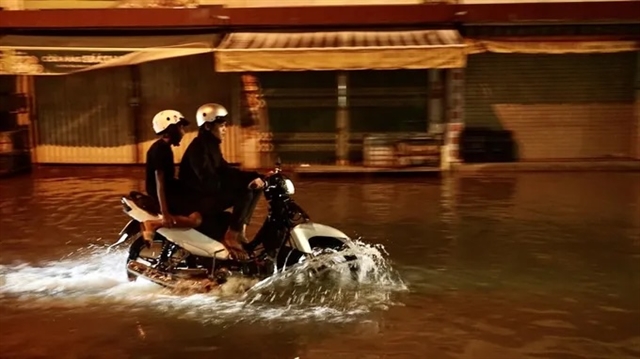
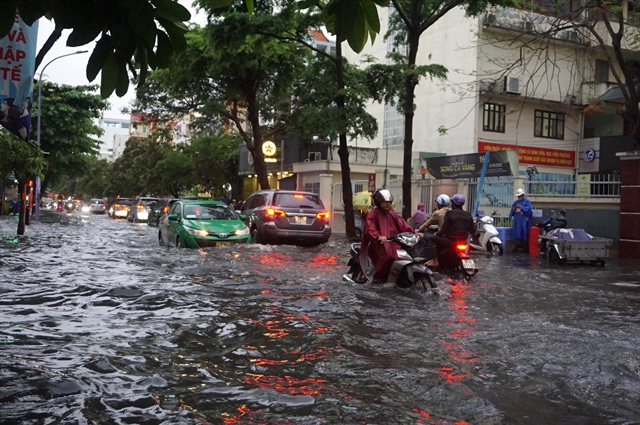
| Localised flooding caused by high tides on Đoàn Trần Nghiệp Street, Thủ Dầu Một Ward, HCM City, on the evening of October 28. — Photo sggp.org.vn |
HCM CITY — HCM City experienced a period of high tides from October 26 to 28, with water levels forecast to exceed Level III warning thresholds at several monitoring stations.
The risk of flooding remains high in low-lying areas and along rivers and canals, particularly when heavy rain coincides with peak tides during rush hour.
The city could face around five more high-tide events capable of causing flooding before the end of 2026, highlighting the need for urgent infrastructure repairs, coordinated reservoir operations and effective early-warning systems.
According to the Southern Regional Hydro-Meteorological Centre, the latest high-tide event was forecast to peak between October 26 and 28.
Water levels at Phú An and Nhà Bè stations were forecast to reach 1.70–1.75 metres, exceeding the Level III warning threshold by 0.10–0.15 metres. At Thủ Dầu Một station, levels were expected to reach 1.80–1.86 metres, or 0.20–0.26 metres above the threshold.
For October 27, forecasts put water levels at around 1.88 metres at Thủ Dầu Một at 7pm, 1.73 metres at Phú An at 6pm and 1.75 metres at Nhà Bè at 5pm.
High tides during the morning and evening commuting periods, between 5am and 7am and between 5pm and 7pm, could cause road flooding, traffic congestion and disruption to daily activities in areas prone to inundation. Heavy rain coinciding with peak tides could further restrict drainage and prolong flooding.
Thunderstorms remain possible in HCM City over the coming days, accompanied by risks of whirlwinds, lightning and strong gusts.
An upper-level easterly wind disturbance was forecast to become more active on October 27 and 28, increasing the likelihood of localised thunderstorms. Heavy rain could cause flooding in urban areas with poor drainage and raise the risk of landslides along some riverbanks.
Flooding has already caused concern in recent months.
According to the HCM City Department of Agriculture and Environment, the city recorded two high-tide events exceeding Level III warning thresholds at Phú An and Thủ Dầu Một stations during the first nine months of 2026.
Eight episodes of heavy rain, thunderstorms and whirlwinds killed three people and injured two, while damaging houses, trees, crops and other property.
The Southern Regional Hydro-Meteorological Centre estimates that around five more high-tide events capable of causing flooding could occur before the end of the year.
Following the late-October event, further high tides are forecast for November 10–12 and November 25–27, with two more events expected in December. Local authorities should continue updating their response plans in line with the latest hydrological bulletins.
Meanwhile, heavy localised rain, thunderstorms, whirlwinds and strong gusts remain possible towards the end of the rainy season. The risk of flooding will therefore depend not only on tide levels but also on rainfall and the drainage capacity of individual areas.
The HCM City Department of Agriculture and Environment has instructed local authorities and relevant agencies to implement measures to address flooding caused by heavy rain, high tides and reservoir discharges.
They have also been asked to inspect dykes, embankments, revetments, culverts and tidal-control gates, and prepare materials and equipment to deal promptly with vulnerable sections.
Drainage, irrigation and transport management units are required to coordinate the deployment of pumps at flood-prone locations and install warning signs, barriers and signal lights.
Traffic personnel must be mobilised to regulate traffic and prevent people and vehicles from entering deeply flooded or unsafe areas.
The HCM City People's Committee has approved in principle urgent repairs to 89 vulnerable infrastructure works across 21 wards and communes, at a cost of more than VNĐ227.9 billion (US$9.1 million).
The department has also proposed repairs to a further 134 works across 23 wards and communes, requiring more than VNĐ326.6 billion.
City leaders have called for approved projects to be implemented promptly and procedures for proposed works to be completed urgently, enabling authorities to address locations at risk of infrastructure failure.
The municipal People's Committee has also called for coordinated operations at Dầu Tiếng and Trị An reservoirs based on weather forecasts, water levels and infrastructure safety requirements.
The aim is to reduce risks to downstream areas when heavy rain, high tides and reservoir discharges occur simultaneously.
Reservoir operations must allow sufficient capacity to receive incoming water and ease pressure on downstream areas, while ensuring adequate supplies for domestic use and production during the upcoming dry season.
|
| Flooding has already caused concern in recent months. — VNA/VNS Photo |
City leaders have called for a shift from a narrow focus on flood prevention towards integrated water management, combining water retention, storage and drainage to address overloading in areas with limited drainage capacity.
The city plans to expand the use of digital maps, monitoring data and warning technologies to provide early information on areas likely to experience heavy rain, roads at risk of flooding and expected inundation levels. This would help residents adjust their routes and travel times.
Authorities have advised residents in low-lying areas and along rivers and canals to monitor weather and hydrological forecasts during periods of high tides, protect their property, avoid deeply flooded roads and follow instructions from the relevant authorities.
With several more high-tide events forecast during the final two months of the year, the effectiveness of the city's response will depend not only on its ability to manage immediate emergencies but also on progress in repairing vulnerable infrastructure, coordinating irrigation system operations and improving early-warning services. —VNS
Environment
 Environment
 Environment
 Environment
 Environment
 Environment
 Environment
 Environment
 Environment
 Environment
 Environment
 Environment
 Environment
 Environment
 Environment