 Environment

Hội An to begin Japanese language education at two schools
1.
|
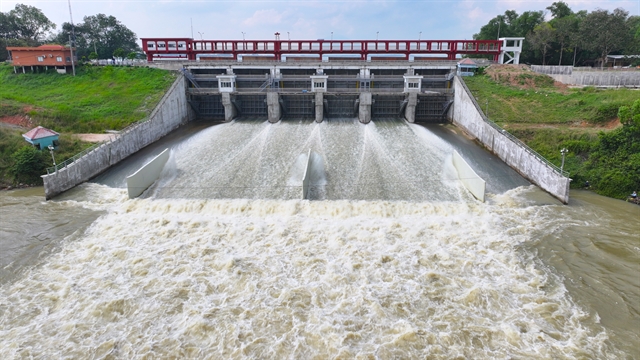
| Floodwater being released through sluice gate 1 at the Dầu Tiếng Reservoir spillway in Tây Ninh Province. VNA/VNS Photo Minh Phú |
HÀ NỘI — As climate change intensifies extreme rainfall and makes flooding increasingly unpredictable, artificial intelligence (AI) could help improve reservoir operations by analysing weather and hydrological data, simulating flood scenarios and recommending water regulation options, the Việt Nam Association of Large Dams and Water Resources Development has said.
Reservoir operators must balance dam safety, downstream flood prevention, water supply and power generation. Achieving these objectives requires reliable forecasts and the ability to rapidly assess different operating scenarios.

|
| Nguyễn Quốc Dũng, chairman of the Việt Nam Association of Large Dams and Water Resources Development. Photo baochinhphu.vn |
Nguyễn Quốc Dũng, chairman of the association, said machine learning algorithms could analyse rainfall records, satellite imagery, weather radar and historical meteorological and hydrological data to improve forecasts of rainfall and reservoir inflows. Combined with hydrological and hydraulic models and real-time monitoring, these tools could provide better information for operational decisions.
AI could also assess reservoir inflows, current water levels, available flood-control capacity, discharge rates and downstream flow conditions. Based on this information, the system could generate alternative operating scenarios, allowing authorities to prepare for incoming floods, adjust discharge rates and reduce downstream inundation risks.
One key application is an integrated digital platform combining monitoring data, infrastructure information, specialised databases and decision-support tools for river-basin management. Accessible via computers and mobile devices, the platform would help with coordination and emergency response during natural disasters.
A decision support system would connect data analysis with operational options. AI could help interpret information, while hydrological and hydraulic models would simulate changes in river flows, water levels and flood extent under different scenarios.
Combining updated data with one-dimensional and two-dimensional hydraulic models could also enable the development of dynamic flood maps showing inundation depth, extent and flow velocity under different rainfall and reservoir-discharge scenarios. When integrated with population, transport and critical infrastructure data, these maps could help identify high-risk areas, plan evacuations and prioritise rescue resources.
However, AI cannot guarantee accurate forecasts in every situation, particularly when extreme rainfall exceeds the range of its training data. Its effectiveness depends on data quality, model reliability and the specific conditions of each river basin.
AI tools must therefore complement real-time monitoring, specialised models and approved reservoir operating procedures. Dynamic flood maps also need to be regularly updated, calibrated to local terrain and validated against actual observations. These safeguards are essential to improving forecasting, strengthening disaster preparedness and protecting downstream communities.
AI supports decisions, but people remain responsible
A major obstacle to applying AI in reservoir management is the fragmentation of data across agencies, hydropower and irrigation operators, and separate monitoring systems.
Within the same river basin, rainfall, water levels, reservoir inflows, discharge rates and downstream conditions may be recorded by different systems. Without common data standards and effective sharing mechanisms, compiling information to simulate coordinated reservoir operations can take time, undermining responses to emergencies.
The challenge is particularly significant in river basins with multiple reservoirs, where releases from one dam can affect downstream flows and flooding. Operating decisions must therefore account for the entire basin rather than the conditions of individual facilities alone.
Dũng said common data standards, clearly defined responsibilities for updating and sharing information, and stronger connections between control systems, monitoring networks and specialised databases are needed to address the problem.
Application programming interfaces could facilitate data exchange between different systems, but would need to be supported by technical standards, security requirements and data-quality controls.
AI and decision-support systems could simulate multiple reservoir operation scenarios and provide a scientific basis for authorities to select appropriate options, Dũng said. Such tools would be particularly useful when decisionmakers need to quickly assess how different discharge plans could affect an entire river basin.
Nevertheless, AI-generated recommendations must be checked against monitoring data, approved reservoir operating procedures, dam safety regulations and instructions from relevant authorities. Responsibility for operating decisions must remain clearly assigned to human officials, who must also be able to intervene manually if data are inaccurate or systems fail.
This approach is consistent with the push for advances in science and technology, innovation and digital transformation under the Politburo’s Resolution 57-NQ/TW. In water resource management and disaster prevention, the goal should extend beyond simply introducing AI to improving forecasting, operational decisions and the protection of lives and property.
Implementation should proceed in stages, prioritising applications with sufficiently reliable data and measurable benefits. Authorities should train operational staff, establish procedures to validate AI outputs and introduce mechanisms to monitor system performance. Crucially, the distinction between technology-generated recommendations and decisions made by authorised officials must remain clear.
With connected data, validated models and clearly defined operational responsibilities, AI could become a practical tool for reservoir management and coordinated operations across river basins. This would help shift disaster response from a reactive approach towards proactive planning, improving water resource management and reducing losses caused by natural disasters, he said. — VNS
Environment
 Environment
 Environment
 Environment
 Environment
 Environment
 Environment
 Environment
 Environment
 Environment
 Environment
 Environment
 Environment
 Environment
 Environment