 Environment
Việt Nam Jazz Heritage Festival creates space for art enjoyment
1.
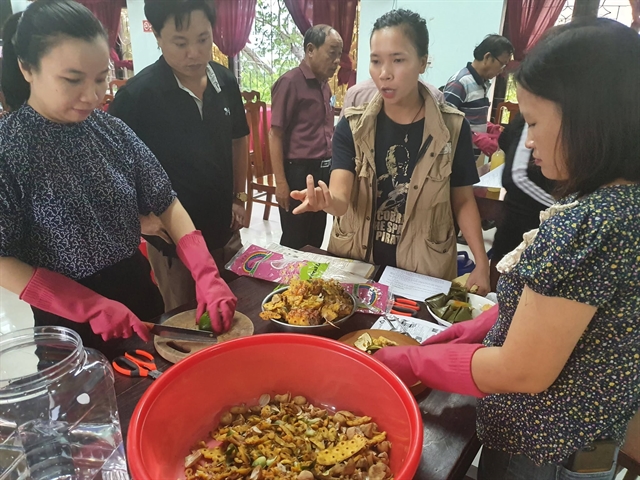 |
| Local residents and visitors join an organic waste processing practical course at Hội An Eco Hub, a Rural Energy Enterprise Development (REED) project. Đà Nẵng has also been boosting waste classification at source in reducing waste at landfills. — Photo courtesy of Hội An Eco Hub |
ĐÀ NẴNG — To handle the 2,300 to 2,500 tonnes of waste generated each day, local communities, waste pickers, and social businesses in the central city have continued recycling and sorting daily waste to build zero-waste models, extend the life cycle of materials, and reduce landfill waste.
Four schools in Sơn Trà District and 17 city kindergartens have maintained their zero-waste models since 2023. Additionally, 22 community-based waste management groups have connected via social networks, and seven "green" living clubs have been formed to volunteer for cleanup and waste collection activities.
Hội An Eco Hub, a Rural Energy Enterprise Development (REED) project, which recruits only six workers, recycles 200kg of kitchen waste each day, and at least nine tonnes of organic waste have been processed to fertilise garden soil at two medicinal herb gardens and two seedling zones.
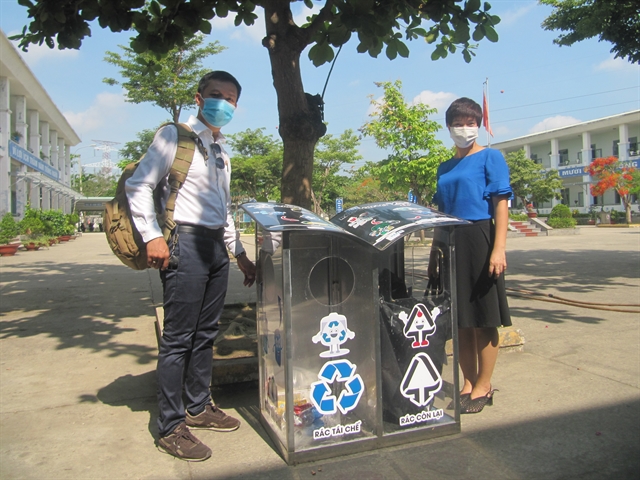 |
| Sorting out waste bins set up at a school in Đà Nẵng. Many schools in Đà Nẵng have been building a zero-waste model as an effective solution in dealing with daily waste in the city. — VNS Photo Công Thành |
The hub has become a practical sample of organic waste recycling, collecting plastic and sorting out waste from households living in Hội An, Vũ Thị Mỹ Hạnh, co-founder of Hội An Eco Hub, said.
She said the site often receives 300kg of organic waste from Hội An market for treatment and supports waste recycling for 1,200 households living in the Cẩm Kim community.
She said it’s the first community-led environmental learning centre developed by Hội An Eco Hub, Green Youth Collective and Refillables.
“Local residents and visitors can participate in waste sorting to explore the circle of waste at the hub. People can bring organic scraps, used cooking oil, paper, cans, and clean recyclables to exchange them for vegetables, organic fertiliser, seedlings, bio-dishwashing liquid, and other useful items,” Hạnh said.
“We created a hands-on learning site and a decentralised Materials Recovery Facility to support waste separation, composting, reuse and refill, recycling partnerships, youth education, and community participation,” she explained.
“It serves as the practical space connecting households, small businesses, tourism businesses, farmers, waste workers, local producers, and visitors into one unified operating system," Hạnh added.
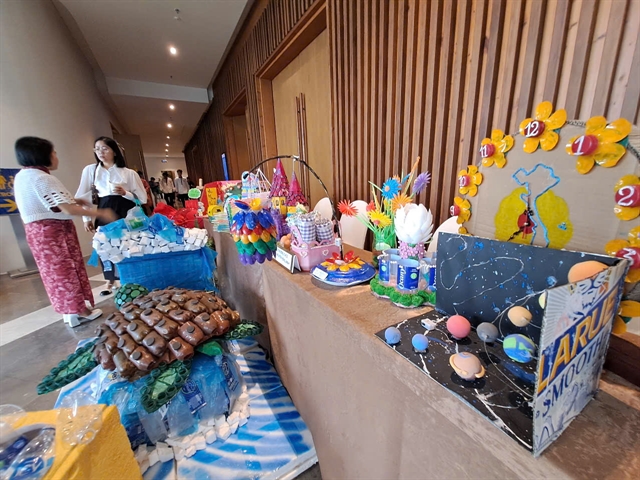 |
| Recycled products on display at an environment event in Đà Nẵng. Social units, communities, and schools in Đà Nẵng are forerunners in waste classification at the source. — VNS Photo Công Thành |
She said the hub plans to recycle one tonne of kitchen waste and 500kg of plastic waste each day from 2027.
Nguyễn Thị Thúy Nga, deputy director of the Centre for Adaptive Capacity Building Research (CAB Việt Nam), said it needs to build up zero-waste models by increasing Reduce-Recycle-Refill-Reuse in communities.
Nga recalled that a school where they applied zero-waste measures helped reduce the amount of waste released at an event from two garbage trucks to only two dust bins.
“Some schools grow bananas to take leaves for packaging or sort them out to reduce garbage to landfills, while Hòa Bắc Eco Co-operative in Đà Nẵng also launched a zero-waste tourism experience service,” Nga said.
Quách Thị Xuân, country director of Pacific Environment Việt Nam (PE Việt Nam), an international NGO, emphasised that it needs awareness change in natural resources management, circular reuse and recycling of waste.
She said a close management system is designed to control and increase waste classification at source, collection, transport and recycling.
“Local community is needed to enhance the capacity of sorting out at the source for a long time, and it requires effective partnership among local authorities, communities and businesses in waste management,” Xuân said.
“Organic waste, which emits greenhouse gases 80 times more potent than carbon dioxide, must be strictly monitored to reduce greenhouse gas (GHG) emissions and combat climate change. PE Việt Nam commits to providing technical assistance to enhance community capacity in waste treatment; at least 500 households in Hòa Khánh and Hội An will implement waste sorting at source in 2027.”
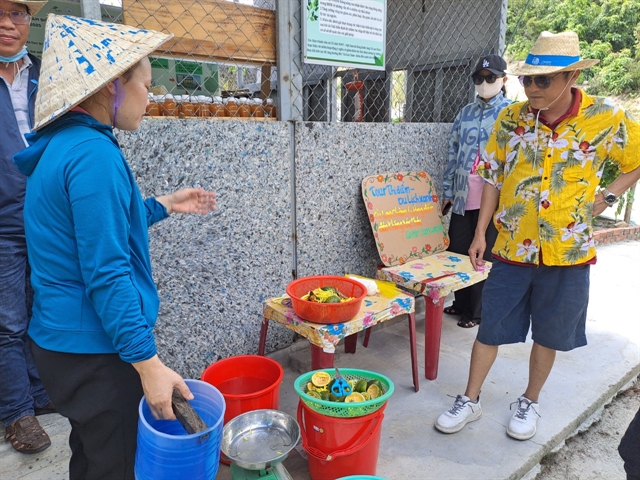 |
| A material recovery facility is introduced at the Chàm Islands, off the coast of the ancient town of Hội An. Waste classification is implemented by communities on the island. — VNS Photo Công Thành |
Zero waste community
"Waste classification at source has not been required by legal regulations, and a waste sorting application is possibly being handled," said Phạm Thị Phương Thảo, a member of PE Việt Nam.
PE Việt and Đà Nẵng Tourism Association officially launched the Việt Nam Zero Waste Tourism Network to build 100 travel businesses with waste management in 2030.
Thảo said a multi-stakeholder partnership should be formed in implementing classification, collection, transport and recycling effectively.
A report from the city’s Department of Agriculture and Environment unveiled that 55 per cent of daily garbage in the inner city is food, garden and park waste, and more than 22 per cent is plastic waste.
The tourism industry discharges more than 20 tonnes of plastic each day, but a plastic recycling plant has yet to be built in Đà Nẵng, or even in central Việt Nam, it reported.
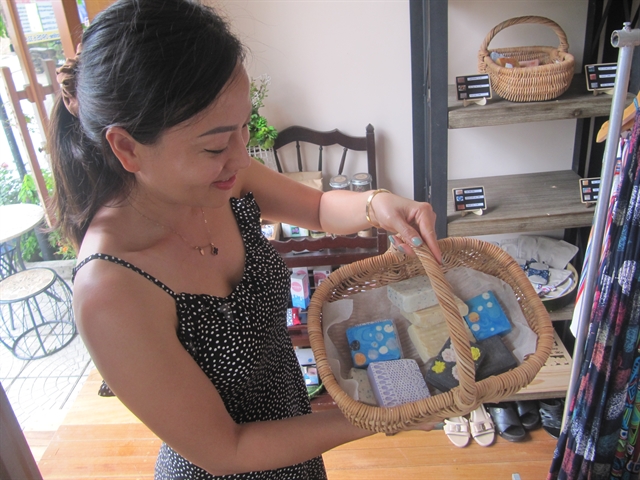 |
| A shop owner introduces soaps and cosmetic products produced from kitchen waste in Tân Thành Commune on An Bàng beach. Hội An ancient town has been boosting waste classification and organic waste processing at the community. — VNS Photo Công Thành |
At least six tonnes of plastic waste were either running into the river and sea or burnt at an open-air site in Đà Nẵng, the Việt Nam Academy of Agricultural Sciences reported.
A group of biologists and researchers from the University of Science and Education under Đà Nẵng University warned that microplastic pollution in the air in both inner and suburban areas of Đà Nẵng has become serious.
While waiting for the introduction of the waste-to-energy project or solutions of complete treatment of daily waste, proper solutions including classification at source, the 5R campaign (Rethink-Redesign-Reduce-Reuse-Recycle) and the Material Recovery Facility are currently effectively useable. — VNS
Environment
 Environment
 Environment
 Environment
 Environment
 Environment
 Environment
 Environment
 Environment
 Environment
 Environment
 Environment
 Environment
 Environment
 Environment