 Opinion
Let’s protect Việt Nam's young people from the nicotine products of today and tomorrow
1.
|
|
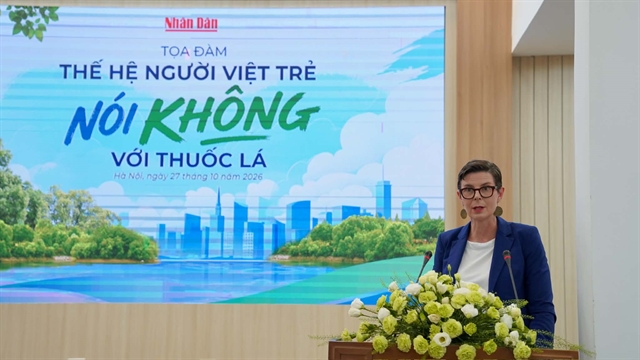
| Dr Angela Pratt, World Health Organization Representative in Việt Nam. — Photo courtesy of the WHO |
Dr Angela Pratt, World Health Organization Representative in Việt Nam
Around the world, tobacco and nicotine companies continue to introduce new products designed to attract the next generation of users. Colourful packaging, sweet flavours and sophisticated social media campaigns are helping reshape nicotine use in ways that can be difficult for regulators to react to within existing legal frameworks.
The good news is that Việt Nam can act now before these new generations of products become a major public health problem. As the National Assembly considers revisions to the Tobacco Control Law, it can help ensure that young people are protected not only from today's tobacco and nicotine products, but also ‘future-proof’ the Law to protect against the threat of new products emerging in the future.
Việt Nam has already demonstrated leadership by banning e-cigarettes and heated tobacco products. The next step is ensuring the law remains effective as the market evolves.
Emerging products such as nicotine pouches, which are a steadily growing product category in other countries, illustrate why this matters. Nicotine pouches contain nicotine, a highly addictive substance that can affect brain development, particularly among adolescents.
Around the world, such products are often marketed in ways that appeal to young people, while regulation struggles to keep pace. Sound familiar? We saw the same pattern when e-cigarettes first entered the market. And so, the lesson is broader than nicotine pouches themselves. It is about ensuring that new products cannot outpace public health protections.
Tobacco and nicotine companies have repeatedly shown how quickly they can develop new products to stay ahead of regulators. But new technology does not make tobacco or nicotine products safe, nor should innovation become a pathway around public health protections. Therefore, the proposed revision of the Tobacco Control Law is about far more than a single product. It is an opportunity to create a framework that protects young people from today’s nicotine products and tomorrow’s, by closing regulatory loopholes and, in doing so, creating a healthier future for the next generation.
If Việt Nam is to stay ahead of an evolving nicotine market, four priorities should guide the revision of the law.
First, the revised law must be designed to address emerging nicotine products, not just those already on the market.
Việt Nam has already taken the important step of banning e-cigarettes and heated tobacco products through National Assembly Resolution No. 173/2024/NQ-QH15. The revisions to the Tobacco Control Law are an opportunity both to enshrine the ban in legislation and to ensure it is broad-based enough to protect against products which may emerge in the future. Effective legislation should not require lawmakers to revisit the law every time the industry develops a new product. The revised law should establish clear definitions and principles that ensure emerging products are subject to appropriate regulation from the outset and cannot exploit unintended loopholes.
The industry is already testing the boundaries of existing regulation. For example, recently the industry has created e-cigarettes that do not contain nicotine – in an attempt to flout regulations on nicotine-containing products. But we should not be fooled. These products may contain nicotine analogues, which can have similar addictive and harmful effects, and carry other health risks.
If we are serious about protecting young people, we cannot allow new products like this to avoid appropriate regulation. The law should ensure that non-nicotine e-cigarettes are also covered by the ban. This would help with enforcement and ensure the law is closely aligned with National Assembly Resolution No. 173/2024/NQ-QH15, which bans all kinds of e-cigarettes.
Second, the law can also do more to reduce the visibility and appeal of tobacco products, especially to children and young people.
Việt Nam's graphic health warnings have helped save lives, but after more than a decade, their impact has inevitably diminished. Larger warnings – with refreshed images – would strengthen awareness of tobacco's harms, encourage quitting and discourage uptake.
Similarly, tobacco product displays at points of sale may seem routine, but they function as advertising. Every display helps normalise smoking by making tobacco a routine part of everyday shopping. Reducing these displays would reduce people's exposure to marketing, particularly among younger people, and lessen the likelihood of relapse among former smokers.
Third, the revised law could do more to protect people from second-hand smoke.
There is no safe level of exposure to tobacco smoke. Everyone deserves to breathe clean air, and no worker or family should be exposed to tobacco smoke because of where they work or spend time. Stronger smoke-free protections would help prevent disease, reduce health-care costs and create healthier environments for everyone.
Fourth, good laws only work when they are well-implemented and enforced.
Retail licensing remains important for compliance, enforcement and accountability. Licensing systems help authorities monitor tobacco sales, enforce restrictions and ensure retailers meet their obligations – it is very important that licensing systems remain robust. Sustained investment in enforcement, public education, compliance monitoring and cessation support is also essential. Experience around the world shows that tobacco control policies deliver the greatest benefits when they are fully implemented.
Việt Nam has already shown leadership by taking decisive action on e-cigarettes and heated tobacco products. The revision of the Tobacco Control Law is an opportunity to build on that success and create protections that will remain effective as the market evolves – so we encourage lawmakers to be as ambitious as possible in all of these areas.
By anticipating future products, closing regulatory loopholes, reducing exposure to tobacco marketing, expanding smoke-free environments and supporting stronger enforcement, the National Assembly can help ensure that today’s children are protected not only from the products they see now, but also from the products the industry may introduce tomorrow.
The best time to protect young people from the next generation of nicotine products is before they arrive on the market. This is Việt Nam's chance to do exactly that.
Opinion
 Opinion
 Opinion
 Opinion
 Opinion
 Opinion
 Opinion
 Opinion
 Opinion
 Opinion
 Opinion
 Opinion
 Opinion
 Opinion
 Opinion