 Opinion

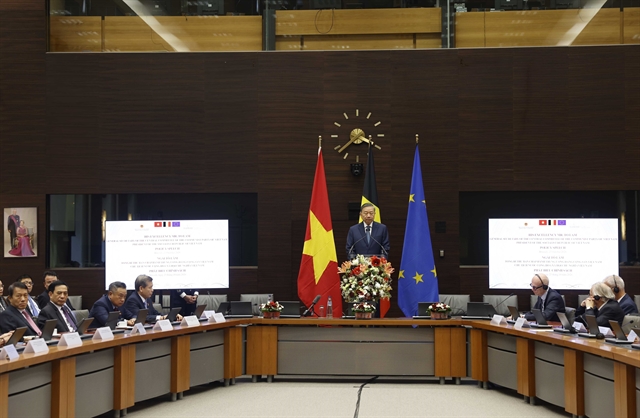
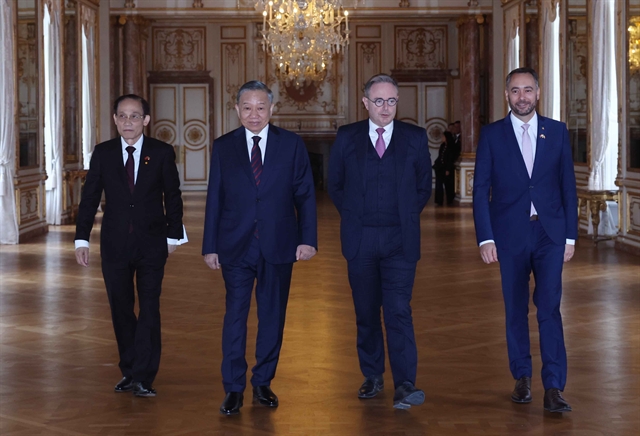
Top Vietnamese leader meets with Belgian Senate Speaker, House President
1.
The World Health Organization (WHO) has launched a new technical package in Accra, Ghana, to help governments and communities implement seven proven strategies to reduce drowning deaths.
On the sidelines of the launch, Việt Nam News reporter Lê Hương spoke with Rebecca Bavinger of Bloomberg Philanthropies, which has supported child drowning prevention programmes in Bangladesh, Ghana, India, Uganda, the US and Việt Nam.
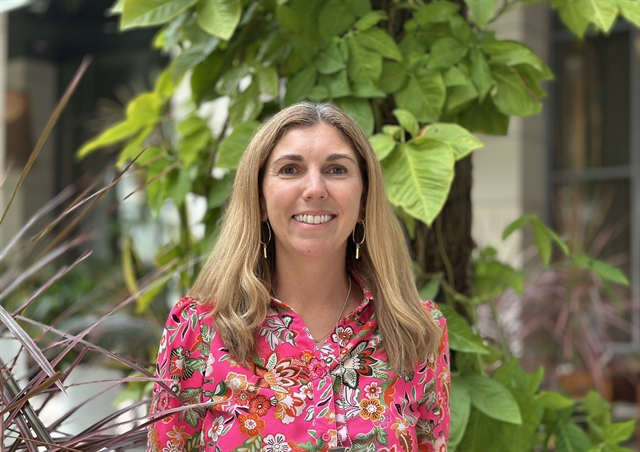 |
| Rebecca Bavinger, Programme Manager at Bloomberg Philanthropies. — VNS Photo Lê Hương |
Could you give us an overview of Bloomberg Philanthropies' support for drowning prevention projects around the world?
We have supported drowning prevention efforts in high burden countries since 2012. We started in Bangladesh in 2012 and we began our work in Việt Nam in 2018, and we've largely supported the intervention of survival swim instruction for children ages 6 to 15 with several partners, including the Government. Originally it was with a partnership with the former Ministry of Labour, Invalids and Social Affairs.
In Việt Nam, I understand that responsibility for the programme has recently been transferred to Vietnamese authorities. Could you explain the reason for this transition? Does this mean Bloomberg Philanthropies will no longer be involved in drowning prevention efforts in Việt Nam?
Now it's transitioned to the Ministry of Health, but our partnership with the Government has been there since day one to provide children with survival swim instruction.
The reason is that we firmly believe that we as a private philanthropy can invest in small-scale projects to show what is possible and to show the impact, but to have large-scale national coverage, we really need the partnership with the Government. The Vietnamese Government has been ready and willing to take on the swimming provision as a drowning prevention initiative.
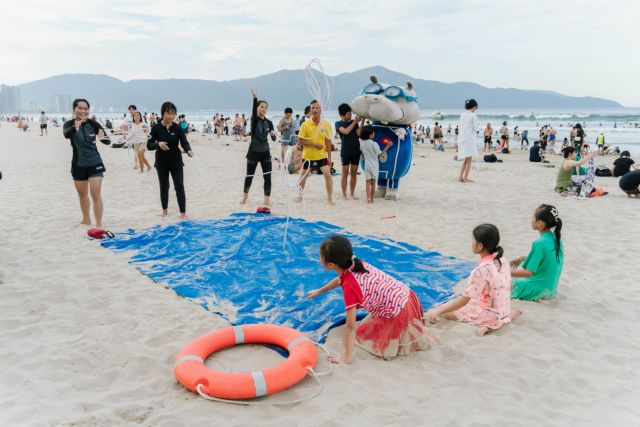 |
| Children take part in a survival swimming course at a beach in Hà Tĩnh Province in central Việt Nam. — Photo courtesy of the Campaign for Tobacco Free Kids Việt Nam |
They have clear targets for how many children they want to learn how to swim, how many drowning deaths they want to prevent, and the Prime Minister issued a decree to both adopt the swimming skills into the Ministry of Education and Training's curriculum and to commit funding from the local governments to actually fund the swim provision.
This is our ideal scenario, where the Government can take on and really own the programme and make it something that's part of everyday life for Vietnamese children.
We will continue to support the transition to the Government with evaluation and training, but we will no longer be providing direct funding for swimming classes, because now the Government is funding that.
So we're there as a partner to help with the evaluation and the training, but at this point the actual swimming skills are being delivered by the Government.
What do you expect to see following this transition in Việt Nam?
Well, we're really excited, because we were able to train with our funding about 75,000 children in swim instruction, but with the Government funding they reached over 330,000 children.
So what we're hoping to see is continued increases in the number of children that go through this programme and then ultimately a decrease in drowning, especially drowning among children in Việt Nam, so that's what we're hoping to see in the coming years.
What advice can you give Việt Nam on preventing child drownings in the face of climate change?
Climate change will obviously increase extreme weather events, flooding or tsunamis, and so what we would recommend to the Government is to continue with the swim instruction, but also ensure that they have a national water safety strategy that includes the World Health Organization recommendations for climate resiliency and disaster preparedness.
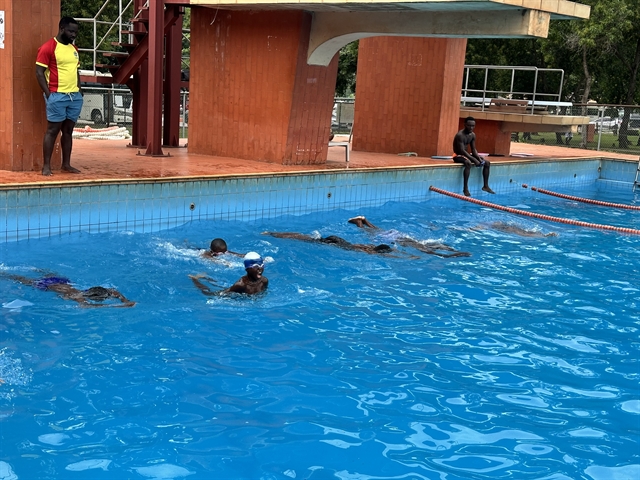 |
| Children take part in a swimming lesson at the University of Ghana. — VNS Photo Lê Hương |
For example, here in Ghana they have a national disaster management organisation that has the authority to put in place certain safeguards for flooding and other climate related events.
I'm sure there's a similar ministry responsibility in Việt Nam that can put in place early detection and warnings, so that the community is given enough time before the weather event comes to prepare to evacuate if necessary, or to take steps to prepare and secure themselves and their property.
Could you highlight the key activities that Bloomberg Philanthropies has supported?
As I said, we were able to support the swim instruction for 75,000 children. This was mostly done in portable pools, so we partnered with Global Health Advocacy Incubator and two local NGOs, Hue Help and Swim for Life, to import products to make these portable pools or to find pools in the community.
We supported the development of the swimming curriculum with the World Health Organization office in Việt Nam and with the Ministry of Education and Training, and then we supported the enrolment, the swim instructors' training, the actual provision of swim instruction and the evaluation of the children before and after the swim instruction class, as well as multiple media events for raising awareness.
They have a mascot now, it's a hippo named Bobo. So all of the media that goes around World Drowning Prevention Day and other awareness events, we were supportive of that.
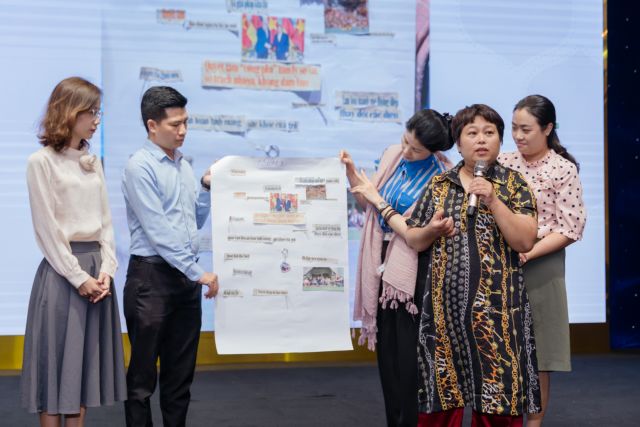 |
| Journalists attend a training workshop hosted by the Campaign for Tobacco-Free Kids Việt Nam with support from Bloomberg Philanthropies. — Photo courtesy of the Campaign for Tobacco-Free Kids Việt Nam |
Could you share your plans in Việt Nam over the coming months?
We will continue supporting journalism training and engagement for covering this issue, drowning as a public health issue. We will provide training for the various Government agencies that are now taking over, as well as any instructors that need refresher training, and then we're also supporting a Government agency that will do the evaluation.
We're providing funding to support the development of the monitoring and evaluation framework, as well as capacity building for the staff, so that they can collect the data that are needed and show the Government the impact of survival swim training as it gets rolled out nationwide. — VNS
Opinion
 Opinion
 Opinion
.jpg) Opinion
Opinion
 Opinion
 Opinion
 Opinion
 Opinion
 Opinion
 Opinion
 Opinion
 Opinion
 Opinion
 Opinion
 Opinion