 Opinion

Miss Universe Hong Kong Winner Jen Zhou — On the Road to Puerto Rico
1.
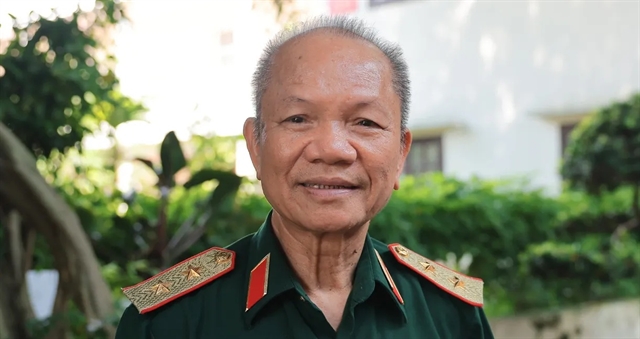 |
| Lieutenant General Hoàng Khánh Hưng, chairman of the Vietnam Martyr Families Support Association. — Photo trianlietsi.vn |
Lieutenant General Hoàng Khánh Hưng, chairman of the Vietnam Martyr Families Support Association, spoke with Nhân Dân (The People) newspaper about the Government's 500-day campaign to recover and identify its war dead, and about why time is running out to finish the job.
You've been closely involved in the search for and identification of fallen soldiers' remains for years. In your view, what are the biggest challenges we're facing more than 50 years after the war ended?
The war has receded into the past, but the pain hasn't. Nationwide, around 530,000 fallen soldiers still haven't been identified, and more than 180,000 of them are lying in former battlefields that haven't even been searched yet, leaving their families and old comrades in a kind of unending wait.
The greatest difficulty is the race against time. More than 50 years on, the terrain has changed enormously. Streams have shifted course; small patches of forest where men buried their comrades have grown into dense jungle; former battlegrounds are now villages, farms or residential areas.
More painful still is what happens to the remains themselves – in some cases, all that's left by the time we find a soldier is a handful of brown earth.
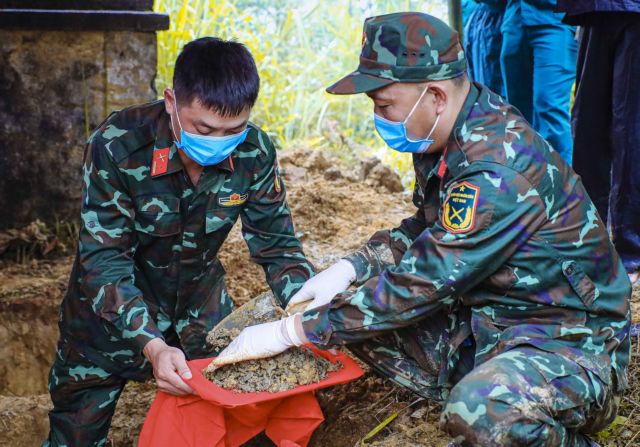 |
| A team gathers the remains of a fallen soldier found atop Pha Đin Pass in the northern province of Điện Biên on July 19.— VNA/VNS Photo |
Living witnesses are dwindling by the year. The old comrades who buried their dead are now elderly and frail. Some carry precious memories of exactly where a man was laid to rest, but by the time we reach them, they can no longer remember clearly, or they've already passed. Verifying information gets harder every year.
How significant is the 500-day campaign to recover and identify fallen soldiers?
I believe it's exactly the right policy – one that's in step with the people's wishes and with the deep-rooted sense of obligation to those who gave everything for the country.
The campaign has revived a powerful spirit of gratitude towards the generations who made today possible, and it's teaching this spirit to young people in particular.
This time, the biggest difference is that we've built an organisational chain running from the central Government down to the local level. In the past, this work happened through small, scattered plans run by individual units. Now the whole country has come together behind it – political and social organisations, and above all, veterans and ordinary people in every locality.
The campaign has only been running just over 100 days, but the early results are encouraging – nearly 1,500 sets of remains have already been recovered. A standout case is the mass grave excavated at Lê Thị Riêng Park in HCM City, which has brought enormous hope to families of the fallen.
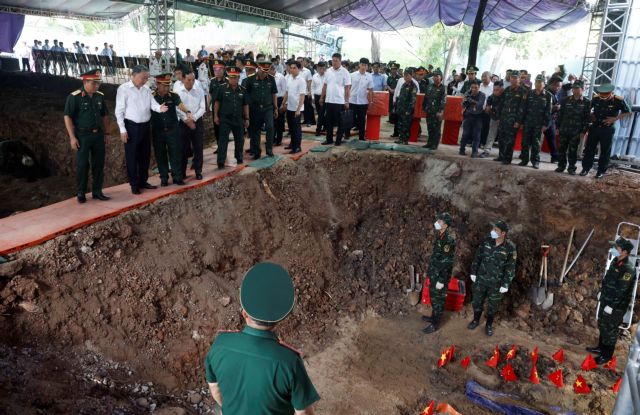 |
| General Secretary and State President Tô Lâm inspects the excavation site at Lê Thị Riêng Park, July 17. — VNA/VNS Photo |
There's still more than a year left, and I'm hopeful the targets – 7,000 sets of remains recovered, DNA testing on roughly 18,000 – will become reality.
For our part, the association aims to bring back between 150 and 200 sets of remains to their home soil during this campaign. With all of society pulling together, we'll soon be able to ease the anguish these families have carried for so long.
How is the association specifically taking part in the campaign, and how does it help families correct inaccurate information on gravestones?
The association was founded on September 17, 2010. From the start, we saw ourselves as a voluntary organisation working alongside the Party and the State, as their partner on the ground in honouring wounded veterans and fallen soldiers.
As soon as the 500-day campaign was launched, we issued guidance asking every branch of the association to respond with concrete action: gathering and cross-checking information to correct gravestone details; helping move remains back to soldiers' home provinces; working with local forces to take bone samples at cemeteries for DNA testing; and renovating cemeteries and memorials.
We're also calling on members and the wider community to support our charity programme, Naming the Nation's Stars. Each member contributes at least VNĐ20,000 (US$0.76), and we're raising broader funds for homes, savings accounts and gifts for families of the wounded and fallen, ahead of the 80th anniversary of War Invalids and Martyrs' Day in 2027.
What we do can never fully repay what these people gave, but it helps families know they haven't been forgotten.
In the first six months of 2026, our branches advised 1,523 relatives of fallen soldiers, opened 347 case files, resolved 225 of them and provided information on 3,573 graves.
We've sent 39 bone samples for DNA testing; 20 of those have come back with results so far, and of those 20, one has matched a living relative – meaning we've now confirmed the exact identity of one fallen soldier.
We've also helped 112 families bring remains home, handling everything from paperwork and memorial services to transport by rail or road. These are only the campaign's first steps, but they've already brought real comfort to these families.
The gravestone issue troubles me most. Surveying cemeteries in person, I've seen how many carry wrong information – wrong names, birth years, hometowns, units.
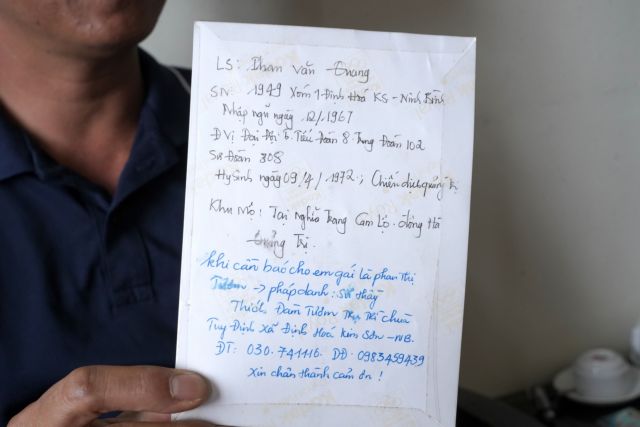 |
| Handwritten notes on the back of a death notice show the soldier died in 1972 and was buried at Cam Lộ Cemetery in the central province of Quảng Trị. — VNA/VNS Photo |
There are legitimate reasons: the actual date of death sometimes differs from the one on the death notice; soldiers often went by a unit's code designation rather than its real name, which caused confusion when records were compiled later; birth years on record don't always match a soldier's actual file.
When a family finds a mismatch, we help them cross-reference death notices, service records and unit archives, and work with veterans' liaison groups to verify the details.
Our advantage is our nearly 10,000 members nationwide – mostly veterans, mostly respected figures in their own communities who know the local terrain – which lets us verify things faster and takes some of the load off Government agencies.
Over 15 years, the association has restored names to 1,100 fallen soldiers, through a combination of eyewitness testimony, archival records and modern science.
What story from this work has stayed with you the most?
There are so many moments I'll never forget. I've seen mothers and widows in their eighties and nineties, in fragile health, still waiting for the day they'll find a husband's or a son's remains.
Some just wanted to touch the ceramic urn holding the bones before they could finally rest easy. Some, days after finally receiving a loved one's remains, passed away themselves – as if they'd been holding on for exactly that.
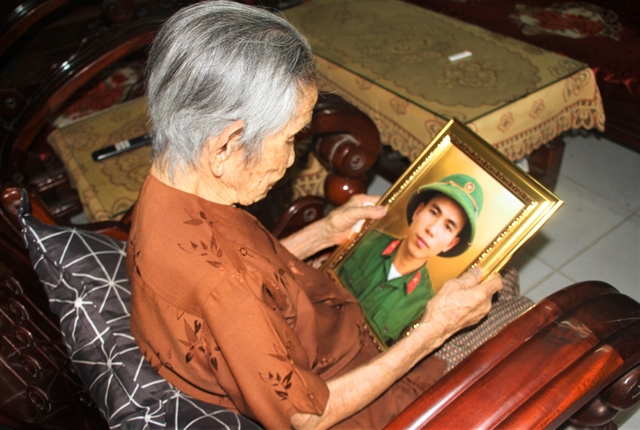 |
| A 105-year-old mother looks at her son's memorial portrait, still hoping, after 61 years, to have his remains brought home. — Photo daidoanket.vn |
One case I'll never forget: we were bringing a soldier's remains back to his home village. His mother was gravely ill, bedridden. But the moment she heard her son was on his way home, she found the strength to have someone help her to the door.
She placed her hand on the urn and said, through tears: "So you've come home to me." She died the next day.
That image is what drives us to work faster, to do better. Behind every set of remains is a family that has waited, aching, for decades. That's why I hope the 18 provinces and cities that still don't have a local branch of the association will get one established soon, so we can carry on this work everywhere, together.
What would you say to today's younger generation about this work of remembrance?
I have real faith in young people. They've grown up in peacetime, but watching the losses unfolding in wars around the world today, they understand more deeply what peace and independence actually cost.
This isn't just a job for Government agencies or veterans, it's a responsibility for all of society, and young people have an important part to play.
I hope they'll take a greater interest in our history, honour what our fallen heroes gave and get involved however they can – learning that history, helping gather information, caring for war cemeteries or simply carrying forward a sense of what we owe the people who came before us.
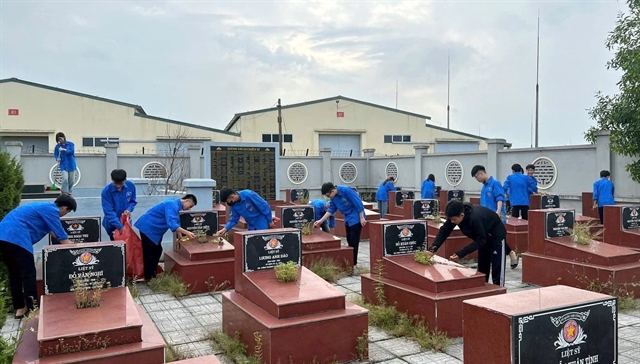 |
| Youth Union volunteers clean a martyrs' cemetery in the northern province of Bắc Ninh. — VNA/VNS Photo |
The 500-day campaign is only a first step. We'll probably need several more campaigns like it before every fallen soldier has their name back. We veterans will keep at this for as long as our health allows, but I'm certain the next generation will pick up where we leave off, so this work never stops.
With War Invalids and Martyrs' Day approaching on July 27, what activities has the association planned?
We're working with the Government Committee for Religious Affairs and the Vietnam Buddhist Sangha on a nationwide proposal: every year at 7pm on July 27, pagodas across the country will simultaneously ring their bells, light lamps and hold memorial services for the fallen.
We would like this to become a lasting custom that deepens people's gratitude towards those who gave their lives for the country.
Another proposal is that every pagoda set aside a memorial space where we can display the names of fallen soldiers from that locality, so people, especially soldiers' families, have somewhere to pay their respects when they visit.
It's an act of remembrance that teaches younger generations, but it's also a real comfort for families, especially those who still haven't found where their loved one finally came to rest. — VNS
Opinion
 Opinion
.jpeg) Opinion
Opinion
 Opinion
 Opinion
 Opinion
 Opinion
 Opinion
 Opinion
 Opinion
 Opinion
 Opinion
 Opinion
 Opinion
 Opinion