 Environment

Concerts boost travel demand among Vietnamese music fans
1.
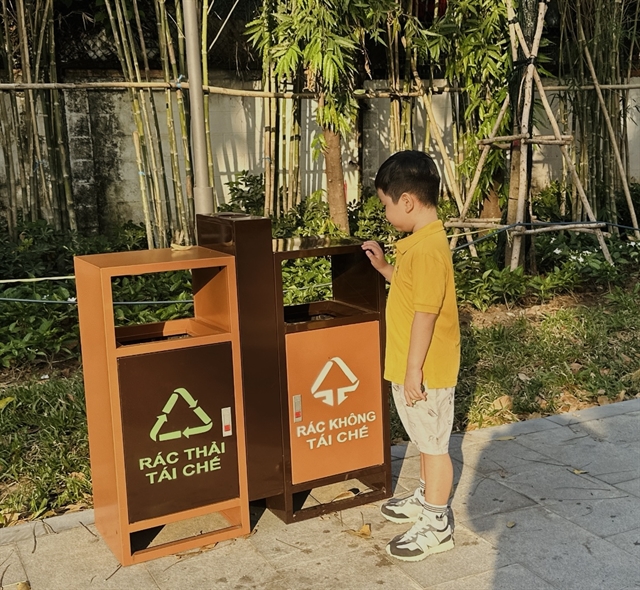 |
| Dual-compartment bins at Lê Thị Riêng Park in HCM City help people separate waste at source. — VNS Photo Nguyễn Diệp |
HCM CITY — HCM City is speeding up investment in its solid waste transfer infrastructure, with the construction of eight fully enclosed waste transfer stations, scheduled to break ground this year to overhaul urban waste collection and transportation.
The initiative marks a crucial step in fixing deteriorating infrastructure, eliminating foul odours and leaks at existing transfer points, and safeguarding public health.
According to plans outlined by municipal authorities, four key stations, Đào Trí, Xuân Thới Thượng, Thắng Nhì, and one additional site, are slated for construction in November.
The paperwork for the other four is being finalised for a December launch.
Looking further ahead, city agencies have been directed to wrap up procedures quickly for 15 more stations scheduled under the 2027 investment plan to begin construction of five to seven of them within the first quarter of next year.
To streamline implementation, the Department of Construction has been tasked with coordinating with relevant agencies.
Nguyễn Hồng Nguyên, deputy director of the Department of Agriculture and Environment, highlighted the pressing need for upgrading infrastructure following the provincial reorganisation last year, noting that the expanded city generates over 14,000 tonnes of household solid waste daily.
Between 2026 and 2030, upgrading and building new transfer stations would remain a top priority, he said.
"By 2030, stations currently using open-compaction technology will be systematically replaced with fully enclosed compaction systems, integrated with odour collection and treatment to minimise environmental impacts on residential areas."
Along with physical upgrades, environmental authorities are also reworking transport routes and introducing automated weighbridges alongside GPS fleet monitoring to track waste volume and transit paths in real time.
The city also plans to enforce source-separation of waste across all districts, reduce reliance on landfills, and foster a circular economy.
The public has expressed happiness at the infrastructure modernisation but stressed the need to keep operational standards high.
Nguyễn Thị Thanh, a resident living near a waste collection point in Bình Thới Ward, said she hoped for a cleaner transfer area without the foul smells and leachate of the past.
"If the living environment improves, people will fully support the city’s projects."
Lê Minh Trường of Cát Lái Ward and his neighbours are most concerned with operational efficiency after construction is finished.
Waste collection vehicles must be scheduled reasonably, and transfer zones must be sanitised regularly with thorough odour treatment to prevent any impact on daily life in the vicinity, he said. — VNS
Environment
 Environment
 Environment
 Environment
 Environment
 Environment
 Environment
 Environment
 Environment
 Environment
 Environment
 Environment
 Environment
 Environment
 Environment