 Environment
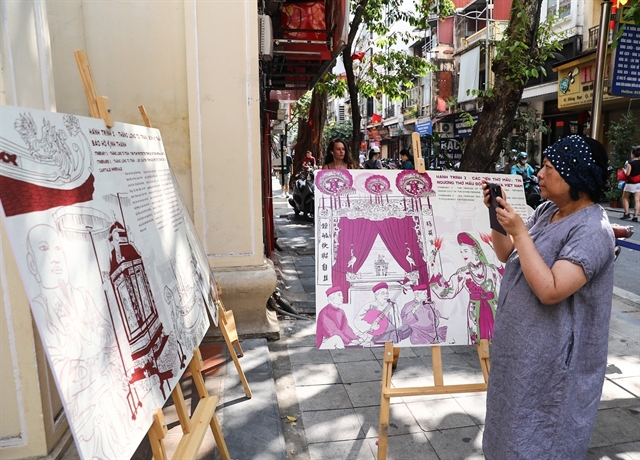
Digital platform takes visitors on Hà Nội heritage tourism journey
1.
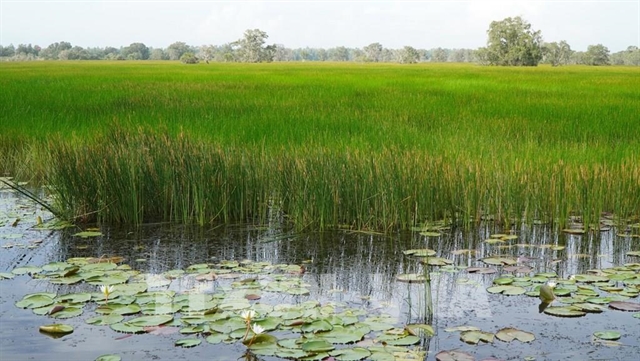 |
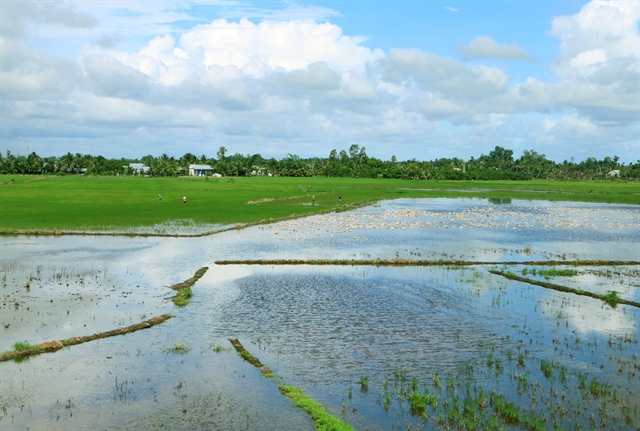
| An example of rice/físh cultivation in Tràm Chim National Park, Đồng Tháp Province. VNA/VNS Photo |
ĐỒNG THÁP — A new project to help conserve wetland ecosystems and promote adaptive agriculture through 2029 has been launched in Đồng Tháp Province's Tràm Chim National Park.
The Livelihoods in the Flood Season to Support Agricultural Ecosystems project is sponsored by the International Union for Conservation of Nature (IUCN), with funding from the Coca-Cola Foundation and the national park.
Carried out in three of the park's buffer communes — An Hoà, Phú Cường and Phú Thọ — the project aims to promote livelihood models that adapt to flood season conditions, while helping to preserve the unique wetland ecosystem of Đồng Tháp Mười (the Plain of Reeds).
Tràm Chim National Park is one of the most important natural wetlands in Việt Nam, recognised as a Ramsar Site, or a wetland of international importance.
However, in recent years, the buffer zones have been seriously affected by climate change and intensive agricultural activities, resulting in a degradation of natural resources.
Three-season rice cultivation has reduced the area's natural flood storage capacity, increased pressure on the ecosystem and made people's livelihoods vulnerable to extreme weather events.
The project will support about 150 households in shifting from intensive rice cultivation to other livelihood models, such as rice/fish farming or lotus/fish farming models, based on the natural flooding seasons.
These new approaches not only help diversify income sources and improve adaptation to climate change, but also enhance water storage and alluvial deposition capacity, reduce subsidence and the use of agricultural chemicals, and create favourable habitats for native aquatic species.
In addition to supporting the new livelihood models, the project will organise training courses and technical training for about 150 farming households and 20 local officials.
Studies to evaluate the project's economic, social and biodiversity outcomes will also being carried out at the same time to build a scientific basis for replicating the model in the future.
Research results will provide evidence of the benefits of converting to modern agricultural models, helping with the sustainable agricultural development of Đồng Tháp Province and the Mekong Delta region.
Nguyễn Thanh Phong, director of IUCN Vietnam's Mekong Delta Programme said: "The flooding season is not only a natural phenomenon, but also a valuable resource in the Mekong Delta. The project aims to turn floodwaters into a driving force for sustainable livelihood development, while restoring the ecological functions of wetlands.”
“This is a typical example of applying nature-based solutions to simultaneously achieve goals in biodiversity conservation, climate change adaptation and community livelihood development," Phong added.
Developing sustainable livelihood models in the buffer zone of Tràm Chim National Park will contribute to reducing pressure on resource exploitation in the core zone, increasing community participation in conservation work and creating a foundation to restore the ecological values of the park in the long term. VNS
Environment
 Environment
 Environment
 Environment
 Environment
 Environment
 Environment
 Environment
 Environment
 Environment
 Environment
 Environment
 Environment
 Environment
 Environment