 Environment
Ensuring water security, restoring rivers an urgent priority
1.
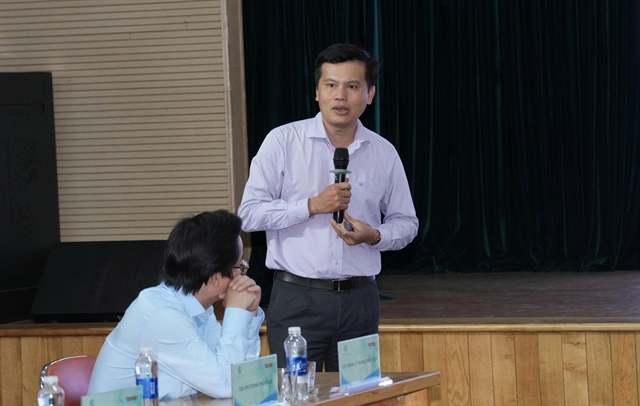 |
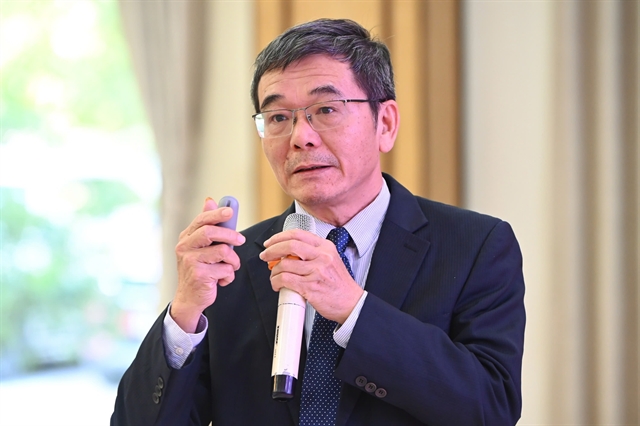
| Associate Professor Dr Nguyễn Văn Hồng, deputy director of the Sub-Institute of Meteorology, Hydrology, Environment and Marine Sciences, speaks about the risks of El Niño and climate change to water security in southern Việt Nam. — Photo courtesy of the organiser |
HCM CITY — Restoring rivers and canals requires an integrated approach combining pollution control, the recovery of natural water flows, ecosystem protection and the application of digital technologies in water resource management, speakers said at a conference in HCM City on November 6.
The conference, entitled “Water Security amid El Niño and Climate Change: Digital Transformation and River Restoration”, was jointly organised by the Department of Water Resources Management under the Ministry of Agriculture and Environment and the Nông nghiệp và Môi trường (Agriculture and Environment) newspaper.
Lý Thị Hồng Điệp, deputy editor-in-chief of the newspaper, said water security was closely linked to food and energy security, public health and sustainable development.
“In the context of increasingly complex climate change, challenges facing water resources are becoming more pronounced,” she said, citing extreme weather, drought, water shortages, saltwater intrusion and declining river flows.
El Niño could further increase these risks, while rising demand for water from households, agriculture, industry and energy production was placing additional pressure on river basins.
She said water security required not only adequate supplies and good water quality but also stronger capacity to respond proactively to natural changes and development needs.
“This requires a shift from reactive responses to proactive management; from fragmented, sector-based and administrative-boundary management to integrated river basin management; and from decision-making based largely on experience to management guided by data, forecasting and scientific tools,” she said.
Associate Professor Dr Nguyễn Văn Hồng, deputy director of the Sub-Institute of Meteorology, Hydrology, Environment and Marine Sciences, warned that a strong El Niño event coinciding with global warming could worsen drought and water shortages in southern Việt Nam.
The main risks included rainfall deficits, declining river flows and saltwater intrusion further inland.
Under a high-risk scenario, El Niño could remain strong before weakening in early 2027, with reduced rainfall and dry-season flows prolonging and intensifying drought and saltwater intrusion in the Mekong Delta.
Under a very high-risk scenario, El Niño could reach very strong intensity and last until mid-2027. If upstream water releases also fell sharply, widespread and severe shortages could occur, potentially affecting around 350,000 hectares of winter-spring rice in the delta.
Hồng called for coordinated structural and non-structural measures, including upgrading saltwater and freshwater control systems at river mouths. Priority should be given to studying works at the Vàm Cỏ and Hàm Luông river mouths, followed by the Cổ Chiên and Cung Hầu.
Coastal dykes, main canals and water transfer facilities should also be improved to regulate supplies and deliver water to shortage-prone areas. Irrigation systems within agricultural areas need to be better connected to enable water supply, drainage and storage, alongside decentralised storage facilities at community and household levels.
|
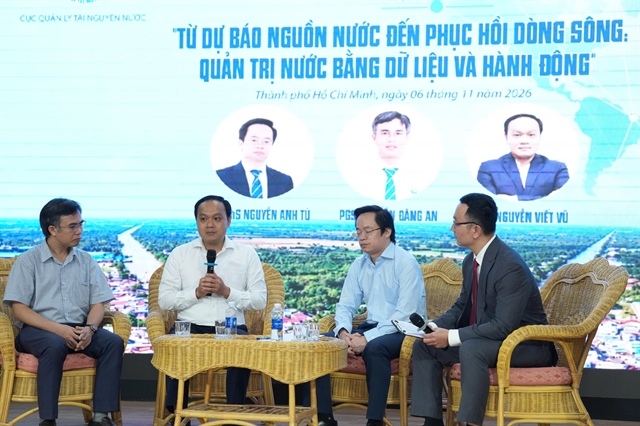
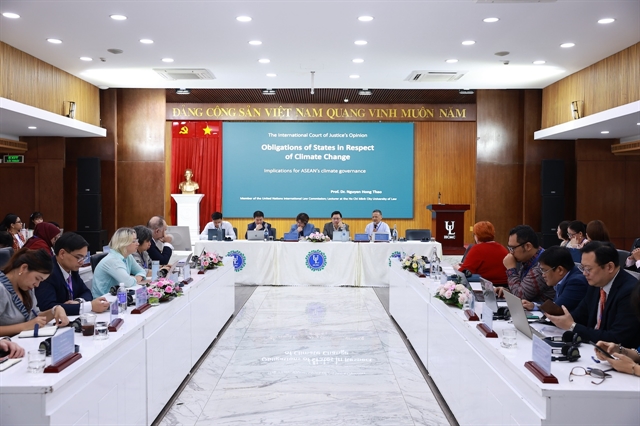
| Panellists discuss the role of digital technologies and data systems in improving water resource management and restoring rivers. — Photo courtesy of the organiser |
Nguyễn Anh Tú, deputy director of the Centre for Water Resources Decision Support and Development under the Department of Water Resources Management, said the 2023 Law on Water Resources marked a shift in management thinking.
The law defines water resource restoration as improving not only water quality but also water quantity, river flows and the functions of water sources, while restoring their economic, ecological and cultural values.
Tú said management should move beyond treating pollution at isolated locations towards restoring entire river systems through pollution control, flow maintenance, ecosystem rehabilitation and the recovery of rivers’ natural self-purification capacity.
This also required a shift from fragmented management based on administrative boundaries to coordinated governance at river-basin level, with clear responsibilities for local authorities and relevant sectors. Restoration should be assessed through actual improvements in water quality, flows and ecosystems, rather than simply the completion of infrastructure projects.
“River restoration is not a pollution treatment project with a defined endpoint, but an ongoing process of management, protection and regeneration,” he said.
Digital platform needed for water management
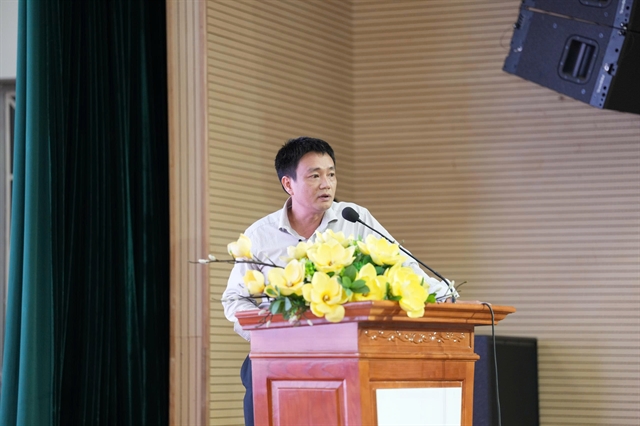 |
| Vũ Văn Thái, deputy director of the Southern Data Information Centre, presents on multi-sectoral integration in water resource management at the conference. — Photo courtesy of the organiser |
Speakers also stressed the need to accelerate digital transformation to improve water forecasting, monitoring and management.
Vũ Văn Thái, deputy director of the Southern Data Information Centre under the Department of Digital Transformation, said water management data remained fragmented, stored in different formats and lacked automatic connectivity.
Many administrative processes still relied on Word and Excel, while local data was often transferred to central agencies through copied files. Information from monitoring stations and hydropower and irrigation reservoirs was also not systematically connected in real time.
Thái said using monitoring data, hydrometeorological forecasts, river flow information and salinity data would improve early warning capacity and help management agencies make appropriate water regulation decisions.
Interconnected operating procedures needed to be reviewed and improved, with the aim of developing intelligent decision-support systems and strengthening data connectivity and sharing among localities, he said.
Assoc. Prof. Dr Trần Đăng An, deputy head of the Water Resources and Environmental Engineering Department at the Water Resources University’s branch campus, said technologies such as artificial intelligence, big data and the Internet of Things could only be effective in water management and river restoration if supported by comprehensive, standardised and reliable data.
He called for better data collection, monitoring and standardisation, as well as a comprehensive review of existing water and environmental data and training for personnel in data processing and analysis.
Speakers agreed that river restoration was a long-term task requiring coordination among government agencies, researchers, businesses and communities. While digital technologies could improve forecasting and monitoring, lasting results would depend on effective pollution control, integrated infrastructure investment and sustained management across entire river basins. — VNS
Environment
 Environment
 Environment
 Environment
 Environment
 Environment
 Environment
 Environment
 Environment
 Environment
 Environment
 Environment
 Environment
 Environment
 Environment