 Environment
Đà Nẵng aims to rank among Asia’s leading cities by 2075
1.
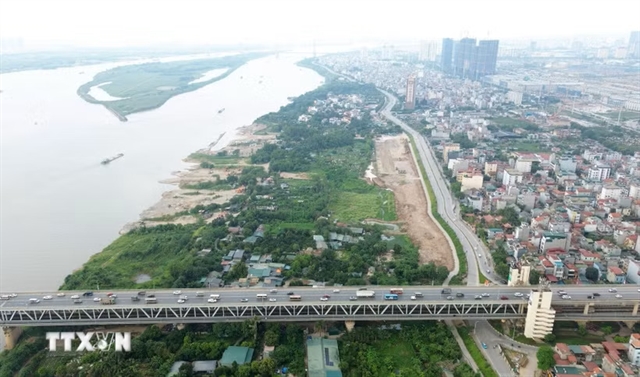 |
| The public park project in Phú Thượng Ward, part of Hà Nội’s Red River landscape boulevard corridor, is in the preparation phase. — VNS/VNS Photos |
HÀ NỘI — As Hà Nội maps out a 100-year vision for the Red River, questions shouldn't be about how many bridges, urban areas or riverside boulevards can be built.
Architect Trần Huy Ánh, believes the project's success will depend on a different principle that works with nature and places people and ecosystems at the centre of development.
A Standing Committee member of the Hanoi Association of Architects, Ánh said that the Red River should not be viewed simply as another urban development project but the strategic axis of the capital, closely tied to the history of Thăng Long-Hà Nội and its future urban structure.
Developing the Red River is a project that spans generations. It cannot be completed in a few years but requires a long-term vision, consistent planning and sustained commitment over decades, he said.
The experience of Seoul's Han River offers useful lessons. People often focus only on the modern appearance of the riverfront without recognising that its transformation was the result of decades of economic and social development, Ánh said.
For Hà Nội, the lesson is not to replicate Seoul's model but to understand how the city gradually restored the river's natural environment, expanded green space and placed residents' quality of life at the centre of planning decisions.
In this context, 'following nature' means more than adapting to natural conditions or ensuring flood safety. It also means respecting the history, culture and ecosystems that have developed along the Red River over thousands of years.
The Red River must first be recognised as a river that sustains life before it can become a driver of economic development or a new symbol of the capital, according to Ánh.
The river supplies water to around 10 million residents of Hà Nội and directly affects the lives of about 30 million people across the Red River-Thái Bình River basin. Every planning decision should therefore prioritise ecosystem conservation, preserve the river's natural functions and minimise interventions that alter its flow.
"The Red River is first and foremost the foundation of life. Only then can it become a driver of development," he told the Voice of Vietnam.
Equally important is the preservation of the historical and cultural values found along both riverbanks. Ancient villages and traditional craft communities have survived wars, natural disasters and centuries of social change. They are not merely places where people live but also repositories of indigenous knowledge and the cultural identity of Thăng Long–Hà Nội.
"If we have yet to create something better, there is no reason to erase values that have already stood the test of time," Ánh said.
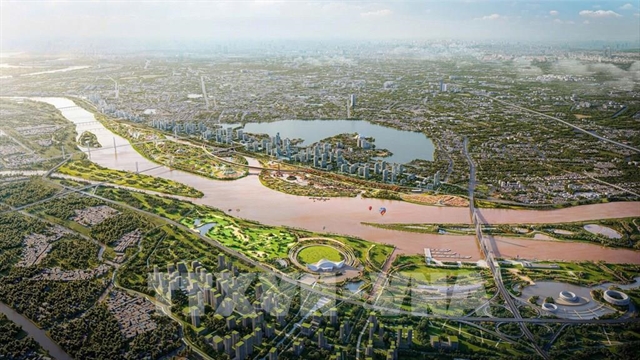 |
| Perspective of the Red River Landscape Boulevard. |
Rather than replacing the old with the new, he believes urban planning should integrate heritage into a modern landscape, allowing the city's unique identity to evolve instead of disappear.
He said that the success of the Red River master plan should not be measured by the number of projects completed or the amount of investment attracted, but by the quality of life it brings to residents.
When the river is restored closer to its natural state, when people have greater access to the waterfront, when green space expands, the environment improves and cultural heritage continues to be preserved, those are the indicators of a truly modern city.
He also recalled the words of urbanist Jane Jacobs who said: "Cities have the capability of providing something for everybody only because, and only when, they are created by everybody."
For that reason, Ánh believes the Red River Landscape Boulevard should be realised with the participation of local communities, experts, businesses and policymakers to build broad public consensus.
In Ánh's view, Hà Nội is capable of creating its own 'Red River miracle', but it should not become a copy of any other city. Its success will depend on making the most of the river's natural advantages, preserving its cultural identity, maintaining a long-term vision and placing people at the centre of every development decision.
"A 'Red River miracle' will not be created by following in the footsteps of others," he said. "It will be built on Hà Nội's own identity, wisdom and aspirations."
One key pillar of the capital’s 100-year master plan is developing the Red River waterfront to forge a new urban identity, rather than simply expanding green space.
Under the plan, parks, public squares, open spaces and scenic riverside routes will be linked with historical sites, traditional craft villages, cultural spaces and conservation areas. The Red River is expected to serve not only as an ecological corridor but also as a place that preserves the city's historical memory and cultural heritage.
Expanding riverside green space would also strengthen Hà Nội's resilience to climate change by improving the urban microclimate, enhancing natural drainage and protecting ecosystems. At the same time, experts stress that implementation must proceed carefully and in full compliance with regulations on flood control, dyke protection, environmental conservation, heritage preservation and efficient land use.
Architect Dr Đào Ngọc Nghiêm, vice chairman of the Vietnam Urban Planning and Development Association, noted that the Red River's complex hydrology requires flood control and long-term urban safety to remain the highest priorities.
He said riverside areas should prioritise adaptable land uses such as parks, green spaces and public facilities, while residential development and permanent structures should be subject to strict controls on elevation, density and land use.
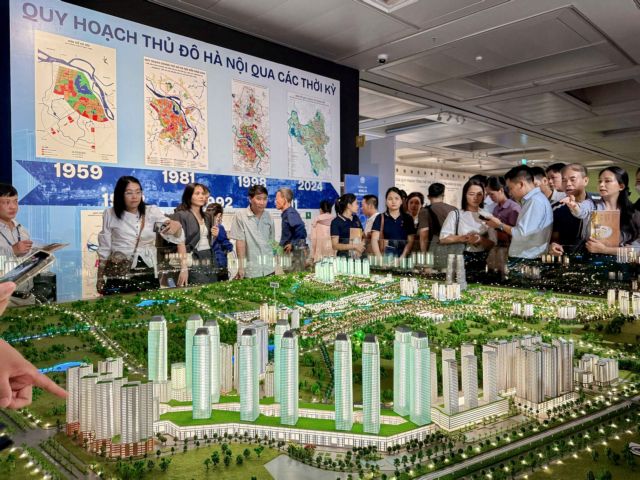 |
| Visitors view an exhibition on Hà Nội’s 100-year capital master plan. |
The inclusion of the Red River Landscape Boulevard and its network of parks in Hà Nội's master plan represents more than a single infrastructure project. It marks a strategic shift in the capital's spatial development, transforming the riverbanks from areas primarily associated with flood prevention into an ecological, cultural and urban corridor.
As this vision gradually takes shape, the boulevard, together with its parks, public squares and open spaces, is expected to become a new symbol of 21st-century Hà Nội, contributing to a greener, more liveable, culturally distinctive and increasingly competitive capital. — VNS
Environment
 Environment
 Environment
 Environment
 Environment
 Environment
 Environment
 Environment
 Environment
 Environment
 Environment
 Environment
 Environment
 Environment
 Environment