 Economy


Two Australian entertainment names revealed behind the scenes of Symphony of the Sea Season 3 in Phú Quốc
1.

|
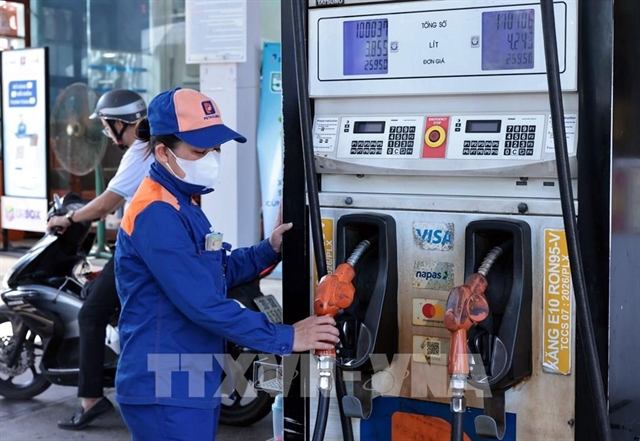
| A buyer is making cashless payment at a petrol station. The SBV is eyeing to close accounts that have remained inactive for at least three years since their last transaction. — VNA/VNS Photo |
HÀ NỘI — The State Bank of Vietnam (SBV) is eyeing to close millions of dormant accounts in an effort to clean the banking account database and curb increasingly sophisticated financial frauds.
The SBV said that a large number of legally opened accounts have remained inactive for years, while others have been created using outdated or falsified documents or have been exploited by criminals for fraud, money laundering and other illicit transactions.
To address the issue, the SBV has proposed amendments to Decree 52/2024/NĐ-CP on cashless payment, allowing banks to close accounts that have remained inactive for at least three years since their last transaction unless otherwise agreed between the banks and the customers.
The proposal addresses difficulties faced by banks in handling dormant accounts, as many of them lack specific agreements on how to handle prolonged inactivity.
Under Decree 52/2024/NĐ-CP, banks can close accounts only at the account holder's request, upon the death of an individual account holder, when an organisation ceases operations or when customers violate regulations governing payment accounts.
The proposed amendments also include regulations on how to handle remaining balances after an account is closed and return funds to their lawful owners.
The SBV said the proposed three-year threshold was in line with international practices.
In the US, dormant accounts are generally classified after three to five years of inactivity, with unclaimed balances transferred to state agencies responsible for managing unclaimed property while owners retain the right to reclaim them.
In the United Arab Emirates, accounts that remain inactive for more than three years are monitored and may be closed after five years, with balances transferred to the central bank until ownership is verified.
Several lenders have already introduced similar measures to tackle dormant accounts.
Among them are LPBank, NCB, Agribank, Sacombank, Techcombank, MB and VIB, which have adopted policies to suspend, convert or close inactive accounts after periods ranging from six months to two years.
Banks say such accounts continue to consume resources related to information technology infrastructure, data storage, cybersecurity and risk management even when they are no longer in use.
The clean-up would help banks save operational costs and create a foundation for a more efficient account management system, they said.
Banks have urged customers to review the status of their accounts through mobile applications or internet banking platforms and close those they no longer use, both to avoid unnecessary fees and reduce security risks.
According to SBV Deputy Governor Phạm Thanh Hà, as of June 26, banks had verified the biometric information of more than 162.9 million individual customers and over 2.6 million corporate customers through chip-based identity cards or the VNeID electronic identification platform.
The central bank has also launched the System for Intelligent Monitoring and Oversight (SIMO) designed to support supervision and fraud prevention in payment activities.
As of June 29, the SIMO247 service, which allows customers to check whether payment accounts and electronic wallets show signs of fraudulent activity, had been rolled out to customers of 12 credit institutions and three payment intermediaries.
The system has issued warnings to around 4.6 million customers. More than 1.5 million users subsequently suspended or cancelled transactions after receiving alerts, helping prevent fraudulent transfers worth more than VNĐ5.2 trillion (US$198.5 million). — VNS
Economy
 Economy
 Economy
 Economy
 Economy
 Economy
 Economy
 Economy
 Economy
 Economy
 Economy
 Economy
 Economy
 Economy
 Economy