 Economy
Government considers easing market access conditions for foreign investors
1.
*Võ

|
| Võ Trí Thành |
Võ Trí Thành*
Việt Nam's aspiration to become prosperous through the sea is not new. President Hồ Chí Minh often spoke of the country's maritime potential and the importance of turning towards the sea as a path to national development.
Today, as Việt Nam seeks new engines of growth and higher-quality development, that aspiration has taken on renewed significance.
With a sea area roughly three times larger than its land territory – more than 3,260 kilometres of coastline and over 3,000 islands – the country possesses one of Southeast Asia's most significant maritime endowments.
Situated along major international shipping routes linking the Indian and Pacific oceans, the sea is not only a source of natural resources but also a gateway connecting Việt Nam with global trade, investment and supply chains.
That strategic importance has become more evident with the adoption of Resolution No. 20-NQ/TW on building and developing Việt Nam into a strong maritime nation at the Third Plenum of the 14th Party Central Committee.
The resolution builds on eight years of implementing Resolution No. 36-NQ/TW, adopted in 2018, on the strategy for the sustainable development of Việt Nam's marine economy to 2030, with a vision to 2045.
The review acknowledged important progress over the past eight years.
Awareness of the sea's strategic role has increased, legal and institutional frameworks have gradually improved, marine resource management has been strengthened and the marine economy has continued to serve as an important driver of national growth.
Living standards in many coastal areas have improved, while international cooperation on maritime affairs and the protection of national sovereignty have also been reinforced.
At the same time, the review also delivered a candid assessment. The ambition of turning Việt Nam into a strong maritime nation has yet to be realised.
Marine governance remains fragmented, economic development has not matched the country's potential, while science and technology, innovation, human resources and marine environmental protection continue to lag behind emerging requirements.
Climate change, sea-level rise and coastal erosion have added further pressure, while the country has yet to fully unlock the value of its vast maritime space.
Against this backdrop, Resolution No. 20 sets out a bold new approach that shifts the focus from developing the marine economy to building a strong maritime nation. It also reflects a changing role of the sea in Việt Nam's development strategy.
The maritime domain is no longer simply a source of natural resources or a collection of economic sectors. It has become the space where many of the country's most important development objectives come together.
First, the sea will be central to Việt Nam's future growth.
Many maritime industries already make significant contributions to Việt Nam's economy while offering considerable room for expansion. From oil and gas, renewable energy and marine tourism to ports, logistics and shipping, these sectors can become important drivers of Việt Nam's double-digit growth ambition.
The challenge, however, is not only to accelerate growth, but also to make it greener, more innovative and more inclusive, strengthening Việt Nam's long-term competitiveness while supporting its sustainable development and net-zero commitments.
|
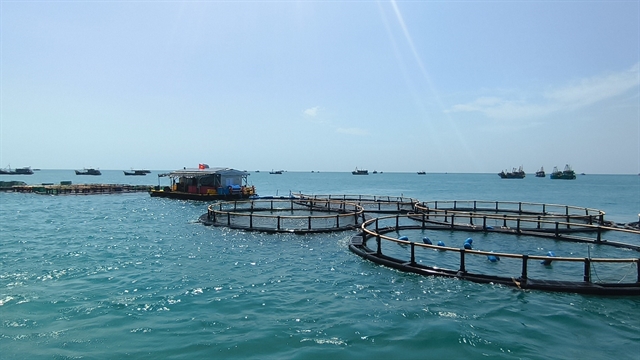
| A fish cage farming model at Hòn Chuối Island in Cà Mau Province. — VNA/VNS Photo Chanh Đa |
Second, the sea is where today's major global transformations are most visible. Geopolitical competition, economic restructuring, technological innovation, the energy transition and climate change are increasingly centred on the maritime domain.
For a country located on one of the world's busiest shipping routes, this presents opportunities that extend well beyond traditional marine industries. The sea is becoming a strategic development space, linking Việt Nam more closely with global supply chains, investment flows, technology and international cooperation.
Third, the maritime economy best demonstrates how strategic autonomy and international integration can reinforce each other.
Strategic autonomy should not be understood as isolation. It is built by integrating more deeply into the global economy while developing stronger domestic capabilities.
From ASEAN's Blue Economy initiatives to partnerships on green finance, renewable energy and marine conservation, Việt Nam has an opportunity to access international capital, technology, knowledge and governance experience. Combined with its geostrategic location, these partnerships can strengthen Việt Nam's role as an important regional hub for trade, investment and innovation.
Turning this vision into reality requires a fundamental shift in how Việt Nam develops its maritime industries.
Maritime industries – including fisheries and aquaculture, oil and gas, offshore renewable energy, marine tourism, logistics and shipping – all have enormous potential. The challenge, however, is no longer simply to expand these sectors, but to create greater value from existing resources. That requires maritime development to be driven by technology, innovation, new business models and deeper participation in global value chains.
|
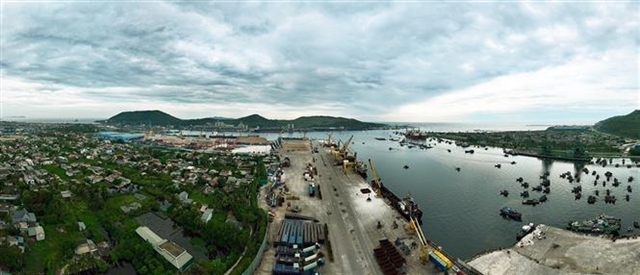
| Nghi Sơn International Port in Nghi Sơn Ward, Thanh Hóa Province, has a 1,500 metre berth system capable of accommodating 100,000-DWT vessels for import and export cargo handling. — VNA/VNS Photo Vũ Sinh |
The opportunities are different across each sector.
In fisheries, future growth lies in deep processing, brand building, traceability and the application of technology to offshore aquaculture. In marine tourism, the focus should shift from increasing visitor numbers to enhancing the quality of experiences and visitor spending.
In the energy sector, offshore wind and other forms of marine renewable energy have the potential to become strategic industries for the future.
Across all these sectors, the objective is to create higher value while ensuring development remains sustainable, balances economic gains with climate resilience and allows coastal communities to benefit from maritime development.
Realising this transformation requires a much stronger supporting ecosystem.
The Government should place modern maritime governance at the heart of this agenda, building integrated marine spatial planning, stronger institutions and a unified, data-driven approach to managing marine resources.
It also needs to create a more transparent, stable and internationally competitive legal framework for maritime development.
Central to this effort is prioritising investment in science, technology, innovation, digital transformation and high-quality human resources, alongside modern infrastructure for ports, logistics, energy and coastal connectivity.
A national marine data system will be equally important, providing the basis for better governance, more informed investment decisions and greater access to international financing, including emerging blue finance initiatives.
Building a strong maritime nation will ultimately depend on developing internationally competitive maritime industries and enterprises.
|
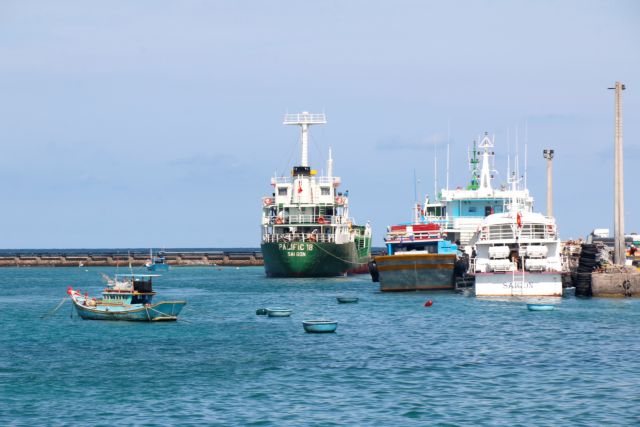
| A cargo vessel is berthed at the fishing port in Phú Quý Special Zone, Lâm Đồng Province. — VNA/VNS Photo Nguyễn Thanh |
Resolution No. 20 identifies shipping, logistics, ports, shipbuilding, fisheries, marine tourism, renewable energy and other emerging ocean industries as priority areas. It also encourages the growth of leading state-owned and private corporations capable of competing globally.
Maritime development should also be approached with a Go Global mindset. As an inherently open space connected to international markets and value chains, the sea requires internationally competitive enterprises in logistics, shipping, ports, offshore energy and maritime services.
Whether state-owned or private, these leading companies can create new ecosystems that attract investment, technology and skilled talent while strengthening Việt Nam's position in global value chains.
The growing participation of major private corporations in coastal and marine projects is an encouraging sign, but their role should extend beyond real estate development to creating new growth spaces for logistics, tourism, innovation and other marine industries, helping Việt Nam become strong through the sea.
The ambition of becoming a strong maritime nation is both timely and well-founded. The new resolution provides a comprehensive roadmap, but its success will ultimately depend on how effectively that ambition is translated into action.
Geography has given Việt Nam exceptional maritime advantages. Turning those advantages into lasting national strength will require modern governance, innovation, globally competitive enterprises and the determination to pursue a development model that is open, sustainable and deeply integrated with the world.
* Võ Trí Thành is former vice president of the Central Institute for Economic Management and a member of the National Financial and Monetary Policy Advisory Council. With a doctorate in economics from Australian National University, he focuses on macroeconomic policy, trade liberalisation and institutional reform.
Economy
.jpg) Economy
Economy
 Economy
 Economy
 Economy
 Economy
 Economy
 Economy
 Economy
 Economy
 Economy
 Economy
 Economy
 Economy
 Economy
.jpg)



