 Economy
Lotte, Phát Đạt combine strengths in Thu Thiem project
1.
|
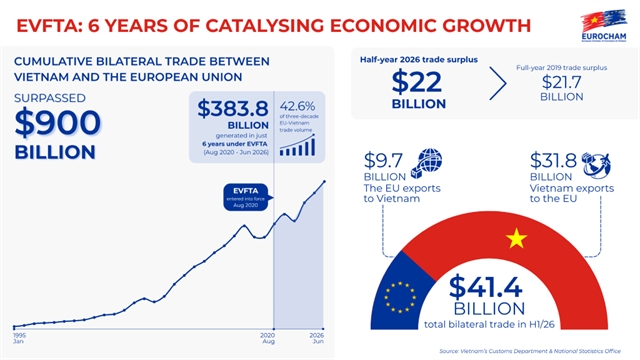
| An infographic highlights key trade milestones between Việt Nam and the European Union six years after the EVFTA entered into force. — Source EuroCham |
HÀ NỘI — Six years after the EU-Việt Nam Free Trade Agreement (EVFTA) entered into force, the deal has evolved beyond a tariff-cutting agreement into a framework underpinning trade integration, supply chain resilience and higher-value investment between Việt Nam and the European Union, according to the European Chamber of Commerce in Việt Nam (EuroCham).
The agreement, which took effect on August 1, 2020, has accelerated bilateral trade to a pace unmatched in previous decades.
Official data from Việt Nam Customs and the National Statistics Office under the Ministry of Finance shows two-way trade between Việt Nam and the EU exceeded US$900 billion between 1995 and June 2026. Of this, nearly $384 billion – or 42.6 per cent of the total – was generated during the six years since the EVFTA came into force.
“Nearly half of three decades of EU-Việt Nam trade has taken place under the framework established by the agreement, highlighting how rapidly commercial integration accelerates once market access barriers begin to lift,” EuroCham Chairman Bruno Jaspaert said in a report published on August 1.
"What began as an ambitious political commitment six years ago has become measurable economic value," he said.
Business confidence strengthens
Beyond trade volumes, EuroCham said the agreement has reshaped how European companies view Việt Nam, with the country increasingly serving as a strategic production and growth base in Asia.
According to EuroCham's Business Confidence Index, as of the second quarter of 2026, 55 per cent of surveyed European businesses now regard Việt Nam as either their core operating hub or primary growth market, while another 22 per cent consider it an important part of their regional network.
Among companies actively engaged in EU-Việt Nam trade, half reported directly benefiting from EVFTA tariff preferences, while sectors including logistics, trading and consumer goods recorded the strongest gains.
In those industries, one in four surveyed firms reported cost savings of between 16 and 30 per cent, roughly double the average across all sectors.
A European importer participating in the survey said more than 80 per cent of its trade with Việt Nam now qualifies for EVFTA tariff preferences.
Although tariff savings contributed only modestly to profit margins, lower import costs allowed the company to reduce prices in the Vietnamese market, strengthening competitiveness and supporting further business expansion.
For logistics providers, the wider use of EVFTA preferences by exporters has translated into steady growth in freight forwarding, warehousing and supply chain services, EuroCham said.
Full duty-free access
The agreement also enters a significant new phase this year.
From its seventh year of implementation, the EU has completed its tariff elimination schedule, granting duty-free access to 99 per cent of tariff lines for Vietnamese exports, marking one of the agreement's most important milestones.
Meanwhile, Việt Nam will continue reducing tariffs on EU goods over the next four years in line with its commitments, with full implementation scheduled for 2030, the 10th anniversary of the agreement.
EuroCham Vice-Chairman Jean-Jacques Bouflet said as the agreement enters its seventh year, businesses face a changing policy environment in Europe.
As new EU regulations including the Carbon Border Adjustment Mechanism, the EU Deforestation Regulation and wider European Green Deal policies reshape market requirements, Vietnamese exporters will increasingly compete on their ability to meet sustainability, traceability and due diligence standards rather than price alone.
EuroCham said simplifying customs procedures, accelerating VAT refunds, digitising trade documentation and clarifying rules of origin would help more businesses, particularly small- and medium-sized enterprises, make better use of the agreement.
Although Việt Nam continues to post a sizeable trade surplus with the EU, the chamber argued the relationship should not be viewed through a surplus-deficit lens.
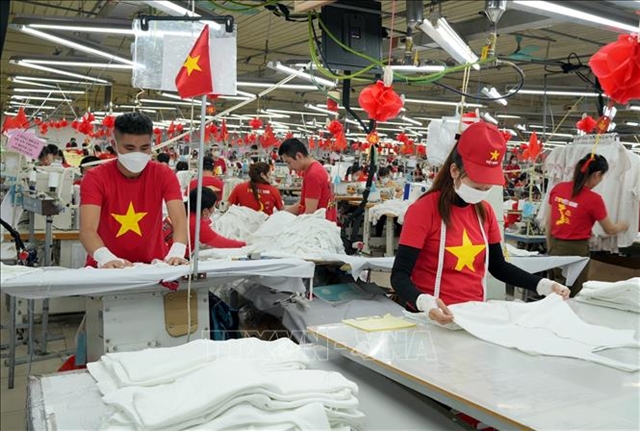
European exports of advanced machinery, industrial technology and pharmaceuticals support Việt Nam's industrial upgrading, while Vietnamese strengths in electronics, machinery, textiles, footwear, furniture and agricultural products reinforce European supply chains and consumer markets.
|
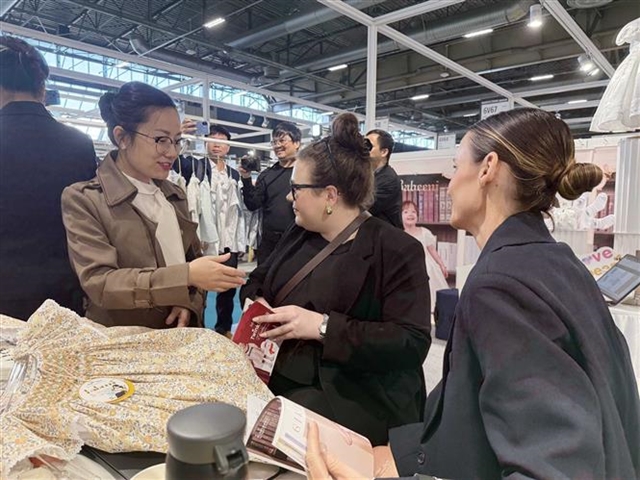
| Visitors look at children's clothing products showcased by a Vietnamese company at an exhibition in France last year. — VNA/VNS Photo |
EuroCham also encouraged Việt Nam to import more high-value European technologies to support industrial modernisation and move further up global value chains.
Currently, the EU accounts for around 12 per cent of Việt Nam's total exports but only 4 per cent of its imports, suggesting considerable room to deepen two-way trade in technology-intensive products.
In addition, Bouflet noted that the EVFTA goes well beyond tariff reductions by covering customs cooperation, technical standards, intellectual property, transparency and sustainable development.
Catalyst for high-value FDI
While merchandise trade has expanded rapidly, European investment has grown at a more gradual pace.
EuroCham said investors continue to place particular importance on regulatory predictability, administrative efficiency and strong legal protection when making long-term investment decisions.
The chamber thus reiterated its call for full ratification of the EU-Việt Nam Investment Protection Agreement (EVIPA) by all remaining EU member states.
Unlike the EVFTA, which focuses primarily on trade liberalisation, EVIPA would establish a stronger legal framework for investment protection and dispute settlement, potentially encouraging more European capital into clean energy, advanced manufacturing and digital infrastructure.
Bouflet said the upgrading of EU-Việt Nam relations to a Comprehensive Strategic Partnership in January provides an opportunity to deepen economic cooperation further, with the EVFTA serving as its commercial foundation.
He argued that the agreement's significance extends beyond trade flows, demonstrating that an ambitious trade deal between Europe and an emerging Asian economy can deliver tangible economic benefits while providing a model for broader EU-ASEAN engagement. — VNS
Economy
 Economy
 Economy
 Economy
 Economy
 Economy
 Economy
 Economy
 Economy
 Economy
 Economy
 Economy
 Economy
 Economy
 Economy