 Economy

NA debates sweeping reforms to land, housing and real estate laws
1.
|
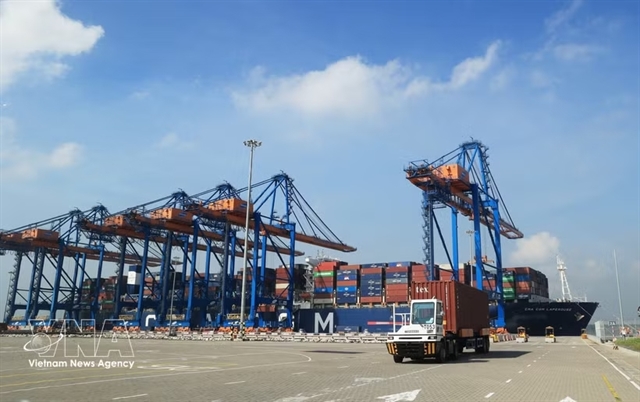
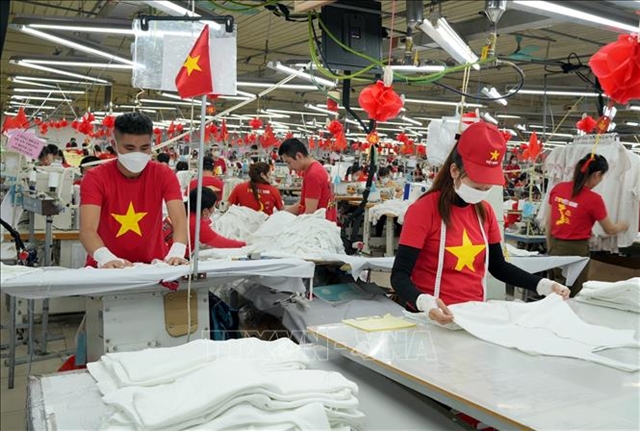
| Vietnam records a trade deficit of around $16.65 billion in the first half of 2026. VNA/VNS Photo |
HÀ NỘI — International institutions have described Việt Nam’s economic performance in the first half of 2026 as impressive, marked by stronger and more broad-based growth. However, rapid expansion amid narrowing policy room is making macroeconomic balances more sensitive, posing a key policy challenge for the remainder of the year.
Impressive growth with more balanced drivers
According to the latest data from the National Statistics Office under the Ministry of Finance, Việt Nam’s economy grew 8.39 per cent in the second quarter, bringing first-half growth to 8.18 per cent – significantly higher than the same period last year and among the strongest first-half performances in recent years.
Shantanu Chakraborty, Country Director of the Asian Development Bank (ADB) in Việt Nam, said the figures are promising, reflecting the economy’s resilience amid global headwinds.
Vũ Bình Minh, CFA, Associate Director, FX Trading, Markets and Securities Services at HSBC Vietnam, attributed the strong performance to a more balanced growth structure, with domestic drivers making greater contributions. ADB Chief Economist for Việt Nam Bùi Minh Giáp similarly noted that growth has become broad-based, driven by industry, construction, services, exports, foreign direct investment (FDI), public investment and recovering domestic demand.
The manufacturing sector remains a major growth engine, with industrial production rising 10.8 per cent year-on-year in the first six months, including an 11.4 per cent increase in manufacturing and processing. Singapore-based United Overseas Bank (UOB) said robust global demand for artificial intelligence (AI)-related products is providing additional momentum.
Public investment has also emerged as a key pillar. HSBC noted that infrastructure spending equivalent to around 6-7 per cent of GDP is relatively high by regional standards, allowing Việt Nam to make effective use of fiscal space as room for monetary easing becomes more limited.
Domestic consumption is recovering, with retail sales up 12.9 per cent, while nearly 12.3 million international visitors arrived in Việt Nam during the period. HSBC said stronger domestic drivers provide the economy with a greater buffer against external shocks.
FDI remains another bright spot. Registered FDI reached US$34.65 billion, up 61 per cent, while disbursed capital stood at $13.03 billion, the highest in five years. UOB said the figures indicate that global supply-chain diversification continues to benefit Việt Nam.
Pressures ahead
Despite strong growth, HSBC warned that trade, inflation, exchange rates and interest rates could become more sensitive as policy buffers narrow.
Việt Nam recorded a goods trade deficit of around $16.65 billion in the first half, reversing last year’s surplus. HSBC noted, however, that much of the increase in imports comprised machinery, equipment and production inputs, suggesting the deficit is largely linked to investment and future production capacity rather than consumption.
In this regard, the ADB Chief Economist for Việt Nam said the downside of this trend is that it highlights the domestic economy's continued heavy reliance on imported inputs.
At the same time, rising inflation is limiting room for monetary policy. Average CPI increased 4.38 per cent in the first half, close to the National Assembly’s target of around 4.5 per cent, while core inflation rose 4.12 per cent. Giap said the figures require monetary policy to remain flexible and cautious.
Exchange-rate pressures have also intensified, while interbank and deposit interest rates have remained high amid strong credit demand. Singapore-based DBS and UOB expect the State Bank of Việt Nam to keep policy rates unchanged for the remainder of 2026, balancing growth support with inflation control.
Overall, strong first-half performance has prompted several international institutions, including Standard Chartered, UOB and DBS, to raise their growth forecasts for Việt Nam. Standard Chartered projects GDP growth of 9.5 per cent in 2026 and 11 per cent in 2027.
HSBC said the second half of the year will be crucial in demonstrating that Việt Nam can not only sustain rapid growth but also maintain macroeconomic stability. — VNA/VNS
Economy
 Economy
 Economy
 Economy
 Economy
 Economy
 Economy
 Economy
 Economy
 Economy
 Economy
 Economy
 Economy
 Economy
 Economy

.jpg)