 Environment

AIMCONNECT 2026 Held in Singapore, Bringing Global Automotive Leaders Together to Explore the Future of AI, Trust and Connected Mobility
1.
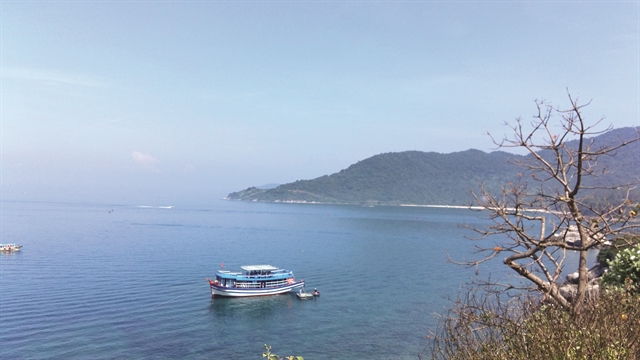 |
| A boat docks at a beach on the Chàm Islands, 20km off Hội An. The islands have been stepping up seagrass conservation as a key ecological system. VNS Photo Công Thành |
Công Thành
For two hours at a time, ecologist Trần Thị Phương Thảo and her six-member scuba team descend into the waters off the Chàm Islands, quietly checking the seagrass beds that shelter marine life and help protect one of Việt Nam’s most valuable coastal ecosystems.
The scuba-based seagrass monitoring is part of a pilot programme on seagrass restoration and livelihood improvements in Chàm Islands Nature Reserve, funded by the World Wide Fund for Nature in Việt Nam (WWF-Vietnam).
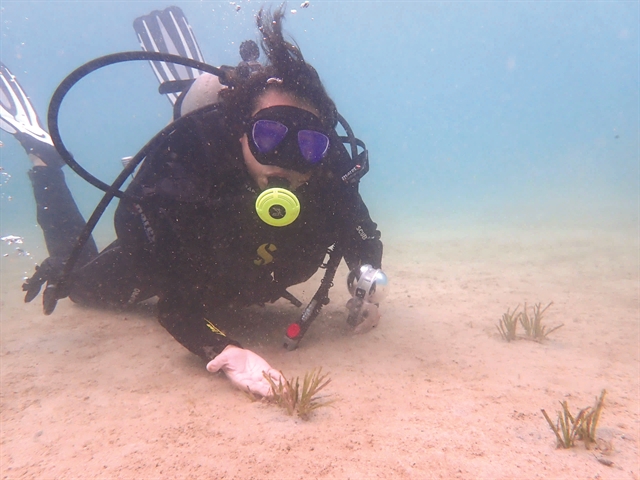 |
| Trần Thị Phương Thảo checks a grown seagrass zone in waters off the Chàm Islands. Photo courtesy of Phương Thảo |
Seagrass restoration off the Chàm Islands, now part of Đà Nẵng City, has gradually become one of the most important factors in boosting biodiversity in the nature reserve, marking a significant example of nature management in central Việt Nam nearly two decades after the area was recognised as a UNESCO world biosphere reserve site.
“Seagrass beds shelter various aquatic species, including endangered sea turtles and fish, while stabilising the seabed and reducing erosion. They also serve as an effective carbon store at sea, helping to address global climate change,” Thảo says.
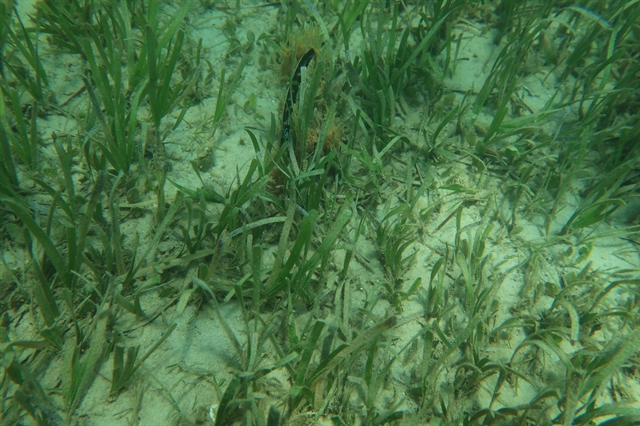 |
| A seagrass section shelters a safe haven for millions of marine species living in the waters off the Chàm Islands. Photo courtesy of Phương Thảo |
The seagrass monitoring programme was established by the management board of the Chàm Islands Marine Protected Area (now Chàm Islands Nature Reserve) to monitor the ecosystem annually in 2016, she adds.
“Seven sites were marked for annual checks. The waters off Bắc and Nần beaches are the two largest seagrass areas, but Hương and Ông beaches have been badly impacted by the intensive use of speedboats and booming tourism and infrastructure construction projects,” Thảo explains.
Seagrass degradation
The ecologist says four seagrass species – Halophila major, Halophila decipiens, Halodule pinifolia and Cymodocea rotundata – were recorded living in the waters off the Chàm Islands following a research report by Vietnamese scientists in 2004, but a fifth species, Halodule uninervis, has yet to be found in the area.
Vietnamese researchers reported that between 14 and 16 seagrass species were recorded in Việt Nam, and the country was the third largest seagrass ecosystem in the world after Australia and the Philippines.
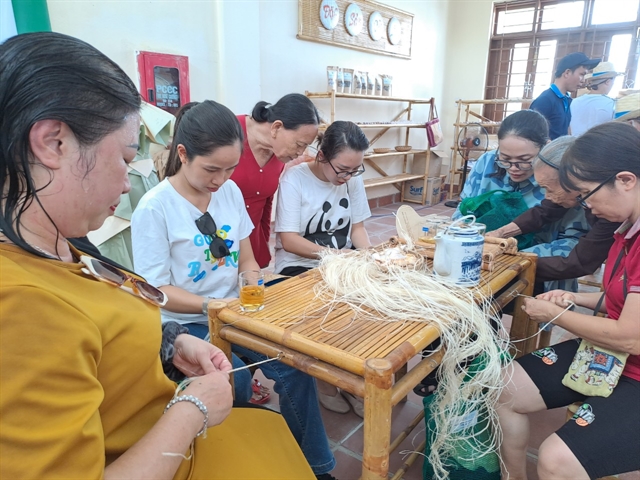 |
| Hammock weaving is one of the most popular crafts to lure visitors. VNS Photo Công Thành |
Scientific research by Võ Sĩ Tuấn and his colleagues in 2004 reported that the Chàm Islands had 50ha of seagrass, but the figure dropped to 17ha in 2017 following a report by Vũ Ngọc Long, PhD, from the Southern Institute of Ecology.
Thảo says the seagrass coverage has deteriorated significantly since 2021, with an average coverage rate of between 9.2 and 14.5 per cent.
She says the degradation of seagrass at some key sites of the islands could result from an unstable seabed environment, fluctuations in water flow, sediment deposition, pollution, boat docking and coastal fishing.
“The awareness of the important role of seagrass in the marine ecological system on the Chàm Islands is still limited. However, seagrass has yet to be exploited as a tourism product, so it naturally remains growing. It just needs strict protection and a designated zone for long-term conservation,” Thảo says.
Well-protected nature
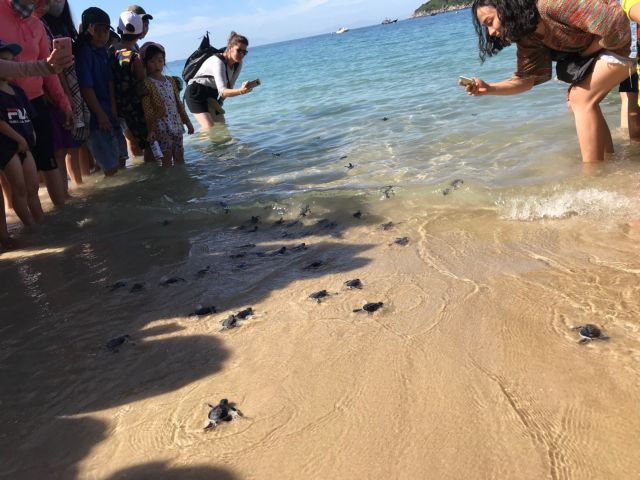 |
| Tourists enjoy releasing newly hatched turtles back to the sea. The eco-tour and natural conservation site launched a series of community-based environment protection programmes. Photo courtesy of Phạm Hải |
Nguyễn Thị Diệu Thúy, director of Ocean Plastic Reduction Programme at WWF-Vietnam, says the Chàm Islands Nature Reserve is seen as a pioneer in boosting biodiversity conservation and livelihood improvements in Việt Nam.
“The site has been implementing a multi-sector approach in nature management from land to sea by implementing a series of measures in waste management, annual seagrass monitoring and restoration, building a resilient environment against climate change, connecting coastal corridors and developing the seagrass ecosystem,” Thúy says.
Lê Vĩnh Thuận, deputy director of the nature reserve, says the seagrass restoration programme will potentially benefit from the carbon credit trade.
“Seagrass fields not only provide a safe home for millions of aquatic species, but also offer an effective protective solution in responding to global climate change. Meanwhile, seagrass and coral reefs linked with wetlands create an important ecological corridor for the estuarine and ocean environments in the Hội An-Chàm Islands world biosphere reserve,” Thuận explains.
Tradable carbon credits from seagrass conservation will offer future development potential for the reserve, as the ecosystem plays a role in supporting sustainable livelihoods for local communities on the islands and in the lower basin region, he adds.
The WWF-Vietnam-funded programme is deemed the initial step towards building a major carbon store via seagrass restoration and conservation for the Chàm Islands, benefiting the local community, Thuận says.
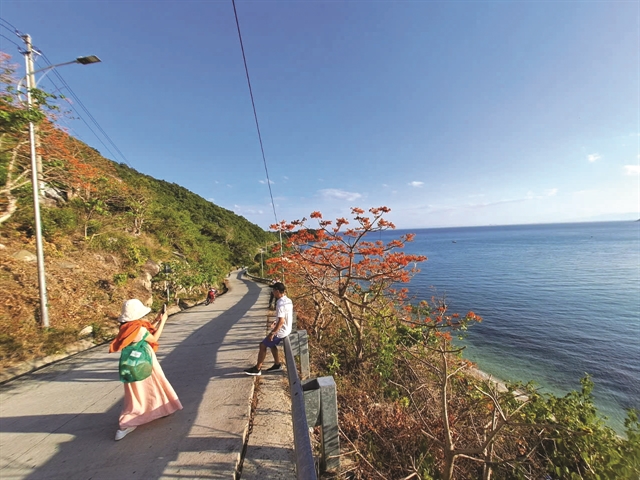 |
| The islands are seen as a typical eco-tour site in central Việt Nam that involves the participation of the community in nature conservation and protection. Photo courtesy of Chàm Islands Nature Reserve |
The Chàm Islands aim to become the first zero-waste and plastic-free tourism destination in Việt Nam by launching various programmes addressing littering, fishing, plastic bag use, marine waste and biodegradable packaging, says Huỳnh Thị Thùy Hương, from the reserve’s communications department.
Ecologist Thảo says she hopes that the reserve can fully restore 50ha of seagrass meadows as an ecological ‘diamond mine’ at sea for better island livelihoods and as the foundation for long-term nature protection. VNS
Environment
 Environment
 Environment
 Environment
 Environment
 Environment
 Environment
 Environment
 Environment
 Environment
 Environment
 Environment
 Environment
 Environment
 Environment