 Opinion
Việt Nam gives top priority to relations with Laos: PM
1.
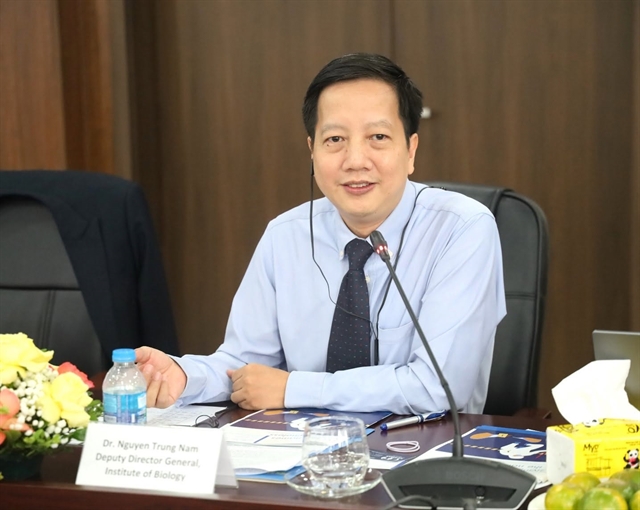 |
| Nguyễn Trung Nam, deputy director of the Institute of Biology under the Việt Nam Academy of Science and Technology. — Photo courtesy of the academy |
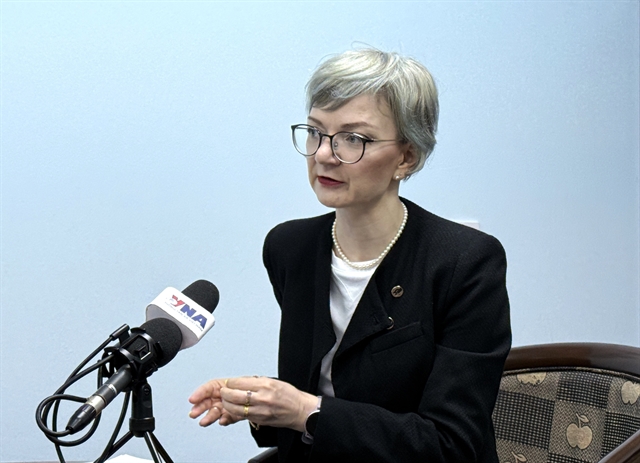
Nguyễn Trung Nam, deputy director of the Institute of Biology under the Việt Nam Academy of Science and Technology, speaks to Việt Nam News about international cooperation with partners in the identification of fallen soldiers’ remains.
What international cooperation programmes or projects has the institute implemented in DNA analysis and identification for locating and identifying war martyrs' remains?
This is a highly specialised scientific field that requires the integration of molecular biology, genetics, forensic science, bioinformatics, anthropology and data science.
In recent years, the institute’s Centre for DNA Identification has been working with the International Commission on Missing Persons (ICMP) on the application of DNA technology to identify missing persons and fallen soldiers’ remains.
The centre is also researching, evaluating and refining the application of next-generation sequencing (NGS) technology, combined with highly informative genetic markers such as single nucleotide polymorphisms (SNPs), to improve DNA recovery and analysis from skeletal remains that have become fragmented and severely degraded after decades of burial in Việt Nam’s hot, humid tropical climate.
This technological approach is increasingly being adopted worldwide to address cases in which conventional DNA analysis methods are still limited.
How have international partners supported the institute in carrying out the mission?
International partners have provided practical and meaningful support across multiple areas, significantly strengthening our DNA analysis capacity.
Firstly, they have supported technology transfer, including optimising DNA extraction from long-degraded bones and teeth, establishing contamination-control procedures, applying next-generation sequencing platforms and introducing advanced genetic data analysis software.
Secondly, the institute has benefited from support in human resource development. Many of the Centre for DNA Identification's scientists have attended specialised training courses and technical placements at overseas laboratories, while regularly engaging with international experts to keep abreast of the latest advances in DNA analysis.
The third aspect is assistance with quality assurance. International experts have advised the centre on laboratory quality management, including laboratory proficiency assessment, equipment calibration, method validation and internal quality control.
Last but not least, partners have also helped the centre gain access to scientific resources, including scientific databases, modern bioinformatics software and advanced statistical methods for evaluating kinship probabilities in complex identification cases.
.jpeg) |
| A technician conducts DNA analysis at the Centre for DNA Identification. — VNA/VNS Photo Hoàng Hiếu |
What are the main areas of international cooperation and the most significant achievements of these programmes?
International cooperation is comprehensive but primarily focuses on key areas including joint research, capacity building, the development of laboratory quality management systems, the standardisation of technical procedures, inter-laboratory assessments and improvements in scientific governance.
For example, joint scientific research and international publications have addressed challenges specific to Việt Nam, such as identifying highly degraded remains and cases lacking direct reference samples.
Together, these areas of cooperation aim to improve the success rate of DNA identification while ensuring accuracy, objectivity and compliance with international scientific standards.
International cooperation has delivered tangible results, substantially strengthening the scientific and technological capacity of the centre to identify fallen soldiers' remains.
The centre has progressively mastered a range of advanced DNA technologies and analytical procedures, particularly techniques for processing severely degraded and fragmented skeletal samples.
By adapting and localising advanced technologies, it has optimised laboratory protocols to suit Việt Nam's climate, soil conditions and the characteristics of recovered remains, improving DNA recovery and increasing the success rate for samples that were previously considered extremely difficult to analyse.
The centre's scientific staff have received advanced training and gained hands-on experience with cutting-edge technologies, enhancing their ability to conduct research and develop solutions tailored to domestic conditions.
Its laboratories have also been upgraded and standardised to meet international quality standards, ensuring reliable and high-quality DNA analysis.
In late 2025, the centre successfully identified the remains of two fallen soldiers recovered from Trà Lĩnh War Martyrs Cemetery in Cao Bằng Province, enabling them to be reunited with their families.
This achievement resulted from the combined application of advanced DNA technologies, close coordination among domestic agencies and technical support from international partners.
Although the number of identified cases remains modest compared with the overall demand, these achievements demonstrate the value of investing in science, technology and international cooperation.
More importantly, each successful identification represents not only a scientific milestone but also a profound humanitarian accomplishment, allowing fallen soldiers to return to their families, hometowns and identities after decades of uncertainty.
What new technologies or methods have been adopted or developed through international cooperation to analyse long-buried, severely degraded remains?
Most fallen soldiers' remains have been exposed to Việt Nam's hot and humid tropical environment for more than half a century, leaving their DNA highly fragmented, present only in trace amounts and often contaminated with substances that inhibit analysis. This remains the greatest challenge in identification.
Through international cooperation, the centre has gained access to advanced technologies, including improved DNA extraction techniques, library enrichment methods and bioinformatics algorithms capable of reconstructing and analysing highly fragmented genetic data.
Compared with conventional methods, which primarily rely on mitochondrial DNA, combining SNP analysis with next-generation sequencing enables scientists to recover much more genetic information from severely degraded samples.
It also expands the ability to establish biological relationships across more distant generations when no direct relatives are available. Unlike mitochondrial DNA analysis, it is not restricted to the maternal lineage, significantly improving the chances of successful identification in complex cases. — VNS
Opinion
 Opinion
 Opinion
 Opinion
 Opinion
 Opinion
 Opinion
 Opinion
 Opinion
 Opinion
 Opinion
 Opinion
 Opinion
 Opinion
 Opinion