 Opinion
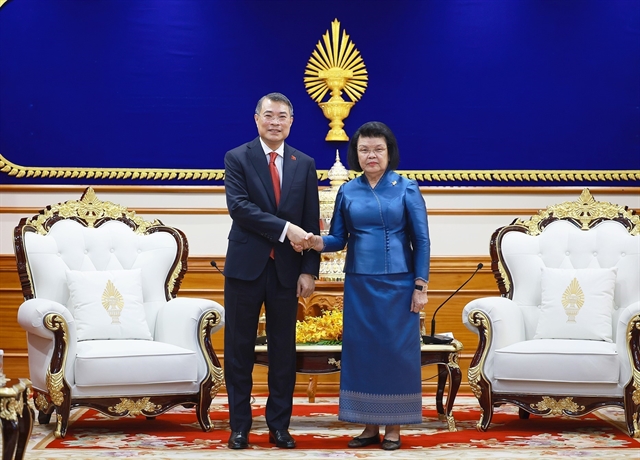
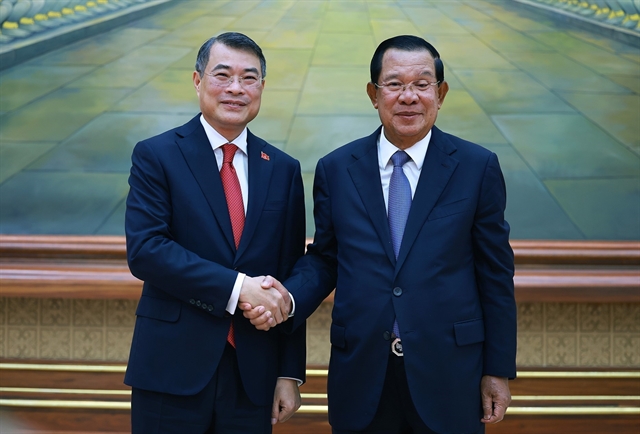
Vietnamese Prime Minister meets Cambodian National Assembly President
1.
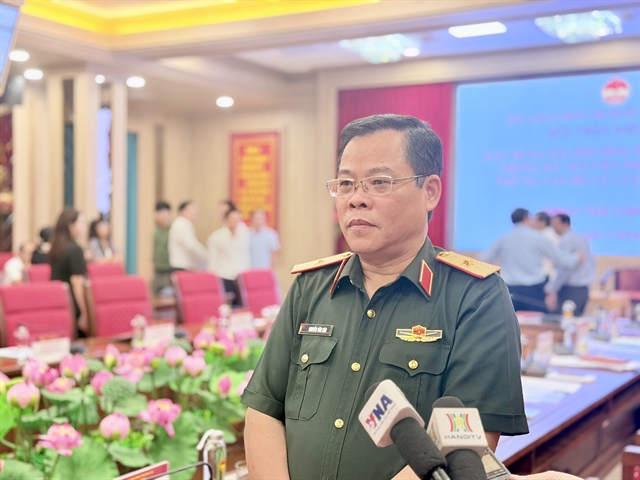 |
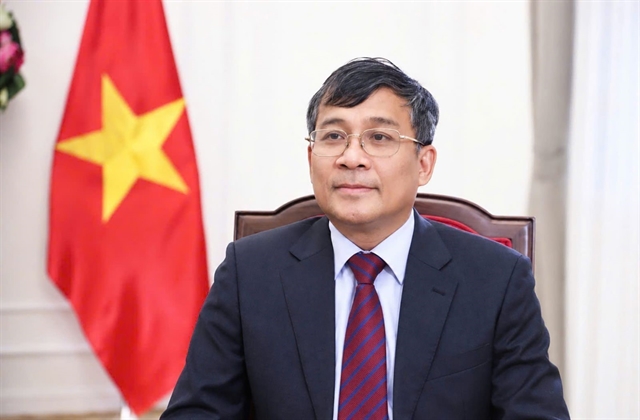
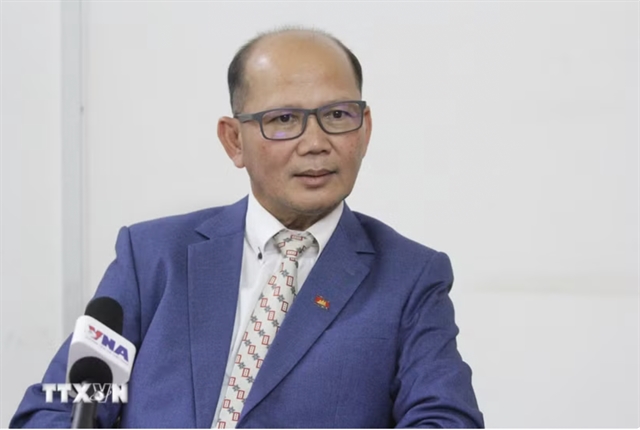
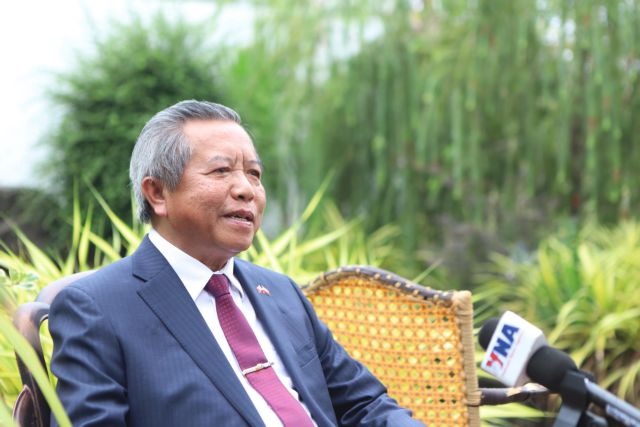
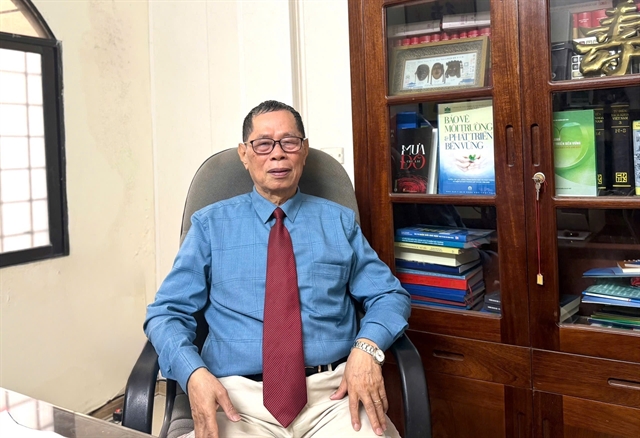
| Major General Nguyễn Văn Sáu, Deputy Director of the Việt Nam Institute for Defence Strategy and History. — VNA/VNS Photo Đỗ Bình |
Major General Nguyễn Văn Sáu, Deputy Director of the Việt Nam Institute for Defence Strategy and History under the Ministry of National Defence, spoke to Công Thương (Industry and Trade) newspaper about the pioneering role of foreign affairs, particularly defence diplomacy, in safeguarding the nation from an early stage and from afar.
Party General Secretary and State President Tô Lâm has stressed that foreign affairs are a 'crucial and regular task' that must serve on the front line in preventing crises at an early stage, from afar and from their point of origin. How is the pioneering spirit reflected in the fact that, for the first time, a Vietnamese military officer has been appointed to a senior leadership position in a United Nations peacekeeping mission?
Party General Secretary and State President Tô Lâm's remarks at the conference to disseminate Resolution No. 06-NQ/TW underscore a new, comprehensive and strategic approach to foreign affairs. Diplomacy must serve national interests while embracing global responsibilities, acting on the front line to prevent conflicts and crises before they emerge, from afar and at their source. This represents a significant evolution in Việt Nam's strategy of safeguarding the nation through peaceful means, in line with the country's deepening international integration.
Against the backdrop, the appointment of Lieutenant Colonel Lương Trường Vinh of the Việt Nam People's Army to a senior leadership position in the United Nations peacekeeping mission in South Sudan marks far more than an individual achievement. It is a vivid testament to the growing maturity of Việt Nam's defence diplomacy and affirms the professionalism, credibility and sense of responsibility of the Việt Nam People's Army in addressing shared international security challenges.
In my view, this pioneering spirit is first and foremost reflected in Việt Nam's decision not to stand on the sidelines of global challenges, but to proactively contribute to peacebuilding, stability and sustainable development. By taking on command, advisory and operational roles within UN peacekeeping missions, Vietnamese officers are contributing not only personnel but also ideas, professional expertise, resilience and the nation's long-standing culture of peace to the international community.
More broadly, every peacekeeping mission in conflict-affected regions gives practical expression to the principle of 'protecting the nation from an early stage and from afar'. Contributing to global peace also helps safeguard Việt Nam's national interests by preventing conflicts from escalating and limiting their adverse impact on the peaceful and stable environment essential for the country's development.
The presence of Vietnamese officers in international positions also enhances the country's standing, reputation and soft power, projecting the image of a peace-loving Việt Nam that is a trusted partner and a responsible member of the international community.
Resolution 06-NQ/TW identifies demonstrating global responsibility, including participation in peacekeeping operations, as one of five major foreign policy orientations. How has this enabled Việt Nam to play a greater role in shaping international mechanisms and norms?
The resolution clearly identifies demonstrating global responsibility and proactively contributing to addressing issues of common concern to humanity as one of the five key directions for Việt Nam's foreign policy in the new era, thereby enhancing the country's international standing and reputation.
Within the framework, participation in United Nations peacekeeping operations has become one of the clearest examples of Việt Nam's transition from simply participating to making substantive contributions, helping shape outcomes and taking on leadership roles in areas where the country has recognised strengths.
Participation in UN peacekeeping has enabled Việt Nam to deepen its presence in multilateral security institutions and fulfil its international obligations. In doing so, it has demonstrated the organisational capacity, professional competence, inter-agency coordination and professionalism of the Việt Nam People's Army, providing a solid foundation for the country's voice to carry greater weight and credibility in international forums on peace and security.
More importantly, through practical experience in peacekeeping missions, Vietnamese personnel have become directly involved in developing, implementing and refining UN operational procedures and standards in areas including civilian protection, humanitarian assistance, military engineering, military medicine, gender equality, child protection in armed conflict and responses to non-traditional security threats. This has enabled Việt Nam not only to adopt international standards but also to contribute practical experience, gradually playing a role in shaping multilateral norms and practices in defence and security.
The appointment of Vietnamese officers to command, management and advisory positions within UN peacekeeping missions is further evidence of growing capacity for international integration of the Việt Nam People's Army, while creating a stronger foundation for expanding defence cooperation with countries and international organisations.
At the strategic level, the contributions reflect the evolution of Việt Nam's foreign policy in line with the resolution, from being an active participant in fulfilling international responsibilities to becoming a capable member of the international community that helps shape international rules and contributes to global governance in areas aligned with the country's interests, capabilities and credibility. This also advances the strategic objective of safeguarding the nation from an early stage and from afar.
Alongside its participation in UN peacekeeping operations, Việt Nam has also actively contributed to disaster relief following major earthquakes in Türkiye, Myanmar and, most recently, Venezuela.
The latest mission was led by Major General Phạm Văn Tỵ, Deputy Director of the Search and Rescue Department under the General Staff of the Việt Nam People's Army cum Deputy Chief of the Office of the National Steering Committee for Civil Defence. These humanitarian efforts embody Việt Nam's long-standing tradition of compassion and the principle that 'helping others is helping ourselves', while reaffirming the international responsibilities of a peace-loving nation.
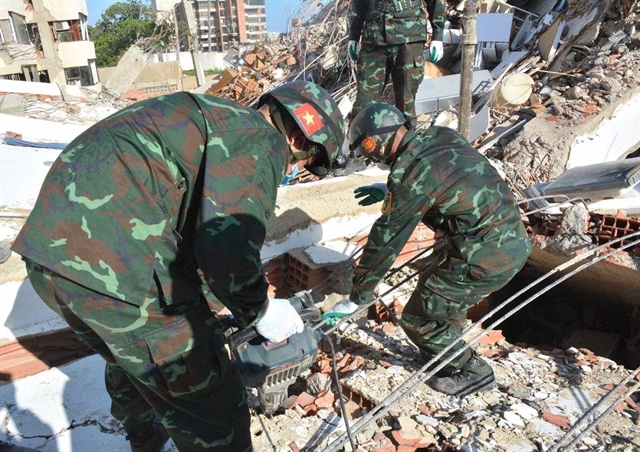 |
| Vietnamese soldiers search for victims in the rubble in Venezuela. — VNA/VNS Photo |
How do you assess the relationship between military strength and the spirit of the 'six dares' in enhancing Việt Nam's international standing, particularly for officers serving in UN peacekeeping missions?
In the current context, military strength encompasses not only economic, defence, security, scientific and technological capabilities and overall national power, but also the quality of human resources, political resolve and the international integration capacity of officials engaged in external affairs.
For the Việt Nam People's Army personnel serving in the UN peacekeeping operations, the relationship between military strength and the spirit of the 'six dares' is a unity, providing the foundation for enhancing Việt Nam's prestige and standing on the international stage.
First and foremost, effective defence diplomacy cannot exist without genuine military strength. Việt Nam's deployment of staff officers, military observers, a Level-2 Field Hospital, an Engineering Unit and, increasingly, officers in leadership positions within UN peacekeeping missions is the result of sustained efforts to build a revolutionary, regular, elite and increasingly modern military.
The strength has been built on professional expertise, foreign language proficiency, command and management capabilities, the ability to operate effectively in multinational environments and, above all, the enduring qualities of Uncle Hồ's Soldiers in an international setting.
However, the strength can only be translated into diplomatic influence when guided by courage and a willingness to innovate. The requirement to build a team of officials with the spirit of 'six dares': dare to think, dare to speak, dare to act, dare to take responsibility, dare to innovate and create and dare to confront difficulties and challenges for the benefit of the nation and people, is a concrete manifestation of this.
For peacekeeping officers, the spirit is reflected in their willingness to serve in unstable and high-risk environments, adapt proactively to multicultural settings, respond flexibly to complex situations and actively propose initiatives to improve the effectiveness of UN missions.
Against the backdrop of intensifying strategic competition among major powers and increasingly complex non-traditional security challenges, the 'six dares' also give Vietnamese officers the confidence to engage actively in multilateral forums, contribute new ideas and gradually participate in developing international procedures and standards for peacekeeping. This reflects a broader shift in mindset from 'participating to learn' to 'participating to contribute, shape outcomes and lead' in areas where Việt Nam possesses recognised expertise and comparative advantages. — VNS
Opinion
 Opinion
 Opinion
 Opinion
 Opinion
 Opinion
 Opinion
 Opinion
 Opinion
 Opinion
 Opinion
 Opinion
 Opinion
 Opinion
 Opinion