 Politics & Law
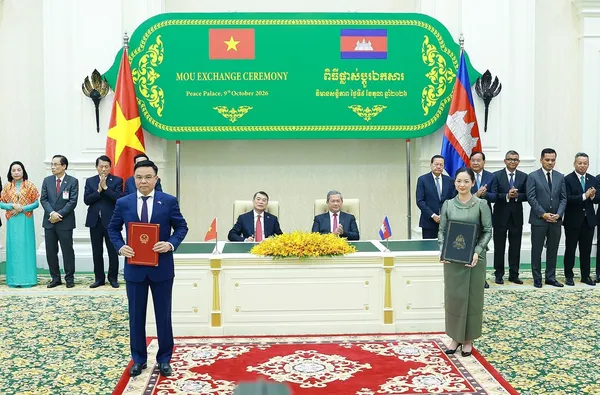
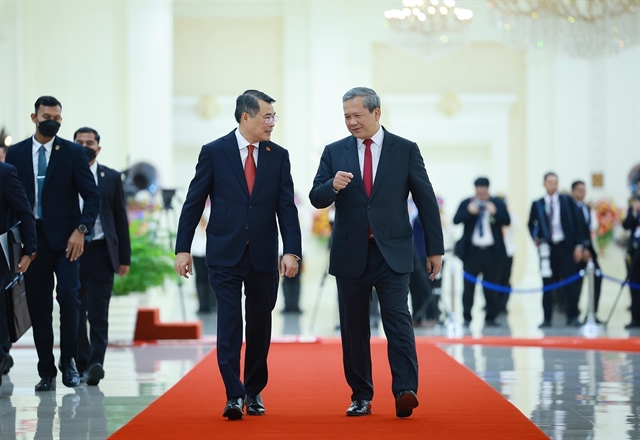
Vietnamese Prime Minister meets Cambodian National Assembly President
1.
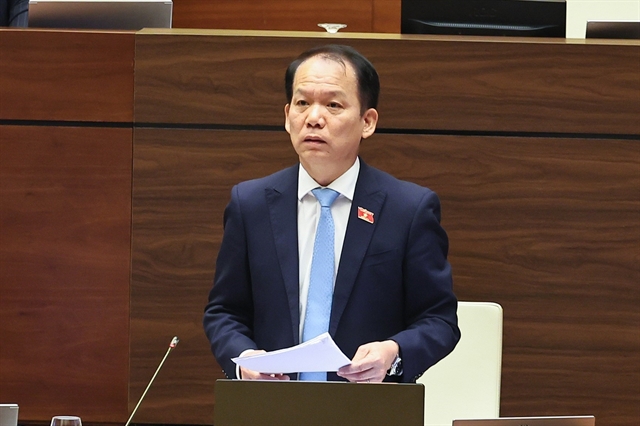 |
| Minister of Justice Hoàng Thanh Tùng speaks at the ongoing first extraordinary session of the 16th-tenure National Assembly on amendments to the Law on Grassroots Mediation on Monday. — VNA/VNS Photo Doãn Tấn |
HÀ NỘI — Lawmakers have called for stronger confidentiality safeguards for online mediation and clear mechanisms to prevent mediation from being misused in cases involving vulnerable people, as the National Assembly (NA) discussed amendments to the Law on Grassroots Mediation on Monday.
Speaking at the ongoing first extraordinary session of the 16th-tenure NA, Deputy Huỳnh Ngọc Liêm of Lâm Đồng Province said allowing online or hybrid mediation was appropriate given current social and technological conditions.
He cited a dispute within a family over a shared access road, with one family member working in HCM City and another living locally. Requiring all parties to return for an in-person meeting could take considerable time, whereas an online meeting could enable a mediation team to bring the parties together within days.
However, Liêm warned that moving mediation online could create new risks to confidentiality and personal data.
A participant could secretly record a session using another device and share excerpts on social media or in community groups. A third person could also listen to the proceedings without the knowledge of the other parties, while images, voices and sensitive information about family circumstances or assets could be recorded and shared.
“In this case, a mediation session intended to mend relationships could instead become a source of new conflict,” he said.
Liêm argued that the revised law should establish basic safeguards for online mediation, rather than simply authorising the format and leaving detailed regulations to the Government.
First, online mediation should only be conducted with the consent of all parties. Technological convenience should not result in online mediation being imposed on citizens.
The identities of participants should also be verified and access to mediation sessions controlled, ensuring that parties know who they are communicating with and who can access the information discussed.
Third, recording, copying, storing or sharing the contents of a mediation session with third parties should require the consent of the involved parties, unless otherwise provided by law. Such activities should also comply with regulations on personal data protection and information security.
“The issue is not simply moving mediation into the digital environment. More importantly, we must preserve the values that make grassroots mediation effective: voluntariness, confidentiality, sincerity and trust,” Liêm said.
Deputy Lưu Thị Thúy Hằng of Phú Thọ Province called for clear legal safeguards to protect vulnerable people, particularly women and children.
She said there have been cases in which women and children suffering domestic violence or serious abuse were nevertheless subjected to mediation at the local level due to a ‘keeping the peace at all costs’ approach.
“This can allow perpetrators to avoid accountability while victims continue to suffer abuse, and delay the application of urgent protective measures,” Hằng said.
She proposed amending Article 3 of the draft law to explicitly prohibit mediation in cases involving domestic violence, child abuse and human trafficking. Mediation should also not be used as a means of delaying judicial measures designed to protect victims, she added.
Hằng also supported provisions allowing other people with relevant knowledge and experience to be invited to mediation, including village elders, community leaders, respected members of clans, legal professionals and people with extensive social experience.
However, she proposed that the law require invited participants to be independent, objective and free of conflicts of interest with the parties involved. The Government should also set out procedures for inviting participants and define the responsibilities of the agencies and organisations where they work.
Regarding mediation in ethnic areas, Hằng said the requirement for mediation teams to include ethnic mediators and interpreters reflects the State’s ethnic policies.
She proposed requiring ethnic mediators to represent the predominant ethnic community in the locality, preventing potential barriers arising from differences in language and customary practices.
Deputy Trương Hồ Hải of An Giang Province said that the past 12 years have showed that many complicated disputes involving land, marriage, inheritance, ethnic affairs and religion require the participation of people with legal expertise, specialised knowledge or particular prestige in the community.
Such provisions would help mobilise social resources while preserving the voluntary and community-based nature of grassroots mediation, he said.
Minister of Justice Hoàng Thanh Tùng presented a report explaining and incorporating lawmakers’ comments on the revised draft law.
The draft focuses on strengthening the mediator network through election and appointment mechanisms, clarifying the types of disputes eligible for mediation, promoting the use of information technology and providing financial support for disadvantaged areas.
Tùng said the draft continues to facilitate technological applications, including online mediation, but would not impose the format rigidly. Implementation would have to reflect practical conditions, particularly in remote and isolated areas, where technological infrastructure remains limited.
The drafting body would continue reviewing and supplementing safeguards to ensure that online mediation is conducted appropriately and serves its intended purpose, he said. — VNS
Politics & Law
 Politics & Law
 Politics & Law
 Politics & Law
 Politics & Law
 Politics & Law
 Politics & Law
 Politics & Law
 Politics & Law
 Politics & Law
 Politics & Law
 Politics & Law
 Politics & Law
 Politics & Law
 Politics & Law