 Opinion
Việt Nam-Cambodia trade gathers pace towards $20 billion target
1.
 |
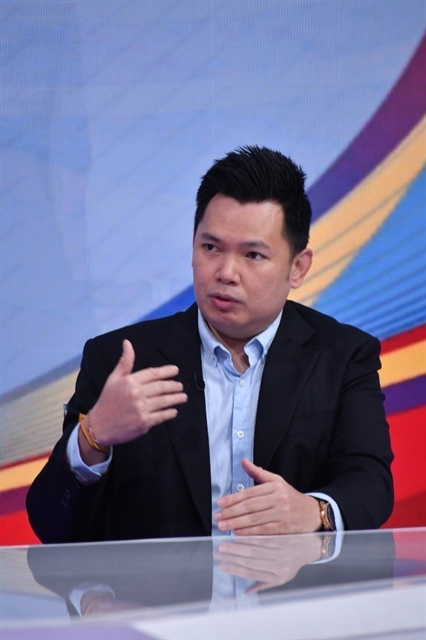
| Dr Huong Le Thu, Chair of Advisory Board, Australia Vietnam Policy Institute (AVPI) |
General Secretary of the Communist Party of Việt Nam Central Committee and President of the Socialist Republic of Việt Nam Tô Lâm departed Hà Nội on Sunday for state visits to Australia and New Zealand, which run until August 14. On this occasion, Việt Nam News reporter Nguyễn Khánh Chi spoke with Dr Huong Le Thu, Chair of Advisory Board, Australia Vietnam Policy Institute (AVPI) to gain insights into the significance of the visit and the potential of the bilateral relationship between Việt Nam and Australia.
First of all, how do you view the significance of the visit to Australia by Việt Nam’s top leader?
This is a significant moment for both countries. A visit at this level demonstrates that neither side wants the Comprehensive Strategic Partnership to remain a document — they want to deliver on it. It reflects a shared commitment to move from ambition to tangible outcomes: in trade, education, clean energy and the people-to-people ties that anchor the relationship. Coming at a time of real uncertainty in the global economy, it also underlines something both capitals understand — that trusted, complementary partners matter more than ever.
Following the elevation of the bilateral relationship to a Comprehensive Strategic Partnership in 2024, what have been the key areas of progress and cooperation between the two countries?
The most important progress for me is trust-building. Trade and investment ties have continued to broaden, education collaboration remains a genuine strength, and both sides have identified clean energy, critical minerals and the green transition as areas where their strengths line up. There is no shortage of areas for cooperation and complementarity. But none of that can reach the depth, if it's not based on strong foundations of trust.
To achieve the goal of US$20 billion in trade turnover and a doubling of two-way investment in the coming time, what breakthrough measures should both nations prioritise?
Ambitious targets need practical enablers. I'd prioritise three.
First, move up the value chain — the growth isn't in more of the same trade, but in higher-value links across clean energy, critical minerals, agribusiness and advanced manufacturing.
Second, lower the friction for investors — regulatory predictability, streamlined approvals and clearer pathways matter as much as any headline deal.
Third, connect the ecosystems, not just the governments — universities, industry and start-ups on both sides. Targets are useful discipline, but they're reached through the unglamorous work of making it easier to do business.
Australian Minister for International Development, Small Business, and Multicultural Affairs Anne Aly praised Việt Nam’s new development model as a vital foundation for bilateral cooperation during her official visit to Hà Nội in late July. Could you please elaborate on how Việt Nam’s new development model will redefine the focus areas for the bilateral ties in the coming time?
Việt Nam's shift toward science, technology, innovation, the private sector and human capital is genuinely significant, because it changes what a partner like Australia can most usefully offer.
As Việt Nam moves up the value chain, the centre of gravity of the relationship moves too — from traditional trade toward research collaboration, skills, technology and the green economy. That's a good fit for Australia's strengths.
The model also plays to what has always been the relationship's foundation: investment in people. So rather than replacing the existing agenda, Việt Nam's new direction sharpens it — and puts human capital and innovation squarely at the centre.
Given Việt Nam's focus on science, technology, innovation, private sector and human capital, how can Australia support or strengthen the partnership?
Australia's most valuable contribution is in capability-building rather than capital alone. Concretely: deeper research partnerships between universities and industry; transnational and industry-connected education that builds the skilled workforce Việt Nam's transition requires; and collaboration that helps move ideas from the lab to the market — technology transfer, commercialisation, support for start-ups.
The green transition and critical minerals are natural proving grounds, where Australian capability and Vietnamese ambition genuinely align. The guiding principle should be partnership, not assistance — building things together, with Vietnamese priorities in the lead.
Beyond defence, trade and investment, how significant is education and training?
I'd argue it's foundational — arguably the most durable pillar of the entire relationship. Decades of education collaboration have built a deep reservoir of trust: Australian-educated alumni across Việt Nam, a large Vietnamese community in Australia, and student and professional networks that carry the relationship well beyond government.
As emphasised earlier, trust is strategic capital. And as both countries manage technological change and economic transition, skills become the common thread running through every other pillar — trade, innovation, the green economy. Education isn't a soft complement to the relationship; it's the engine underneath it. VNS
Opinion
 Opinion
 Opinion
 Opinion
 Opinion
 Opinion
 Opinion
 Opinion
 Opinion
 Opinion
 Opinion
 Opinion
 Opinion
 Opinion
 Opinion