 Opinion

Coca-Cola Hong Kong Launches "Coca-Cola Recycling Academy"
1.
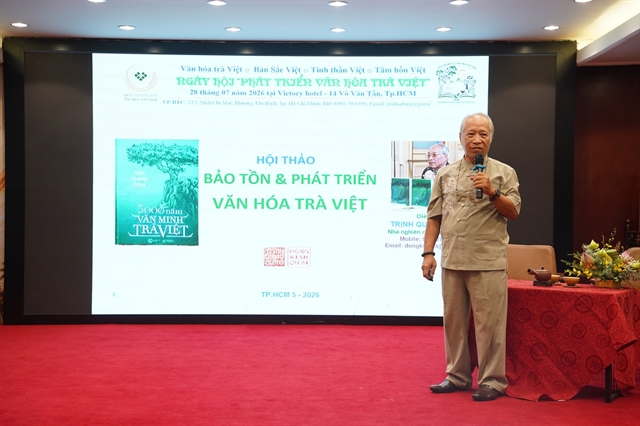 |
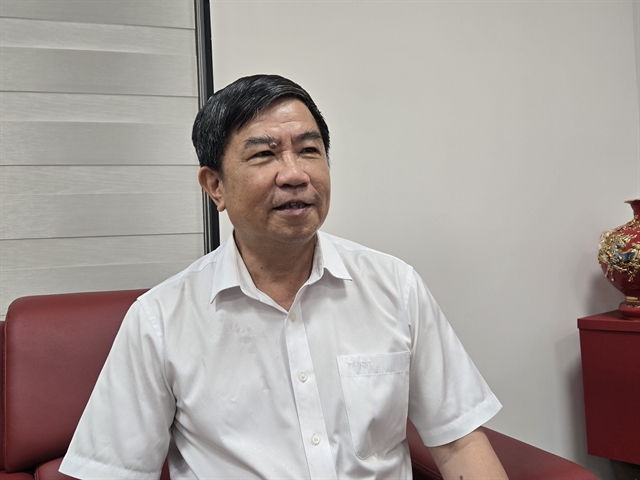
| Trịnh Quang Dũng, chairman of the Việt Nam Tea Culture Association, at the launch of the association and its HCM City and Đà Nẵng branches. Photo courtesy of the Vietnam Culinary Culture Association |
As Vietnamese cuisine enjoys growing international recognition, attention is turning to how the country can transform its rich culinary heritage into a globally recognised national brand. Speaking to Việt Nam News reporter Ly Ly Cao, Trịnh Quang Dũng, chairman of the Vietnam Tea Culture Association, shares his views on Việt Nam's ambitions to become a true culinary destination.
Việt Nam is considering a project to position itself as the 'Capital of Cuisine'. Do you think this is the right time for such an initiative?
I believe this is both a timely and highly promising initiative. Việt Nam is entering a new stage of development and the country has never enjoyed stronger momentum in terms of its international image. At the same time, we possess an exceptionally rich culinary heritage, supported by thousands of years of history and cultural diversity. Those are advantages that many countries cannot easily replicate.
If this project had been launched two or three decades ago, it would have faced far greater challenges because Việt Nam's international profile was very different.
Today, however, the world sees Việt Nam from a new perspective. The country's economic achievements, major infrastructure projects and growing international presence have all contributed to strengthening the national brand. As the image of Việt Nam continues to improve, our cuisine naturally benefits from that positive perception.
A country's reputation acts as an invisible asset. When people think of Germany or Japan, they immediately associate those countries with certain qualities. Việt Nam is gradually building a similar reputation, and cuisine should become one of the strongest expressions of that national identity.
Vietnamese food is already popular among international visitors. Why hasn't that popularity translated into a stronger global culinary brand?
One of our biggest weaknesses is communication. Việt Nam has extraordinary culinary resources, but we have not promoted them effectively.
In recent years, many young people have become very creative in producing digital content, which is encouraging. They understand modern communication and know how to attract audiences.
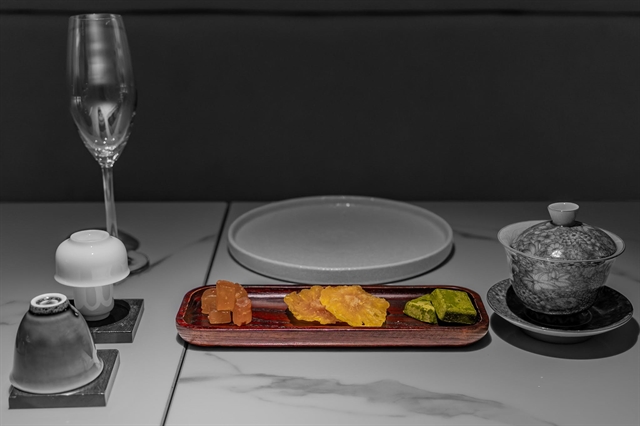 |
| AUTHENTIC: A tea-serving set created for the Taste Vietnam Show – Pure Sip by Munterra. Photo courtesy of the Vietnam Food & Beverage Ecosystem |
However, many of these campaigns focus too much on visual appeal while overlooking the historical and cultural depth behind Vietnamese cuisine.
Sometimes they present images that are attractive but no longer reflect authentic Vietnamese identity. If international audiences cannot recognise the cultural roots behind what they see, the message becomes much weaker.
The same principle applies to cuisine. Every campaign promoting Vietnamese food should clearly communicate what makes it uniquely Vietnamese instead of simply presenting beautiful dishes.
Another important point is that Vietnamese cuisine aligns remarkably well with global consumer trends. Around the world, people are becoming increasingly concerned about health. Consumers are paying closer attention to natural ingredients, balanced nutrition and environmentally friendly food production. In many ways, Vietnamese cuisine already embodies these values.
Our food is built largely around fresh vegetables, herbs, fruits and fibre-rich ingredients. It generally contains less fat than many other cuisines while remaining fresh, balanced and nutritious. This is precisely the direction global gastronomy is moving toward.
Rather than simply telling the world that Vietnamese food tastes good, we should also communicate that it represents a healthy lifestyle. Taste is subjective, but health is becoming a universal concern. That is where Việt Nam has a genuine competitive advantage.
You have suggested that Việt Nam needs a unified strategy for promoting its cuisine. How can the country achieve that while preserving the diversity of local culinary traditions?
The first requirement is to have a unified national direction. At present, some localities have done an excellent job of promoting their cuisine, while others have much less experience.
Not every province has the same resources or expertise in branding and communications. That is why the overall strategy should be coordinated at the national level.
This does not mean everything has to be centralised. Once a common framework and standards have been established, implementation can be delegated to local authorities and appropriate partners.
Local communities should continue to develop their own culinary identities and compete in a healthy manner, but there must always be clear guidance to ensure consistency in how Vietnamese cuisine is presented to the world.
One challenge we often encounter is that many provinces claim ownership of the same dish. Take bánh xèo, for example. Different regions prepare it differently, and each believes its version is the authentic one. In my view, that is not the real issue. Culinary diversity is perfectly natural.
What truly matters is the cultural story behind each dish. A dish without history or cultural context is far less convincing than one that carries a meaningful narrative. That is what gives food its identity and emotional value.
For example, bánh chưng is much more than a traditional rice cake. It represents thousands of years of Vietnamese civilisation and is closely connected to the country's origin stories. Few dishes in the world possess such a long cultural history.
Its preparation is equally remarkable. Every ingredient is natural, the wrapping process requires great care, and the cooking method reflects centuries of accumulated knowledge. Traditional preservation techniques, many of which have been handed down through generations, also demonstrate the ingenuity of Vietnamese culinary culture.
Even today, some of these methods continue to impress scientists because they reveal practical wisdom developed long before modern food science emerged. When people remember a dish, they should also remember the history, traditions and values associated with it. That is how cuisine becomes part of a country's cultural identity.
Regional competition is becoming increasingly intense, particularly with countries in the region. What gives Việt Nam a distinctive competitive advantage?
Việt Nam's greatest strength lies in its history. Throughout thousands of years, Việt Nam has absorbed influences from different cultures while preserving its own identity.
We have inherited more than 4,000 years of indigenous culinary traditions, experienced centuries of interaction with Chinese cuisine, and later incorporated many techniques and ingredients introduced through French cuisine. As a result, Vietnamese cuisine has become a remarkable fusion of East and West.
At the same time, Việt Nam is an ethnically diverse country with distinct culinary traditions stretching from the north to the south. Every region has developed its own ingredients, cooking techniques and flavours, creating extraordinary richness within a single national cuisine.
This combination of indigenous traditions and international influences gives Vietnamese cuisine a unique character. In many ways, it integrates elements from some of the world's greatest culinary traditions while remaining unmistakably Vietnamese. That is one reason why foreign visitors often feel comfortable dining in Việt Nam.
European visitors can recognise familiar characteristics in dishes such as bò sốt vang or even phở sốt vang, while those accustomed to Chinese cuisine also find flavours and techniques that resonate with their own culinary experiences.
At the same time, Việt Nam offers countless traditional dishes that are unlike anything found elsewhere, from grilled mountain specialities to foods cooked in bamboo tubes, many of which carry fascinating historical and cultural stories. This ability to combine familiarity with originality is one of the defining strengths of Vietnamese cuisine.
How should Việt Nam evaluate whether the 'Capital of Cuisine' initiative has been successful?
Tourism provides one of the clearest indicators. If international visitor numbers continue to grow, if more tourists choose to return to Việt Nam and if they consistently describe Vietnamese cuisine as one of the highlights of their trips, then we are moving in the right direction.
Today, many visitors already say that beyond Việt Nam's landscapes and cultural attractions, one of the country's greatest appeals is its food. They appreciate not only its flavours but also the fact that Vietnamese cuisine is widely available, particularly through street food, and offers excellent value for money.
Finding food that is fresh, enjoyable and affordable at the same time is not something every country can offer.
If more international visitors continue to associate Việt Nam with those qualities and choose to return because of the country's culinary experiences, that will be one of the strongest signs that Việt Nam is succeeding in establishing itself as a globally recognised culinary destination. — VNS
Opinion
.jpg) Opinion
Opinion
 Opinion
 Opinion
 Opinion
 Opinion
 Opinion
 Opinion
 Opinion
 Opinion
 Opinion
 Opinion
 Opinion
 Opinion
.jfif) Opinion
Opinion