 Opinion

Visit Vietnam app to showcase AI-powered platform at ITB Asia 2026
1.
|
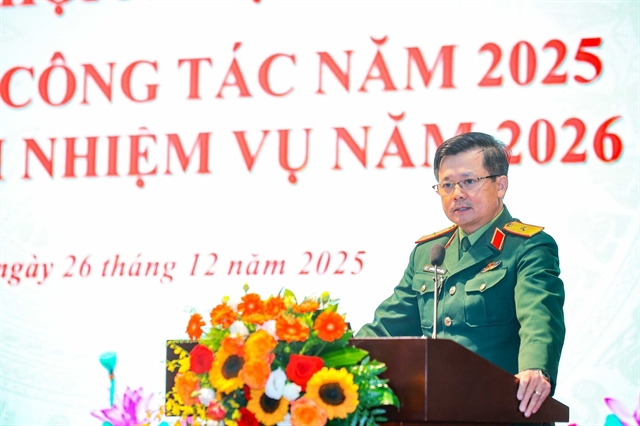
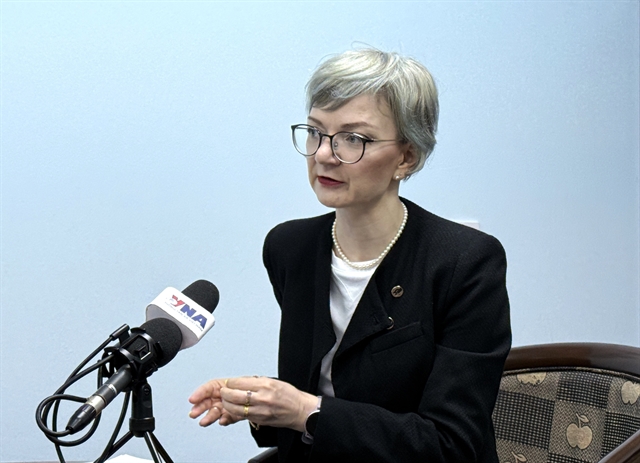
| Major General Dương Minh Hải, Director of the Military Science Department under the Ministry of National Defence. — VNA/VNS Photo Hoàng Hiếu |
Major General Dương Minh Hải, Director of the Military Science Department under the Ministry of National Defence speaks to the Quân đội Nhân dân (People’s Army) Newspaper about the military's efforts to achieve breakthroughs in research, technological mastery and the development of strategic defence products
How has the Military Science Department advised the Central Military Commission and the Ministry of National Defence on advancing military science and technology?
The department has taken a proactive role in advising the commission and the Minister of National Defence on policies, mechanisms and plans to advance science and technology as well as innovation, in support of military modernisation and national defence.
In recent years, the department has proposed and commissioned a wide range of research projects focused on developing high-tech weapons and military equipment of strategic importance. These projects incorporate multiple foundational and core technologies, with many research institutes, academies and military educational establishments undertaking the research, design and production of such systems for the first time. Beyond delivering tangible products, the programmes are intended to strengthen domestic research capabilities, build technological self-reliance and cultivate a highly skilled scientific workforce for both the military and the nation.
Research and innovation activities have been carried out across the armed forces in a coordinated and determined manner, producing significant results. The ministry has accepted a number of newly developed products, particularly those involving strategic technologies.
These large-scale projects require mastery of multiple core and enabling technologies, substantial investment and advanced scientific expertise, laying a solid foundation for the next generation of modern weapons and military equipment. Alongside research and production, the ministry has also prioritised programmes aimed at operating, maintaining and providing technical support for high-tech weapons, thereby enhancing technical support capabilities and improving combat readiness across the armed forces.
What are the main challenges facing military scientific research and how can they be addressed?
There are three major challenges.
First, many technologies required to manufacture advanced weapons and military equipment are subject to export restrictions or technology transfer controls. At the same time, strategic defence products integrate multiple foundational and core technologies, many of which are being researched in Việt Nam for the first time. As a result, research teams must develop technological expertise while carrying out the research itself. In addition, domestic laboratories, research and testing facilities, measurement capabilities and supporting industries still face a number of limitations.
Second, the workload in science and technology is expanding rapidly, with multiple national priority programmes being implemented simultaneously, while the supply of highly qualified personnel remains limited, particularly chief engineers and leading scientists.
Third, some units continue to face difficulties in implementation, coordination among agencies and units has yet to be fully synchronised, and the application of policies and mechanisms relating to science, technology and innovation remains inconsistent.
To overcome these obstacles and remove bottlenecks, the department has advised the commission and the ministry to adopt a comprehensive package of measures. These include strengthening the accountability of Party committees and commanding officers at all levels in directing science and technology tasks, fully harnessing the expertise of the scientific community, further improving institutional frameworks and policies, establishing strong and specialised research teams, and selecting leading scientists and chief engineers to oversee major projects.
The ministry will also continue investing in research infrastructure, key laboratories and testing and measurement capabilities. At the same time, it will expand scientific and technological cooperation both within and beyond the military, make better use of national science and technology resources, broaden international collaboration, strengthen financial oversight, and maintain regular inspection and supervision to promptly resolve issues arising during project implementation.
What will be the department's priorities in implementing the Minister of National Defence's directive to 'resolve to research and produce weapons and military equipment, overcome challenges, and ensure that although we start later, we do not fall behind'?
The demands placed on the military science sector will continue to grow, requiring not only timely implementation but also higher quality and greater technological self-reliance.
In line with the direction of the commission and the ministry, the department will continue advising on the effective implementation of research programmes to develop strategically significant weapons and military equipment during the 2025-30 period, ensuring that science, technology and innovation tasks are completed on schedule, achieve their objectives and deliver maximum effectiveness.
The department will work closely with relevant agencies inside and outside the armed forces to address policy, resource and implementation challenges. It will intensify inspections, guidance and supervision to accelerate key research programmes, while promoting administrative reform and digital transformation in military science management.
It will also enhance the use of specialised databases, military science management software and quality management systems compliant with the ISO 9001:2015 standard to improve command, coordination and operational efficiency.
In line with the Minister of National Defence's strategic vision, the department will capitalise on the advantages available to late-developing countries by selectively adopting advanced scientific and technological achievements from abroad. This approach aims to shorten the research, development and technology acquisition cycle while enabling leapfrog advances in strategically important defence fields.
To fulfil its assigned tasks, the department will focus on refining institutional frameworks, modernising science and innovation governance, accelerating the development of strategic digital infrastructure and data resources, and enhancing its advisory role in identifying priority areas for mastering and developing strategic, foundational and core technologies.
The efforts are intended to support the development of an autonomous, self-reliant, dual-use and modern defence industry, while promoting fundamental scientific research that provides the knowledge base necessary to strengthen the country's long-term strategic autonomy in developing and producing advanced military equipment. — VNS
Opinion
 Opinion
 Opinion
 Opinion
 Opinion
 Opinion
 Opinion
 Opinion
 Opinion
.jfif) Opinion
Opinion
 Opinion
 Opinion
 Opinion
 Opinion
 Opinion