 Opinion
Vietnamese scientist wins ASEAN-US Science Prize for Women
1.
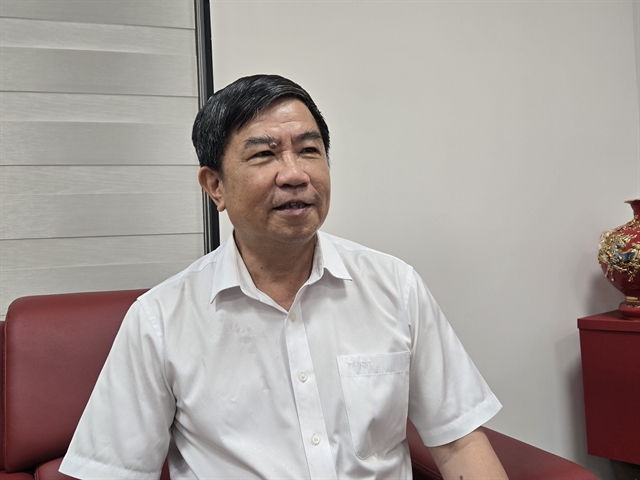 |
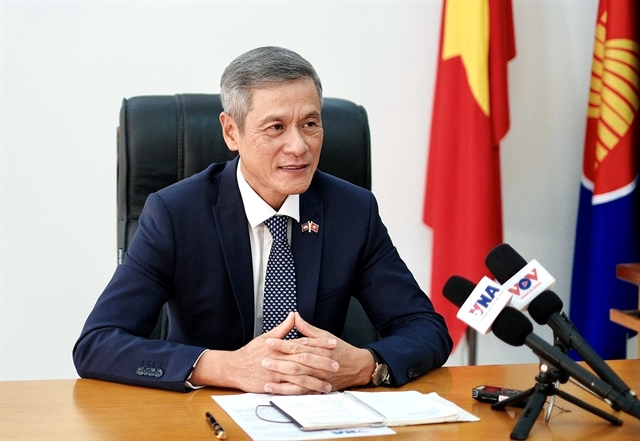
| Lieutenant General, Professor, Dr Trần Vi Dân, member of the Central Theoretical Council and member of the Minister of Public Security's Special Advisory Research Group. VNA/VNS Photo |
Lieutenant General, Professor, Dr Trần Vi Dân, member of the Central Theoretical Council and member of the Minister of Public Security's Special Advisory Research Group, talks to the Vietnam News Agency about the strategic relationship between national security and sustainable development, one of the key issues discussed at the Third Plenum of the 14th Party Central Committee.
One of the four strategic shifts highlighted at the Third Plenum of the 14th Party Central Committee is the move from responding to individual risks towards proactive prevention, strengthening national resilience and firmly safeguarding the country. Could you explain the significance of this strategic shift in the current context?
First of all, this reflects an important advance in strategic thinking about strategic autonomy in national construction and defence. It reflects a growing recognition of the need to strengthen the State's capacity for strategic governance, improve long-term forecasting, and enhance the effectiveness of public administration in the context of deeper international integration.
Strategic autonomy requires a long-term vision. Rather than focusing solely on responding to threats, we must place greater emphasis on creating the conditions that reduce risks before they emerge. It also requires us to anticipate challenges in a holistic and interconnected way so that we can develop integrated, sustainable solutions and implement them effectively to safeguard the nation.
The international and regional landscape continues to evolve rapidly in increasingly complex and unpredictable ways, profoundly affecting every country's development environment.
Domestically, the Party, the people and the armed forces are working to implement the Resolution of the 14th National Party Congress, guided by a commitment to greater strategic autonomy, self-reliance and confidence as Việt Nam enters a new era of national development.
This new context presents both significant opportunities and considerable challenges, particularly as traditional and non-traditional security threats become increasingly intertwined. Against this backdrop, shifting from responding to individual risks towards proactive prevention, strengthening resilience and firmly safeguarding the nation represents a fundamental strategic adjustment that is both timely and well suited to the challenges we face today.
In his remarks at the Third Plenum, Party General Secretary and State President Tô Lâm made an important observation, saying: "Security is a prerequisite for development, while sustainable, inclusive and resilient development forms the foundation of security." Could you elaborate on the theoretical and practical significance of this statement?
National security is a matter of fundamental importance to every nation. Without security, there can be no stability, and without stability, sustainable development is impossible. Safeguarding national security is therefore a core and enduring responsibility of the Party, the people and the armed forces. Its ultimate goal is not only to maintain a strong and stable security environment, but also to create the conditions that enable national development.
The Party leader's remarks further clarify the relationship between security and development, and the role each plays in reinforcing the other.
Without a secure environment, it is difficult to maintain stability, let alone achieve sustained development, particularly as Việt Nam becomes increasingly integrated into the global economy. Conversely, effective and sustainable development strengthens the country's overall capability, creating the resources and resilience needed to reinforce national security. The relationship between security and development is therefore both organic and dialectical, with each reinforcing the other.
Today, safeguarding national security is no longer solely about protection. It also encompasses creating the conditions for development and serving as a driver of national progress. At the same time, development, particularly economic development, together with a strong political system, social stability, public consensus and Việt Nam's growing international standing, provides an increasingly solid foundation for ensuring national security.
The Party General Secretary and State President's remarks offer strategic guidance for this new stage of national development, as the entire Party, people and armed forces work to turn the Resolution of the 14th National Party Congress and other strategic Party resolutions into concrete action. These efforts are directed towards the country's two centenary goals and the vision of becoming a high-income, developed nation by 2045 that is peaceful, independent, democratic, prosperous, civilised and happy.
While Việt Nam enjoys significant opportunities for development, it also faces a range of major challenges, many of which have the potential to threaten national interests. This makes safeguarding national security an even more critical task in the country's development process.
The Party General Secretary and State President's remarks also provide a clearer framework for understanding contemporary security issues, particularly the growing importance of non-traditional security threats.
Today, Việt Nam faces increasingly complex non-traditional security challenges, including human security, cybersecurity, cyber sovereignty, data security, the protection of critical infrastructure, transnational crime, terrorism, climate change, environmental degradation and pandemics. All of these have the potential to affect national security. Unless we are able to fully recognise these challenges and respond to them proactively, sustainable development will not be possible.
Among these non-traditional threats, environmental security deserves particular attention. Protecting the environment and responding proactively to climate change must now be approached within an integrated framework that sees national protection and national development as mutually reinforcing.
This is fully consistent with the direction set out by the 14th National Party Congress, which identifies socio-economic development in tandem with environmental protection as a central task. Economic growth must go hand in hand with environmental sustainability, supported by green transformation, appropriate policies and practical measures that ensure long-term economic, social and environmental sustainability while addressing broader security challenges.
Achieving these goals will require strong political commitment and a decisive shift from awareness to action. It will also require mobilising the combined strength of the entire political system, businesses and the public.
The Party has also stressed the importance of building 'an orderly, disciplined, safe, healthy, civilised, harmonious and prosperous society'. Could you elaborate on the significance of this vision in safeguarding national security, improving people's quality of life and strengthening public trust?
Building an orderly, disciplined, safe, healthy, civilised, harmonious and prosperous society is one of the Party's long-term strategic orientations. Over time, this vision has been further developed both in theory and in practice, with the ultimate goal of creating a living environment where people can enjoy a civilised, happy and fulfilling life.
The 13th National Party Congress established the conceptual foundation for this approach. Its documents clearly stated the need to safeguard human security and build an orderly, disciplined, safe and healthy society as a basis for national development. This was identified as a key task in the cause of national defence and protection. The 14th National Party Congress has since reaffirmed and further refined this strategic direction.
Building such a society goes hand in hand with the building of a socialist rule-of-law State of the people, by the people and for the people. It also goes hand in hand with implementing the Party's major resolutions across a wide range of areas, from institutional and legal reform to cultural development and economic growth.
In practical terms, an orderly, disciplined, safe, healthy, civilised, harmonious and prosperous society is one that enjoys peace and stability, upholds the Constitution and the law, ethical values, justice, fairness, compassion and humanity, and encourages respect for shared social norms and standards of conduct.
It is a society where the economy grows rapidly and sustainably on the foundation of modern science and technology; where the natural environment is protected; where a vibrant culture rooted in national identity continues to flourish; where national interests remain paramount; where human rights and human security are guaranteed; and where people enjoy both material prosperity and rich cultural and spiritual lives.
Such a society also plays a decisive role in enhancing Việt Nam's image and standing in the international community.
Building, maintaining and effectively governing such a society requires a high level of political determination across the entire political system under the Party's leadership. It also demands effective governance by the State and, equally importantly, the active participation of the people, who remain the foundation of national strength.
A society built on these values will strengthen national security, improve people's quality of life, promote human development, reinforce national unity, and deepen public trust in the Party, the State and the socialist system. VNS
Opinion
 Opinion
 Opinion
 Opinion
 Opinion
 Opinion
 Opinion
 Opinion
.jfif) Opinion
Opinion
 Opinion
 Opinion
 Opinion
 Opinion
 Opinion
 Opinion