 Opinion

Việt Nam national youth ice skating championships attract record 112 athletes
1.
The World Health Organisation (WHO) has launched a new technical package in Accra, Ghana, to help governments and communities implement seven proven strategies to reduce drowning deaths.
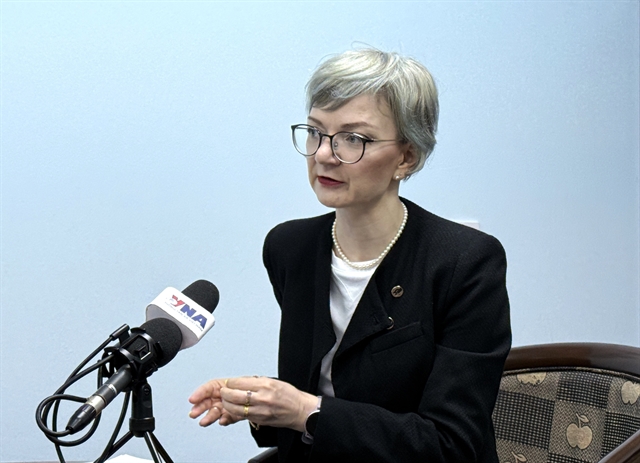
On the sidelines of the launch, Việt Nam News reporter Lê Hương spoke with Caroline Lukaszyk, Technical Officer for Unintentional Injury Prevention at WHO headquarters, about the significance of the initiative.
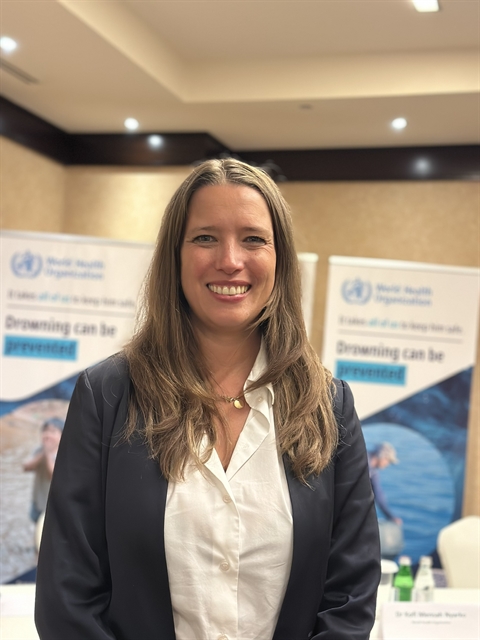 |
| Caroline Lukaszyk, Technical Officer for Unintentional Injury Prevention at WHO headquarters. VNS Photo Lê Hương |
Could you explain the significance of the Global Drowning Prevention Technical Package Launch Event being held in Accra, Ghana?
In the recent Global Situational Assessment on Drowning Prevention published in 2024, we saw that the African region had the highest drowning mortality rate of any region. We also saw that a number of policy interventions recommended by WHO are actually not implemented in African countries.
So what we wanted to do is to ensure that we have the biggest impact with this launch event and we're able to reach people and policymakers who would most benefit from the recommendations. We did want to hold the launch event in the African region, specifically in Accra, Ghana, with our colleagues here who are doing a lot of great implementation work in communities.
What are WHO’s key objectives for this event, and what outcomes do you hope to achieve?
We hope to really communicate.
Of course, drowning is preventable, but it's preventable through policy change. We want to communicate that this policy change isn't overwhelming. It doesn't require a huge amount of resources and investment.
It requires really strategic thinking, it requires partnership and collaboration, and these are all very achievable things.
This is not something that should be seen as a huge change to how things are already being done or a new portfolio of work, but rather something that we can work together to leverage existing resources, knowledge, expertise to really drive forward. So, that's what I really hope we can achieve through this, making these types of policy changes seem very practical and attainable.
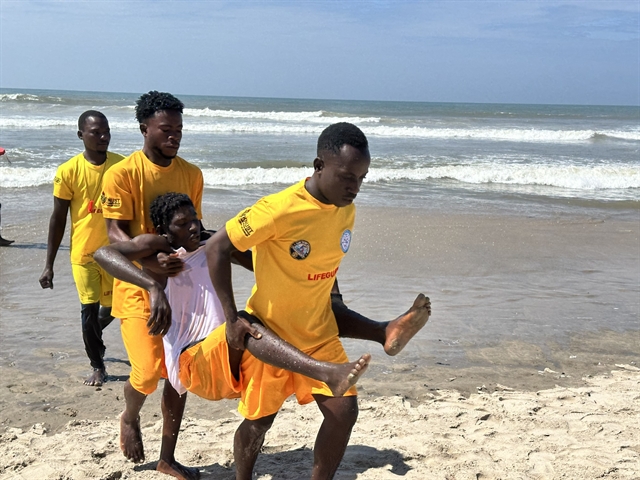 |
| A rescue team at La Pleasure Beach in Accra, Ghana practises providing first aid to a drowning victim. VNS Photo Lê Hương |
Why was Ghana chosen to host the launch, and what makes Africa a priority region for drowning prevention efforts?
When we did the situational assessment in 2024 in Ghana, we saw that a number of policies and mechanisms were missing.
They weren't in place in Ghana for drowning prevention. And then what we've seen in the last year or two, was an incredible amount of progress being made on national drowning prevention efforts in the country. As Becky Bavinger referred to in her remarks, over a six-month period, a national multi-sectoral coordination body was established in Ghana.
People came from different sectors. They came together to discuss drowning and discuss a strategic way to prevent it. The momentum currently happening in Ghana is extremely impressive, and we wanted to come and share that momentum globally to help inspire other countries, but also, in a way, continue to promote that momentum within Ghana as a country and really show and vocalise support for the work being done here.
In regard to the region, the African region as a whole has got the highest drowning mortality rate in the world, and it falls further behind on the key indicators of what WHO recommends for drowning prevention when compared to other regions. So we wanted to come to a place where we believe we could make a really big impact with this launch, where it would be most beneficial to countries.
What are WHO’s priorities for the coming months to strengthen global efforts to prevent drowning, particularly among children?
We have the technical package now. It's a very good tool. There's very clear guidance here.
It's very sector-specific. Now we need to focus on its uptake and its implementation. As WHO, we work with a number of member states around the world, but we do have specific interests from various countries who would like to do more detailed, in-depth dives into their drowning prevention situation.
So we are going to be entirely focused in the coming months on operationalising this package in partnership with governments. We'd like to know and understand how different governments are going to approach this, what adaptations might need to be made to the recommendations, and whether these can be shared broadly for other countries to apply as well. This is one global package of recommendations.
We need to understand how it can suit efforts from a country like Ghana to a country like Việt Nam to a country like the US. So this is going to be the next immediate thing that we are doing.
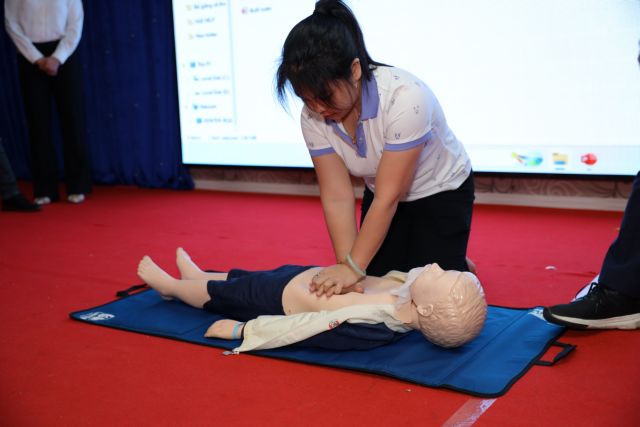 |
| Apart from swimming skills, drowning prevention and first aid skills are also taught across Việt Nam. Photo courtesy of Tobacco Free Kids |
What do you think about Việt Nam's efforts to prevent child drowning?
It has been really inspiring. And I think that you know, as WHO, we present Việt Nam as a case study to a number of countries who are just starting on their drowning prevention journey. It's been a long path that Việt Nam has been working through.
There have been significant political shifts. There has been a change in how government is structured. And yet, drowning prevention remains on the agenda to be invested in.
It remains part of national programmes. And a number of countries, they come to WHO and they say, well, it's not possible for us to do these sorts of drowning prevention interventions or these strategies because of ABCD. And we often present Việt Nam as a case study on how this is possible, on how very innovative and new mechanisms have been used to deliver swim training, for example, in communities using the portable pools.
Việt Nam pioneered that intervention. There was a huge issue with accessing swimming pools and Việt Nam had this idea around the portable pools. It really is, for us, very inspirational and something that we share.
What advice would you give Việt Nam on preventing child drowning in the face of climate change?
We live on a dynamic planet. Things are changing continuously.
The climate is changing. Now we're seeing a lot more drowning risk associated with things like heat waves. People will go into water bodies more often for longer periods of time to cool down from the heat.
We see not so much in Việt Nam, but in the northern hemisphere, there's a lot. The ice is getting much thinner because of climate change, and people are falling through the ice.
Because of climate change, drowning risks and drowning risk factors are changing and evolving all the time.
So for a country like Việt Nam, specifically around child drowning prevention deaths, the key advice would just be to monitor the situation, monitor the change in risk, monitor the change in risk profile and see how it evolves.
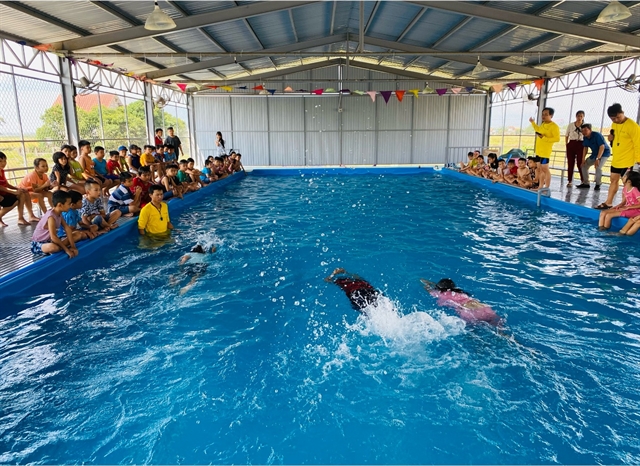 |
| Children learn to swim in a portable pool during a swimming class in Huế. Portable pools have become a practical solution for expanding swimming lessons in rural areas across Việt Nam. Photo courtesy of Tobacco Free Kids |
Thus far, the risk factors being addressed are around child skills, around swimming and water safety, but we need to also understand, perhaps, what is the exposure to flood risk for young children? What is the exposure to heat? How are children cooling down when it gets to really high temperatures?
What we don't know, we can't address. So again, it's constant monitoring, constant evaluation, and then being responsive and dynamic and reactive to what we're learning over time. VNS
Opinion
 Opinion
 Opinion
.jpeg) Opinion
Opinion
 Opinion
 Opinion
 Opinion
.jfif) Opinion
Opinion
 Opinion
 Opinion
 Opinion
 Opinion
 Opinion
 Opinion
 Opinion