 Opinion
Việt Nam, Singapore promote cooperation through Party-to-Party channel
1.
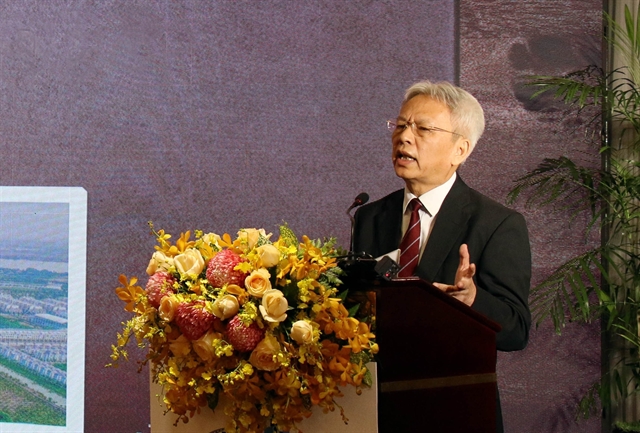 |
| Nguyễn Sĩ Dũng, former deputy chairman of the Office of the National Assembly. — VNA/VNS Photo Tiến Lực |
Nguyễn Sĩ Dũng, former Deputy Chairman of the Office of the National Assembly, spoke to the Chính Phủ (Government) News about the role of 'development-creating enterprises' in Việt Nam’s journey towards becoming a developed country.
Alongside the concept of a development-enabling State, you have also referred several times to the notion of "development-creating enterprises”. What, in your view, are the criteria for identifying such an enterprise?
If a development-enabling State creates the institutions and environment for development, development-creating enterprises build technology, markets, jobs, competitiveness and new growth drivers for the economy.
What defines a development-creating enterprise is not the size of its assets or revenue, but its ability to create new development capabilities whose impact extends beyond the enterprise itself.
In my view, there are three key criteria for identifying such an enterprise.
First, it must be willing to invest in strategically important sectors that open up new avenues for development, rather than simply exploiting opportunities that already exist.
It must also build development platforms, such as technology, skilled workers, innovation ecosystems, supply chains or national brands, thus strengthening the economy’s overall competitiveness.
Third, it must develop on the basis of modern governance, innovation, fair competition, transparency and compliance with the law. Only then can its contributions be sustainable and command public trust.
Looking back at four decades of development in Việt Nam’s private sector, if you had to name one development-creating enterprise, which company would you choose and why?
If we apply the criteria for development-creating enterprises that I have just outlined, I would say Vingroup is one of the most notable examples in Việt Nam today.
What is noteworthy is not simply that the group has expanded into multiple sectors, but that it has repeatedly chosen to invest in pioneering industries requiring substantial resources, long investment horizons and a high degree of risk. If successful and validated by the market, such choices can create value not just for the enterprise itself, but also help establish new industries, innovation ecosystems and new competitive capabilities for the economy.
What deserves recognition is not that every investment decision has necessarily been successful, but the spirit of taking the plunge and investing in sectors capable of creating new development capabilities for the country.
The group has repeatedly expanded into areas where Việt Nam’s private sector previously had little presence or had yet to play a leading role. This requires a long-term vision, innovation capacity and the courage to embrace challenges – qualities that not every enterprise is prepared to pursue.
In business, safety and profitability should presumably be the top priorities. What drives a firm to enter fields that most businesses tend to avoid?
I think pioneers do not enter difficult fields because they see fewer risks than others; they do so because they see greater long-term value. That is the difference between a mindset focused on exploiting immediate opportunities and one focused on shaping the future.
The development history of many countries shows that the most influential enterprises have often not followed paths that had already been laid out. They may have started in established sectors and along existing paths, but once they reached a certain threshold, they began choosing to tackle challenges that the market was still hesitant to address.
It is precisely in those areas that new competitive advantages and new growth drivers for the economy can emerge. Toyota, Samsung and TSMC, for example, each ventured into fields in which few people at the time believed they could succeed. Those unconventional choices ultimately helped transform the competitiveness of their respective countries.
From that perspective, Vingroup’s repeated investments in high-tech sectors with long investment cycles and significant risks reflect a noteworthy development mindset. The effectiveness of each project will continue to be tested by the market and by time, but the willingness to blaze new trails, embrace challenges and invest in the future is certainly something worth recognising.
Of course, being a pioneer does not always mean succeeding. But without enterprises willing to move ahead, it would be very difficult to develop new industries and new competitive capabilities. What therefore deserves encouragement is not only success, but also the ambition and courage to open new paths for the country’s long-term development.
Could you elaborate on the significance of such pioneering efforts?
The greatest significance of these pioneering efforts lies in their contribution to building new foundations for economic development. In the 21st century, countries no longer compete primarily on the basis of natural resources or cheap labour. Increasingly, they compete through technology, innovation, skilled workers, business ecosystems and the ability to participate in global value chains.
These foundations cannot be created by the State alone. The State has a role in creating the institutions and environment for development, but many of the economy’s new capabilities can only emerge through long-term investment and the pioneering spirit of the business community.
When an enterprise invests in technology, trains workers, develops a network of partners or builds a national brand, the value created does not belong solely to that enterprise. It can also generate spillover effects across other sectors and businesses.
Seen from this perspective, what is worth recognising about pioneering enterprises is not simply the scale of individual projects, but the development capabilities that those projects leave behind for the country.
Ultimately, a country’s long-term competitiveness is not determined by the number of major projects it has, but by the number of new capabilities accumulated through those projects. That is the most sustainable value that development-creating enterprises can contribute to Việt Nam’s future.
What should Việt Nam do to develop more enterprises and entrepreneurs with a strong sense of purpose and the capacity to lead?
The development history of many countries shows that major economic leaps have always been associated with the emergence of entrepreneurs with a broad vision. They not only build globally competitive enterprises, but also help open up new industries and create technologies, brands and competitive capabilities for their countries.
To turn its development aspirations into reality, Việt Nam needs to nurture a generation of entrepreneurs with a vision that looks beyond the present, a strong sense of purpose and the courage to pursue ambitious goals. But entrepreneurs of this calibre cannot mature through personal determination alone. They need institutions that encourage innovation, a level playing field for competition and a society that values and supports those willing to blaze new trails.
When these conditions come together, Việt Nam will not just have more successful enterprises. More importantly, it will develop new industries, new technologies and new competitive capabilities that can turn the country’s development aspirations into reality.
Because they choose difficult paths that no one has travelled before, pioneers inevitably face considerable risks and may not always receive public understanding at the outset. How should society respond to them?
In my view, a common feature of countries that have made breakthroughs and risen to become major powers is that they have created an environment that continuously nurtures entrepreneurs with ambition and leadership capacity. At the same time, public scrutiny and evaluation are normal and essential to ensuring healthy development. Trust and understanding do not arise automatically.
A society that encourages innovation must know how to value those who dare to think big, act boldly and take responsibility. At the same time, they must be judged by actual results, transparency and compliance with the law. We should encourage ambition without exempting anyone from responsibility, and support pioneers without abandoning the standards of a modern economy.
I also believe that society’s support should not be limited to encouragement. It should also be reflected in the trust placed in legitimate efforts to innovate. For pioneering entrepreneurs, that trust represents a highly valuable form of social capital, giving them additional motivation to pursue long and challenging journeys. And provided they are fair, society’s assessments, which may sometimes be demanding, can also help these entrepreneurs grow and mature.
I personally think that the aspiration to make Việt Nam a developed country will not be realised by the State or the business community alone. It must come from the synergy between a development-enabling State, a generation of development-creating entrepreneurs and a society willing to stand alongside those who are creating the future.
When these three forces come together, the aspiration for development will no longer be simply a goal pursued by the State or an effort made by businesses; it will become a shared strength of the entire nation. That is the strongest foundation for Việt Nam to rise and become a developed country. — VNS
Opinion
 Opinion
.jpeg) Opinion
Opinion
 Opinion
 Opinion
 Opinion
 Opinion
 Opinion
 Opinion
 Opinion
 Opinion
 Opinion
 Opinion
 Opinion
 Opinion