 Opinion
Việt Nam intensifies efforts to combat illegal fishing
1.
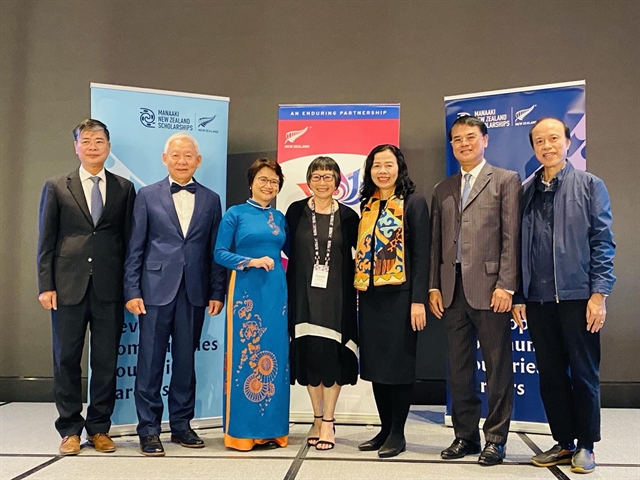 |
| Alumni from the ELTSO Intake 2 (2013 and 2014) of Victoria University of Wellington (Dr. Trần Văn second from left) take a group photo with their university teacher at the ceremony celebrating the 50th anniversary of Việt Nam-New Zealand diplomatic relations in Hà Nội on February 11, 2025. Photos courtesy of Trần Văn |
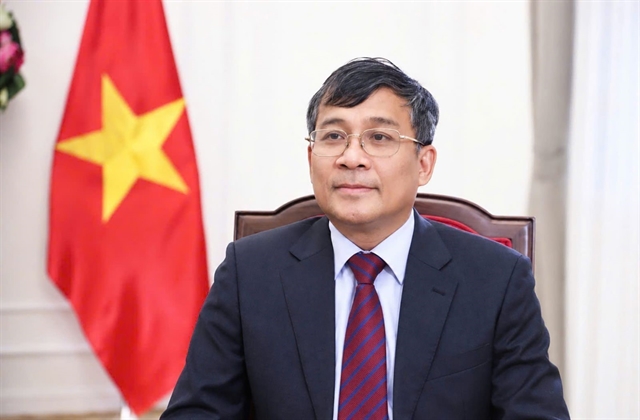
The visit to New Zealand by General Secretary of the Communist Party of Việt Nam Central Committee and State President Tô Lâm is a landmark in the history of the two countries' diplomatic ties, emphasised Dr. Trần Văn, former Deputy Head of the National Assembly’s Finance-Budget Committee and former Chairman of Vietnam-New Zealand Parliamentary Friendship Association in an interview with Việt Nam News reporter Nguyễn Khánh Chi.
How do you view the significance of the visit?
The visit to New Zealand by General Secretary of the Communist Party of Việt Nam Central Committee and State President Tô Lâm is a landmark in the history of the two countries' diplomatic ties. I’m convinced that the visit underscores the firm commitment of Việt Nam's top leaders to concretise the newly upgraded Comprehensive Strategic Partnership and the 2025–2030 Action Plan. These efforts are set to drive economic and trade breakthroughs, steering two-way trade toward the US$3 billion target.
The visit is also expected to unlock new opportunities in frontier sectors, including innovation, high-tech farming, climate action, and the green transition.
Sharing a maritime identity in an increasingly complex global landscape, the growing cohesion between Việt Nam and New Zealand demonstrates a mutual vision for a peaceful, stable, and law-abiding Asia-Pacific and Indian Ocean region that champions multilateral free trade.
Education and people-to-people diplomacy are among the five key pillars identified for strengthening in the 2025–2030 Action Plan. In your view, how have these ties contributed to the relationship so far, and what role will they play in the future?
Education and people-to-people ties are the strongest 'soft power' elements of the five pillars of our bilateral relationship. For many years, New Zealand has been a top-tier destination for Vietnamese students and researchers seeking a high-quality education. Government scholarships and training programmes in English and public management have played a direct role in upskilling Việt Nam’s workforce.
Having attended the ELTSO English course for senior officials at Victoria University of Wellington in 2013, I have seen this firsthand. Parents trust New Zealand as a study destination because of its superior learning environment, friendly locals, safety, beautiful scenery, and high-quality, reasonably priced food.
Looking ahead, I believe our educational partnership will reach a new level of depth. We are moving beyond traditional schooling into specialised research and collaboration in high-tech industries, marine resource management, climate-resilient agriculture, and digital transformation.
The links created by tourism, cultural activities, and the Vietnamese diaspora in New Zealand act as a bridge of trust between our nations. These personal connections will be key to boosting bilateral trade and tourism, facilitating labour agreements, and inspiring the youth of both countries to serve as 'ambassadors' for the Việt Nam-New Zealand friendship in the years ahead.
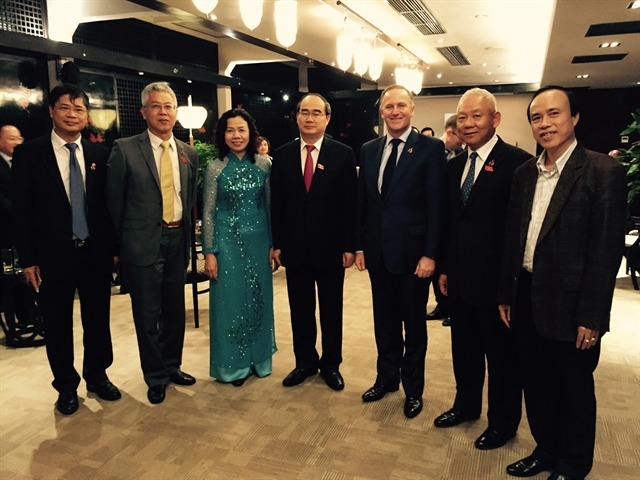 |
| Victoria University of Wellington ELTSO alumni take a group photo with then Politburo member, chairman of Vietnam Fatherland Front Nguyễn Thiện Nhân and New Zealand’s Prime Minister John Phillip Key in Hà Nội on November 16, 2015. |
During his phone talks with the New Zealand counterpart Christopher Luxon in May, Prime Minister Lê Minh Hưng proposed an expansion of scholarships and stronger links between two sides’ universities and research institutes. Given this, what do you consider to be the primary strengths of New Zealand’s higher education system? Furthermore, what specific mechanisms can both sides use to better connect our academic institutions?
New Zealand’s higher education system is defined by its global excellence and research prowess. Notably, all eight of its public universities rank in the top 3 per cent globally according to the QS World University Rankings, upholding strict standards for high-impact, practical research.
There is a natural synergy between New Zealand’s educational expertise and Việt Nam’s development goals. New Zealand is a world leader in R&D within fields critical to Việt Nam’s sustainability, such as high-tech agriculture, climate resilience, environmental governance, renewable energy, and public policy. Their future-focused teaching methods prioritise critical thinking and innovation, ensuring graduates meet the demands of the modern global workforce.
Moving forward, our academic institutions can broaden collaboration through joint degrees and flexible credit transfers in cutting-edge fields like data science and clean energy. We should also look toward establishing co-funded research centers to address urgent issues like smart agriculture in the Mekong Delta and marine conservation.
By facilitating faculty and PhD exchanges, we can encourage a vibrant flow of academic talent. Additionally, strengthening ties in Technical and Vocational Education and Training (TVET) and bridging the gap between academia and the private sector will be essential to solving skill shortages in the digital economy, tourism, and sustainable farming.
Which priority sectors should Việt Nam target to attract New Zealand trade and investment, and what is the strategic rationale behind these choices?
First and foremost is high-tech agriculture (Agritech) and high-value farming, as New Zealand is a global powerhouse in yield optimisation, food safety control, and cold chain management. Partnering with New Zealand enterprises will help Việt Nam modernise its agricultural ecosystem, enhance deep processing value, and meet the stringent quality standards of premium international markets.
Renewable energy and green transition technology serve as a strategic foundation for Việt Nam to attract investment from New Zealand. This sector directly supports Việt Nam's goal of reaching Net-Zero emissions by 2050 and aligns with the National Power Development Plan VIII. With its exceptional expertise in renewable energy, New Zealand can provide both advanced technological solutions and green investment capital to Việt Nam.
New Zealand also possesses highly dynamic and specialised technology sectors, such as the digital economy, educational technology (EdTech), and health technology (HealthTech). Joint venture projects involving educational software, telehealth platforms, and corporate digital transformation tools will contribute directly to Việt Nam’s National Digital Transformation Programme.
Furthermore, New Zealand’s premium food and beverage (F&B) sectors and supply chain infrastructure are perfectly positioned to meet the rising consumption demands of Việt Nam’s expanding middle class. At the same time, attracting investment into logistics infrastructure and processing plants within Việt Nam will enhance the country's capacity to export processed agricultural products to the global market.
Việt Nam views science, technology, and innovation as the primary drivers of new development models to accelerate sustainable growth. In this context, how can New Zealand contribute to strengthening cooperation in these sectors and advancing digital transformation in Việt Nam?
According to Resolution No 19-NQ/TW of the 3rd plenum of the 14th Party Central Committee on innovating the development model, science, technology, innovation, and digital transformation have been identified as key drivers for Việt Nam. Given New Zealand’s outstanding potential and strengths, both countries can elevate their cooperation in these fields through technology transfer and digital solutions in green agriculture (Agritech), as New Zealand is a global leader in smart agriculture, precision farming, and low-emission agricultural supply chain management.
New Zealand can enhance the sharing of soil and water data management technologies, digital sensor-based weather monitoring systems, and post-harvest preservation technologies. These solutions will directly support Việt Nam in implementing its green transition strategy, particularly the project to develop one million hectares of high-quality, low-emission rice in the Mekong Delta.
Both nations should connect their innovation ecosystems and intellectual networks by leveraging the roles of technology bridge organisations such as VietTechNZ (Vietnam Tech Network in New Zealand) and the National Innovation Center (NIC) of Việt Nam. This includes establishing startup incubators, organising joint applied research funds, and promoting collaboration between innovative startups from both countries in pioneering sectors such as Artificial Intelligence (AI), space/satellite technology, and biotechnology.
Digital transformation cooperation should also be expanded into essential public services where New Zealand possesses extensive experience, such as Digital Government, online public services, digital health (HealthTech), and online education (EdTech). This includes strengthening policy consultancy, transferring Telehealth platforms to Việt Nam's remote areas, and expanding the application of educational technology in schools to bridge regional gaps and enhance digital literacy for the population.
Finally, New Zealand can support Việt Nam in developing high-tech human resources and cybersecurity by training a highly-skilled digital workforce. This can be achieved by expanding specialised scholarship programmes, short-term training courses, and professional internships for Vietnamese engineers and technology experts in fields such as cloud computing, cybersecurity, Big Data analytics, and sustainable digital infrastructure management. VNS
Opinion
 Opinion
 Opinion
 Opinion
 Opinion
 Opinion
 Opinion
 Opinion
 Opinion
 Opinion
 Opinion
 Opinion
 Opinion
 Opinion
 Opinion