 Opinion
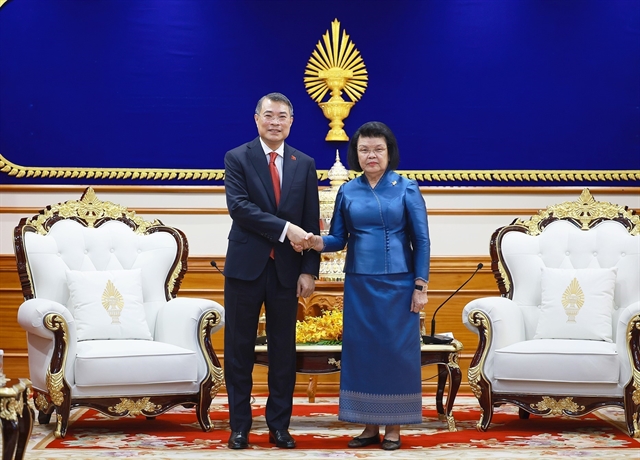
Vietnamese Prime Minister meets Cambodian National Assembly President
1.
 |
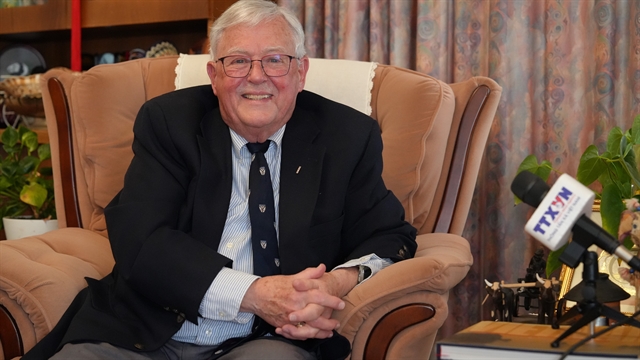
| Dr Hai Hong Nguyen, a senior lecturer in politics and social change at VinUniversity in Việt Nam. Photo https://vinuni.edu.vn/ |
General Secretary of the Communist Party of Việt Nam (CPV) Central Committee and President Tô Lâm, along with a high-ranking Vietnamese delegation, on Sunday departed Hà Nội for state visits to Australia and New Zealand, which will run through August 14. On the occasion, Việt Nam News reporter Nguyễn Khánh Chi talked to Dr Hai Hong Nguyen, a senior lecturer in politics and social change at VinUniversity in Việt Nam. He is also Adjunct Associate Professor at the University of the Sunshine Coast and Adjunct Senior Lecturer at Queensland University of Technology, Australia.
How do you view the significance of the visit?
The visit by General Secretary and President Tô Lâm is highly significant and is being keenly anticipated by Australia. Its significance can be seen at both the bilateral and regional levels.
First, this is the highest-level 'two-in-one' leadership visit by Việt Nam to Australia since the two countries established diplomatic relations in 1973. Looking at each position separately, this is the third visit by a General Secretary of the Communist Party of Việt Nam, coming 17 years after General Secretary Nông Đức Mạnh's visit in 2009; in the capacity of President, this is the first-ever official visit by a Vietnamese head of state. In 2007, President Nguyễn Minh Triết travelled to Australia for the APEC Summit and combined it with an unofficial visit.
Given that several Australian Governor-Generals, in their capacity as heads of state, have paid official visits to Việt Nam in recent times, an official visit by General Secretary and President Tô Lâm to Australia in both of his capacities as the top leader of the Party and the State is something Australia has been eagerly awaiting and regards as highly significant. I believe Australia will accord the highest welcoming protocol to General Secretary and President Tô Lâm.
Second, the visit takes place at a time when bilateral relations are flourishing and political trust between the two countries is at its highest level, following the upgrade of their relationship to a Comprehensive Strategic Partnership. In Southeast Asia, Australia has so far established Comprehensive Strategic Partnerships with only three countries: Indonesia, Singapore, and Việt Nam. This shows how highly Australia values Việt Nam's position in its foreign relations, within Southeast Asia, and more broadly within the Indo-Pacific region.
Third, the visit is expected to open up new directions and areas of cooperation as both countries enter a new stage of development. Việt Nam is entering an era of rising and prosperous development, with two centenerial development goals built on science, technology and innovation; Australia, meanwhile, is seeking new development directions aimed at diversifying its markets and strengthening its advanced science and technology foundations, with a particular focus on applying AI within the Fourth Industrial Revolution. As such, the two countries have ample scope to explore new avenues of cooperation in science and technology, both bilaterally and regionally, especially in combating cybercrimes.
Fourth, the two economies are complementary. Việt Nam is one of the fastest-growing economies in the region and the world, a large market with access to 100 million people, and one that needs capital and technology; Australia, on the other hand, is a developed economy with solid capital resources and a strong technological foundation. This complementarity allows both sides to grow together.
Fifth, the Vietnamese community in Australia is one of the country's four largest immigrant communities and is relatively successful. The resources and talent within this community are abundant. Harnessing this resource well would make a significant contribution to national development, while the community itself serves as a bridge sustaining and strengthening the Việt Nam-Australia relationship.
Sixth, within ASEAN and the wider region, Việt Nam is emerging as an active 'game player' that helps shape the rules rather than a passive 'game follower' - a reliable, responsible and constructive partner in an increasingly complex and risk-laden geopolitical and security environment. Meanwhile, Australia's prosperity and core interests are closely tied to ASEAN and the Asia-Pacific and Indian Ocean regions. Both countries share a vision of a stable, peaceful region that respects international law, in which all disputes should be resolved by peaceful means. It can be said that this convergence of vision and shared regional interests is drawing Việt Nam and Australia closer together, making them natural allies.
Following the elevation of their relationship to a Comprehensive Strategic Partnership in 2024, what have been the key areas of progress and cooperation between the two countries?
Following the upgrade of relations, the two countries adopted an action programme to implement the contents of the Comprehensive Strategic Partnership for the 2024-2027 period. According to the assessment of both sides, of the 180 activity items in the programme, 98 per cent have so far either been completed or are being implemented on schedule. This shows that the areas of cooperation set out in the action programme are all being carried out. Several key areas have made progress or continue to maintain their pace of progress, including economics and trade, education, defence and security and peacekeeping.
Given Việt Nam’s strategic focus on science, technology, innovation and the development of both the private sector and human capital, how can both nations align these priorities to deepen their bilateral partnership?
These are the pillars of cooperation within the framework of the Comprehensive Strategic Partnership. As I mentioned earlier, Việt Nam and Australia are two economies that complement each other, and Việt Nam's strategic priorities for its new stage of development happen to align with areas where Australia holds particular strengths. The issue here is not one of infrastructure or resources, but rather one of cooperation methods and mechanisms. The two countries need to consult with each other and build appropriate, breakthrough-oriented mechanisms grounded in political trust and partnership trust.
To achieve the goal of US$20 billion in trade turnover and a doubling of two-way investment in the coming time, what breakthrough measures should both nations prioritise?
I think the strongest breakthrough step would be a bilateral free trade and investment agreement between the two sides. Both countries are members of the CPTPP, RCEP and other multilateral mechanisms. The two countries also have had the Australia-Vietnam Enhanced Economic Engagement Strategy since 2019, have established an economic ministers' dialogue mechanism, and have made certain progress in trade and investment. However, if we truly want a breakthrough and to achieve the $20 billion target, then a breakthrough solution is needed.
A bilateral free trade and investment agreement would make it easier for import-export goods and capital flows to move more freely, and would make it easier to remove trade barriers - so this would be a powerful breakthrough. Within ASEAN, Australia already has free trade agreements with Singapore, Thailand and Malaysia. With Indonesia, Australia has a Comprehensive Economic Partnership Agreement. Việt Nam's economy currently ranks fourth largest in ASEAN and 32nd in the world. Given Việt Nam's economic scale and the bilateral trade target in question, a Vietnam-Australia Free Trade Agreement is something that fully deserves consideration and should be pursued.
With the signing of the peacekeeping partnership arrangement in 2024, in which ways do you think the document has contributed to strengthening defence cooperation between Việt Nam and Australia and in promoting peace, stability and development in the region and the world?
Australia has been one of the partners most actively supporting Việt Nam, from capacity-building to the actual deployment of peacekeeping forces in the field, dating back to the earliest days of defence cooperation between the two sides. With the signing of the Peacekeeping Partnership Arrangement in 2024, both countries demonstrated a stronger commitment to bilateral defence cooperation, as well as to jointly promoting stability, security, peace and development in the region and the world at large.
The two sides will advance and could expand cooperation between their military branches at a deeper level, as well as Australia will continue to provide training and capacity-building for Vietnamese officers so that they are fully equipped to meet peacekeeping requirements and carry out international missions. VNS
Opinion
 Opinion
 Opinion
 Opinion
 Opinion
 Opinion
 Opinion
 Opinion
 Opinion
 Opinion
 Opinion
 Opinion
 Opinion
 Opinion
 Opinion