SBV to curb property price inflation, enforce lending rate rules
1.
|
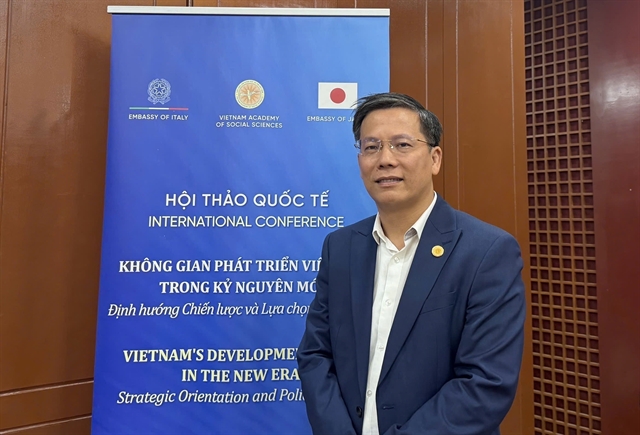
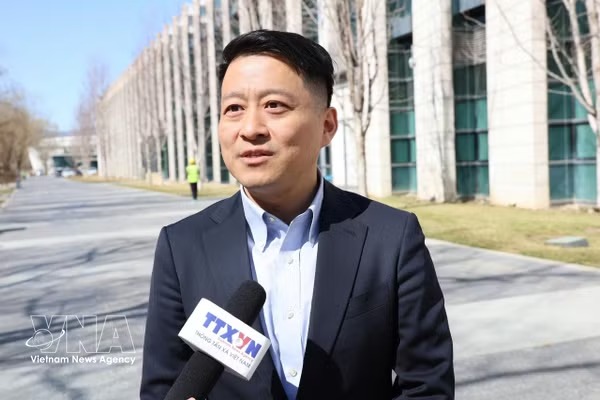
| Nguyễn Đình Chúc, Director of the Institute of Việt Nam and World Economy under the Việt Nam Academy of Social Sciences. — VNA/VNS Photo Diệu Thúy |
HÀ NỘI — The resolution on renewing Việt Nam’s development model, adopted at the third plenum of the 14th Party Central Committee, marks a significant shift in the country’s development thinking, laying the foundation for a new growth model driven by productivity, science and technology, innovation, digital transformation, green transition, and high-quality human resources.
According to experts, the resolution goes beyond the goal of rapid and sustainable economic growth. It establishes a comprehensive development model designed to unlock new growth space, mobilise resources more effectively, strengthen national competitiveness, and help Việt Nam achieve its goal of becoming a developed, high-income country by 2045.
Institutional reform a top priority
Nguyễn Đình Chúc, Director of the Institute of Việt Nam and World Economy under the Việt Nam Academy of Social Sciences, said the resolution reflects a fundamental shift in Việt Nam’s development mindset. While growth model reform was previously viewed mainly as a tool for achieving economic targets, the new approach defines the development model as an overarching strategy covering the economy, culture, human development, national defence, security and social progress, with economic growth serving these broader objectives.
To successfully implement the new model and avoid the middle-income trap, Việt Nam must address long-standing bottlenecks related to productivity and enterprise competitiveness, he said.
For years, economic growth has relied largely on expanding production and traditional growth factors, but this model is reaching its limits. Future growth should instead be driven by higher productivity, stronger innovation and enhanced research and development (R&D) capacity.
Chúc said enterprises should play a central role in R&D and innovation. Greater investment in science, technology and their application in production would create higher value-added products and services, improve labour productivity and strengthen sustainable growth.
He stressed that institutional reform should be the top priority in achieving the 2045 development goal. A more transparent and enabling institutional framework would foster new growth poles, expand development space, encourage innovation and allow market forces to create new industries, products and services.
Developing a highly skilled workforce is equally important. Alongside training high-quality human resources, Việt Nam should continue promoting university autonomy while expanding reskilling programmes to help workers adapt to the demands of science, technology and innovation.
Leveraging regional strengths for sustainable growth
|
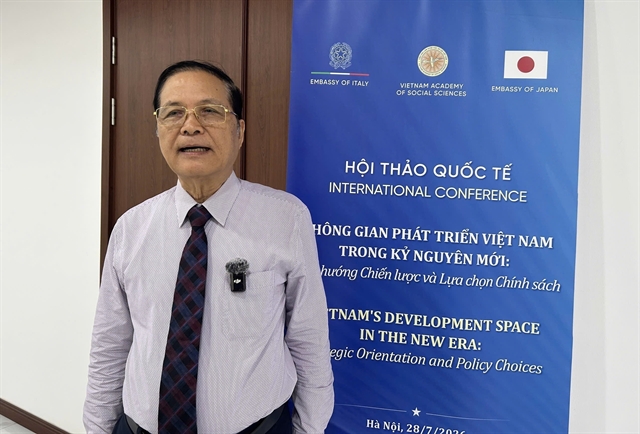
| Trương Quang Hải, Vice President of the Association of Việt Nam Geographers. — VNA/VNS Photo Diệu Thúy |
Trương Quang Hải, Vice President of the Association of Việt Nam Geographers, said achieving rapid growth alongside sustainability requires a decisive shift from an extensive growth model to one based on quality, productivity and innovation.
He said Việt Nam should rely more on science and technology while making full use of domestic strengths and international cooperation opportunities.
As digital transformation, green transition and stricter environmental standards become defining features of global trade, Việt Nam should accelerate the development of green and circular economies, replacing the traditional linear model with one that uses resources more efficiently and reduces emissions. Applying advanced technologies in production would improve resource efficiency and help businesses meet increasingly demanding international standards.
Hải also emphasised the need to improve institutions, develop high-quality human resources and strengthen governance capacity. Amid challenges such as climate change, energy insecurity, environmental degradation and food security concerns, effective governance and adaptability will determine the resilience and long-term sustainability of the economy.
Regarding spatial development, Hải said Việt Nam should capitalise on its geographical location, natural resources and rich human and cultural assets by reorganising development planning around the comparative advantages of each region. Localities should focus on industries and products best suited to their resources, workforce and infrastructure to increase value added and competitiveness.
He also called for stronger inter-regional connectivity through economic corridors, supply chains, integrated urban-rural systems and logistics networks to create a unified development space and make more efficient use of national resources.
To ensure the long-term success of the new development model, Hải stressed the need for governance reform based on clearer decentralisation, stronger accountability and greater adaptability to global uncertainties, alongside wider application of science, technology and digital transformation in governance and resource management. — VNA/VNS
 Opinion
 Opinion
 Opinion
.jpg) Opinion
Opinion
 Opinion
 Opinion
 Opinion
 Opinion
 Opinion
 Opinion
 Opinion
 Opinion
 Opinion
 Opinion