.jpg) Opinion
Opinion

Sun PhuQuoc Airways expands Russian partner network ahead of Moscow route launch
1.
 |
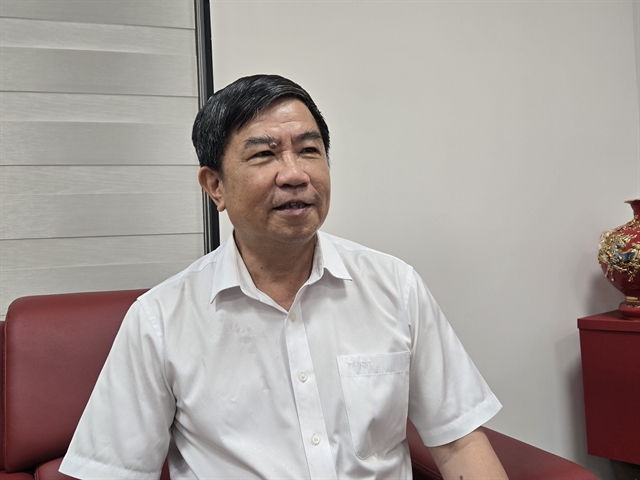
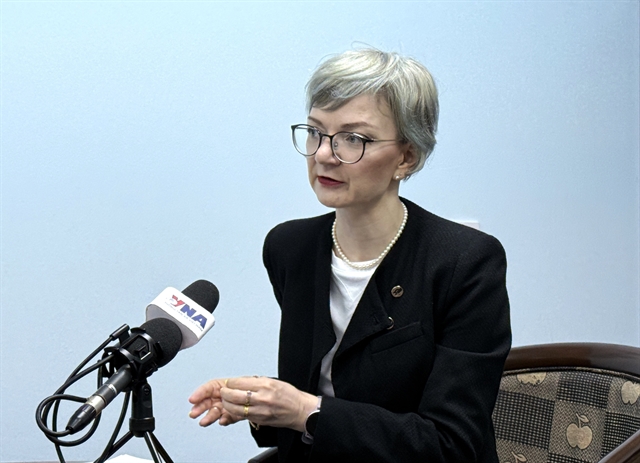
| Nguyễn Quốc Dũng, former Director of the Academy of Politics Region No 2 Photo courtesy of HCM City's People's Committee |
In his opening remarks at the third Plenum of the 14th Party Central Committee, Party General Secretary and State President Tô Lâm stressed that the focus of reform should shift from restructuring the organisational apparatus to improving the Party's leadership and governance capacity, as well as the operational quality of the political system. The streamlined apparatus, he said, should enable the Party to lead more effectively, the State to govern more efficiently, public institutions to operate faster and people to receive better services.
Nguyễn Quốc Dũng, former Director of the Academy of Politics Region No 2, shared his views with Voice of Vietnam (VOV).
What is your assessment of the General Secretary and President's message at the third Plenum of the 14th Party Central Committee?
I believe the message is both timely and well-founded. Streamlining the organisational apparatus is only the starting point of reform. No matter how lean the system becomes, meaningful improvements will not follow unless reforms are implemented effectively.
The immediate priority is therefore to accelerate implementation so the country can achieve its development goals in this new era. This is also an imperative dictated by global developments. If Việt Nam fails to seize emerging opportunities, it risks falling behind.
The core message is that policies must be translated into concrete action. The effectiveness of the political system and the Party's leadership should be measured by the quality of policymaking, the results of implementation and, above all, public trust.
With such determined leadership, I believe the country will gain fresh momentum to achieve its development targets. This is particularly important as Việt Nam aims for double-digit economic growth in 2026. Such an ambitious goal cannot be achieved if institutions continue to operate in the old way.
Why should the focus now shift from restructuring the apparatus to improving the quality of governance?
Since July 1, 2025, Việt Nam has officially operated under a two-tier local government model. More than a year into implementation, the model has produced encouraging results, improving the effectiveness of public administration and strengthening public confidence.
However, the Party leadership has continued to stress that reform policies must be turned into practical action because opportunities created by streamlining are accompanied by significant challenges.
First, the system is still undergoing a period of transition and remains influenced by institutional inertia. Most officials were trained and developed under the previous administrative model, so adapting to new requirements will inevitably take time.
Second, the global landscape is changing rapidly, driven by advances in science and technology, artificial intelligence and digital transformation. These trends will not wait for any country. If Việt Nam can harness them effectively, they will provide new momentum towards two long-term national goals: becoming a developing country with modern industry and upper-middle income by the Party's centenary, and a developed, high-income nation by the centenary of the country.
What do you see as the biggest challenges in moving from a streamlined apparatus to one that operates with greater efficiency, effectiveness and performance?
The most significant challenge is that two-tier local governments are no longer simply implementing directives from higher authorities. They are expected to become comprehensive governing bodies that actively drive local development.
This requires local leaders not only to utilise State resources but also to mobilise investment and support from businesses, communities and citizens to achieve development objectives. This represents a fundamental shift in governance, and many localities are still adapting to these expanded responsibilities.
Another major challenge is the quality of the civil service. Officials are learning while carrying out their duties under the new model. At the same time, digital transformation has become mandatory, alongside far greater decentralisation. Commune- and ward-level authorities now handle around 60-70 per cent of the workload previously undertaken by district-level governments.
Without accelerating digital transformation, modernising management methods, mobilising social resources and encouraging greater public participation, local governments will struggle to fulfil their new responsibilities. Most officials were trained under the previous system, making adaptation to new governance methods particularly demanding. Continuous learning, innovation and self-improvement are therefore essential.
In my view, digital transformation is the foundation for the effective operation of the two-tier local government model. Three conditions are necessary for success.
First, the State must be fully prepared with digital infrastructure, technology platforms, servers and integrated databases.
Second, public officials must proactively strengthen their digital capabilities and acquire the skills needed for new ways of working.
Third, citizens must also be ready to participate. Many online public services require people to complete digital procedures before government agencies process their applications. In reality, however, many citizens remain unfamiliar with these platforms and continue to visit public administrative service centres, leaving officials to perform tasks that users could complete themselves online.
In addition, although administrative decentralisation has been strengthened, the delegation of resources and decision-making authority has not always kept pace. In some places, responsibility is still avoided or shifted elsewhere, creating obstacles to effective implementation.
Going forward, it will be essential to continue reviewing and selecting officials based on competence so that the two-tier local government system can operate with greater efficiency, effectiveness and accountability. — VNS
Opinion
 Opinion
 Opinion
 Opinion
.jpg) Opinion
Opinion
 Opinion
 Opinion
 Opinion
 Opinion
 Opinion
.jfif) Opinion
Opinion
 Opinion
 Opinion
 Opinion
 Opinion