 Opinion
Three international exhibitions open in Hà Nội
1.
|
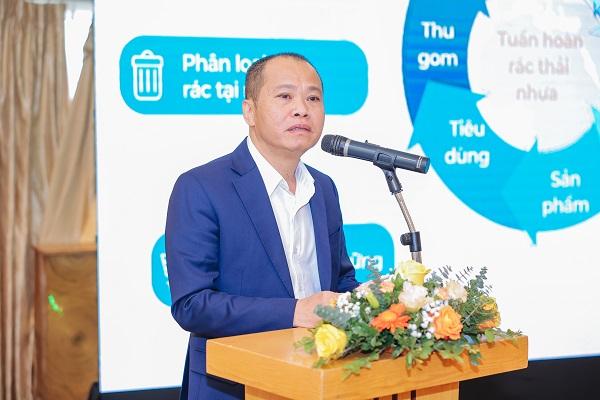
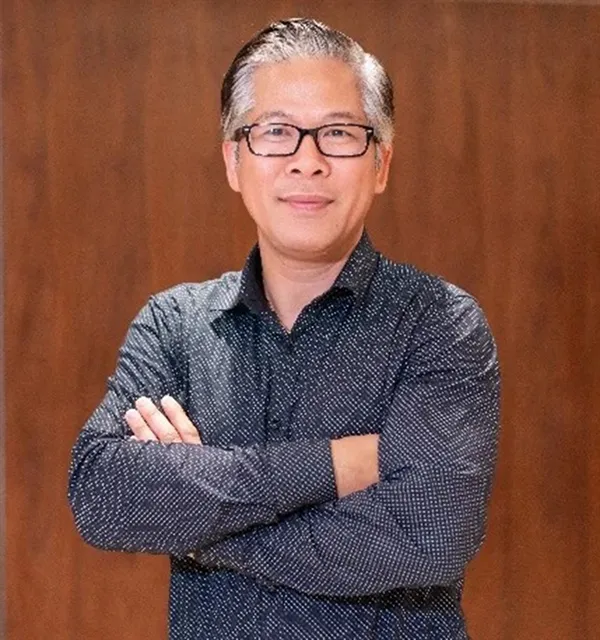
| Hoàng Đức Vượng, vice president of the Việt Nam Plastics Association. — Photo courtesy of Vượng |
Hoàng Đức Vượng, vice president of the Việt Nam Plastics Association, spoke to Việt Nam News reporter Khánh Dương about current Extended Producer Responsibility (EPR) regulations and proposed amendments.
The Government’s Decree 110/2026/NĐ-CP, which took effect on May 25, provides detailed regulations for implementing provisions of the Law on Environmental Protection on recycled products and packaging, as well as waste treatment responsibilities. The decree specifies entities subject to recycling responsibilities, mandatory recycling and specifications for recycling. What is your assessment of the regulations introduced in the decree?
I have been involved in the development of environmental protection and EPR policies for six or seven years. We greatly appreciate the Ministry of Agriculture and Environment, particularly the Việt Nam Environment Agency, for developing what I would say is a comprehensive framework for building Việt Nam's recycling industry and promoting a circular economy.
First, we now have a EPR framework. Second, this time we have introduced mandatory recycled content requirements for packaging and products, which is the strongest feature.
The decree also includes provisions on design for recycling. To create a circular system for waste, we need mandatory collection. At the same time, we need a market for recycled materials after recycling, and mandatory recycled content requirements for packaging and products can help create such a market.
Recycling in Việt Nam is very difficult, because product packaging has generally not been designed with recycling in mind.
With these new provisions, we believe a comprehensive framework is being established for the development of the recycling industry and the circular economy.
This is very encouraging for Việt Nam's plastics and recycling industries.
This is a forward-looking approach that keeps pace with global trends, and I think Việt Nam could become a policy leader in this area. In Southeast Asia, Việt Nam is already playing a leading role.
We greatly appreciate the vision and expertise of the Ministry of Agriculture and Environment and the Government.
We are still discussing what the appropriate recycled content rates should be and what the roadmap should look like.
The Việt Nam Environment Agency has proposed abolishing the option for producers and importers to contribute to the Việt Nam Environment Protection Fund to support recycling activities. Instead, they are required to organise the collection and recycling of discarded products and packaging, or engage a qualified entity to carry out these obligations. Could you share your opinion on this proposed amendment?
This is a bold move by the Ministry of Agriculture and Environment. Previously, the approach was for a fund to collect financial contributions and for the State to use the funds for recycling. However, this is a very complicated process.
In Việt Nam, the recycling industry is still in its infancy and does not yet have sufficient capacity.
The ministry's decision to allow businesses to take direct action and assume direct responsibility is a major policy decision, and we greatly appreciate it.
However, we are concerned that removing the financial contribution mechanism could create a legal gap. If producers and importers negotiate directly with recyclers, it could lead to a race to the bottom.
If recycling fees are no longer fixed, they will no longer provide sufficient signals to investors. Investors will not know what the fee will be from one year to the next. If companies offer different fees, it will be difficult for investors to make long-term investment decisions.
We are proposing that the Ministry of Agriculture and Environment set a minimum recycling fee so as not to weaken the EPR policy.
|
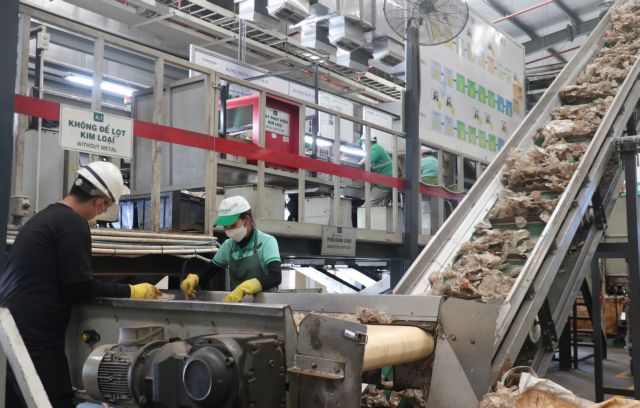
| A plastic recycling line of Duy Tân Company in Tây Ninh Province. — VNA/VNS Photo Bùi Giang |
In your experience, which stage of the recycling process is currently the most challenging?
The most difficult issue is proving the origin of collected materials.
Việt Nam's collection system still relies heavily on the informal sector, including waste pickers and scrap collectors. We have proposed integrating this informal collection system into the EPR mechanism so that these workers can benefit from EPR policies and strengthen their capacity.
Another issue is documentation. The informal collection sector generally has almost no invoices or supporting documents.
They have traditionally sold materials to craft villages without invoices, and often lack the capacity to complete tax procedures and comply with relevant regulations.
We have therefore proposed that the Government exempt this group from personal income tax, now at only 0.5 per cent to 1 per cent.
If such an arrangement is introduced, they will be more willing to cooperate with businesses and sell collected materials to them.
Alternatively, the Government could allow businesses to pay taxes on behalf of these informal collectors, so that the collectors would not have to deal with complicated tax and administrative procedures.
Most of these workers have limited formal education, so businesses could assist them with these procedures. — VNS
BOX The Việt Nam Environment Agency under the Ministry of Agriculture and Environment is drafting amendments to the EPR regulations to enhance the responsibility of producers and importers for products and packaging after disposal. Current EPR regulations mentioned in the Environment Protection Law 2020 state that manufacturers and importers can fulfil their recycling obligations through two main channels: organising recycling themselves or making financial contributions to the Vietnam Environmental Protection Fund. Đỗ Tiến Đoàn, deputy head of the Việt Nam Environment Agency's Waste Management Division, said the draft amendments completely abolish the financial contribution option. Producers and importers must directly organise the collection and recycling of discarded products and packaging, or engage a qualified entity to carry out these obligations. This helps enhance the proactivity and responsibility of producers and importers, involving them closely with the sorting, collection and recycling of products and packaging, rather than simply making a financial contribution to fulfil their obligations, he said. Director General of the Việt Nam Environment Agency Tăng Thế Cường said: “EPR should not be viewed merely as a financial obligation for producers, but as a mechanism to incentivise businesses to change the way they design products, select materials, organise collection and recycling and invest in circular economy solutions.” Under the direction currently being drafted by the agency, the new regulations will strengthen the role of the private sector in fulfilling EPR responsibilities, with the State acting as an enabler and providing the framework for implementation, he said. |
Opinion
 Opinion
 Opinion
 Opinion
 Opinion
 Opinion
 Opinion
 Opinion
 Opinion
 Opinion
 Opinion
 Opinion
 Opinion
 Opinion
 Opinion