 Restaurant Review

Lotte, Phát Đạt combine strengths in Thu Thiem project
1.
AF Reeves - @afreeves23
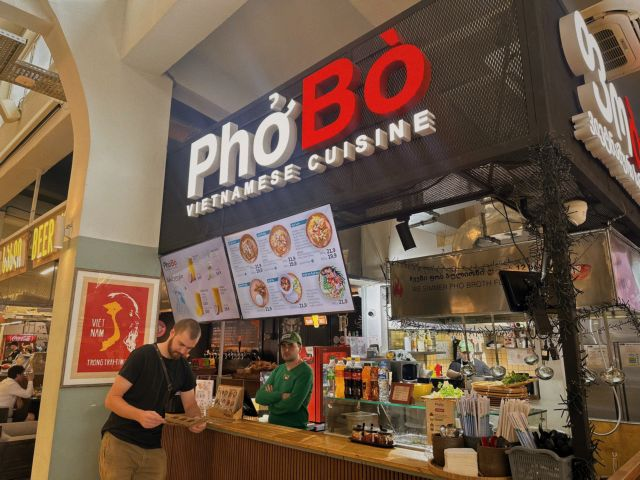 |
| BROTH LOCATED: Phở Bò is Tbilisi's only Vietnamese restaurant. - Photo courtesy of @afreeves23 |
Did you know that Istanbul is the most populous city in Europe? Neither did I, until I tried to find a single Vietnamese restaurant to review there. The great historical border of East meets West. I was sure there must be a place somewhere, and that such a cultural crossover point would provide a lovely subtext to this piece.
Sadly, that's not how life works and I was left in a bit of a pickle. While travelling in summer, I love to try Vietnamese food abroad, to see if anyone gets close to the flavours I'm so enchanted by back in Hà Nội.
Did you also know that Georgia's national spirit, chacha, is an experiment in inebriation by way of sadomasochism? The kind of sore-headedness and general unease from which, in my experience, only a bowl of phở can rescue a day. Thankfully Tbilisi, my most recent stop, didn’t let me down. A much smaller city, but with a very easily findable Viet spot.
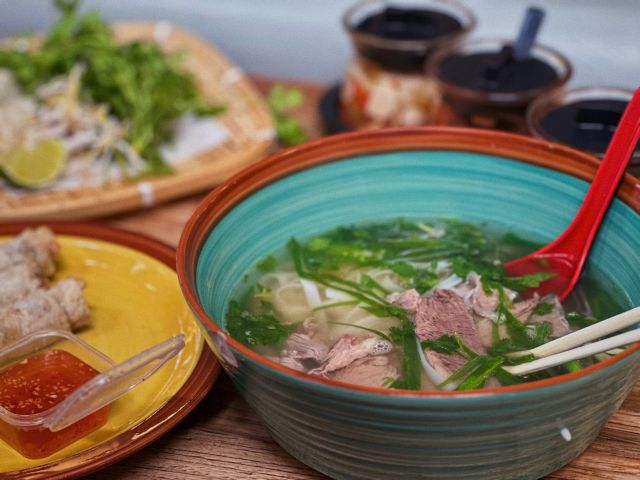 |
| THE CURE: The broth is simmered for 12 hours and offers authentic flavours. - Photo courtesy of @afreeves23 |
PhoBo Georgia is atypically part of a chain of Vietnamese eateries dotted across Russia. Given the historical connections between Việt Nam and the world's largest nation, it's no surprise that nationals have migrated there and brought their cuisine with them. But Georgia? Well, it turns out that owner Temuri Imnaishvili met PhoBo founder Nguyen Chi Zung [sic Dung] at university in Moscow in 1996. Zung opened his first Vietnamese restaurant there, Vietcafe, in 2006 and rebuilt it as PhoBo a decade later, with Temuri helping launch the first 10 sites.
The chain now runs to more than 80 locations, mostly franchised across some 50 Russian cities, with outposts as far as Dubai and Armenia. After leaving Moscow due to the Ukraine conflict, Temuri decided to bring the flavours of Việt Nam home, originally opening here with Vietnamese staff, but shifting immigration policies made a noble intention practically impossible.
Instead, Vietnamese chefs such as brand chef Canh Le Van are brought in as regular consultants to conduct taste tests, work on techniques and ensure the correct balance of herbs and spices is at play. This is important, appreciated and observable in the dishes. Seeing no Vietnamese staff might initially raise an eyebrow, but the team are well versed in the techniques and appreciate the need to balance authenticity against the local palate.
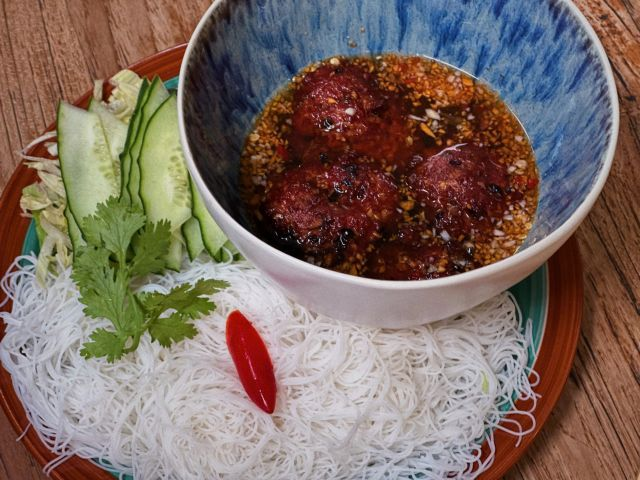 |
| Twist on a classic: A different style of 'bun cha' is served here, still delicious. - Photo courtesy of @afreeves23 |
In the company of fellow Hà Nội-based expat Leon Roesner, who came armed with a proper camera, we set out to try as much of the menu as possible while still making it out to dinner later and fitting into our clothes for the rest of the holiday. We shared dishes and compared notes.
First up, the fried spring rolls, nem rán. Honestly, they lacked the shape and signature crunch of the real deal back home. Longer, slimmer, a little bit limp, but what they lacked in presentation they made up for in flavour. Fewer noodles, a few more vegetables, well-seasoned minced pork and herbal notes to back it up.
Dipped in some tame sweet chilli, they were a satisfying snack alongside the mains. My advice: go shorter, fatter, bolder if authenticity is the aim. Otherwise, a big thumbs up.
The fresh spring rolls, gỏi cuốn, looked authentic. Translucent rice paper, a healthy amount of bún with shrimp and appropriate vegetables packed into a well-wrapped roll. On a flavour level, however, they were a little bland, and didn't meet the expectations of their visual appeal.
I've genuinely had far worse in Việt Nam, and my sympathy lies with the restaurant here. Getting the juicy shrimp and the vegetables freely available year-round at home, the ones that carry the flavour, must be almost impossible somewhere the agriculture varies this much.
Next up, bún chả. This was interesting. The bún was thinner and drier than we've come to expect in Hà Nội, and the patties were of one kind, rounded pork with ginger and other herbs baked into them. That left a textural difference from the usual dish, and I found myself missing the smaller, tougher, less defined fatty pork. The broth was built upon fish sauce but ran a deeper red, with more body and a stronger, more garlic-forward flavour than expected.
Though it loses marks on the authenticity scale, it gains them on the merit of its own flavour; like the original it balanced sweetness with umami in a delicious way. It was hearty and I'd go back for it, even if it were based in Hà Nội.
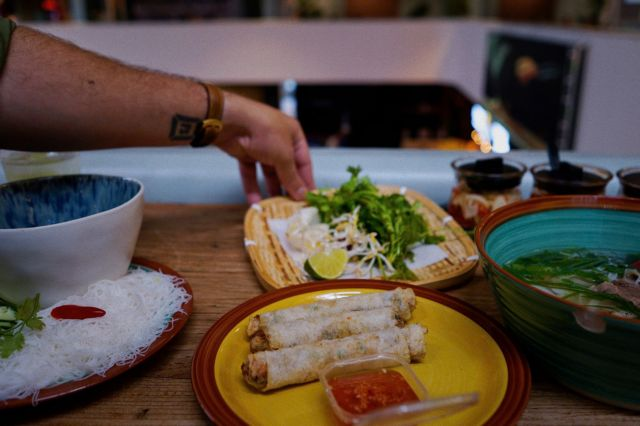 |
| Fresh spring rolls look just like the ones back home. - Photo courtesy of Leon Roesner |
Finally, the reason I dragged myself out of bed and across town, phở bò itself, the dish from which the restaurant borrows its name and from which so many of us borrow life every time we slurp it down. The biggest compliment I can deliver is that it actually tasted like phở. That may sound strange, but I've had numerous bowls in my time away from Việt Nam and the vast majority are so far off the mark that I feel second-hand offence, on behalf of my adopted home, that somebody tried to pass it off as such. This is likely down to a broth simmered for 12 hours before serving, and the aforementioned investment in research and training.
The noodles seemed a tad wider than usual but slurped down all the same. The broth was less aromatic than I tend to enjoy but clean, non-oily and unmistakably the real thing. It came with a wedge of lime and three sauces: dấm tỏi, the pickled garlic vinegar found on practically every noodle-soup table in Hà Nội; a chilli sauce; and a jar of Lao Gan Ma, the Guizhou chilli crisp, a Chinese pantry staple rather than a Vietnamese one but doing no harm.
It shows an understanding of how to enjoy phở, tasting the broth first and then adding to your own preference; control passed to the diner. Top marks here. If I ever relocated to Tbilisi, this would go some way towards filling the Việt Nam-shaped hole left in my heart.
One thing remains as clear as ever when I try Vietnamese food abroad: even with the best effort to source ingredients and follow methods, the style and flavours are incredibly hard to replicate. The cuisine doesn't travel as well as some others, and even when you serve up a delicious meal with welcome touches of authenticity, as PhoBo Tbilisi have done, some flavours stay out of reach.
If you're ever in Georgia craving the comforting flavours of Việt Nam, or in desperate need of medicine for the damage you inflicted on yourself with a night of chacha, head here, or to their new location set to open in early August. It might not have the smells, sounds and atmosphere of the streetside joint in your memories, but the Bazari Orbeliani it's housed in is pretty cool in itself, and you can count on service with a smile. Until next time, Tbilisi. VNS
-----------------------------
PHOBO GEORGIA
Address: 3 Vladimir Vekua Street, Bazari Orbeliani, Tbilisi
Tel: +995 595 79 95 97
Instagram: @phobo_georgia
Price: ₾80 or VNĐ800,000 (for two, including four dishes plus drinks)
Dining companions: Anyone nursing a chacha hangover
Top tip: Taste the broth neat before you touch the sauces, then reach for the dấm tỏi
Restaurant Review
 Restaurant Review
 Restaurant Review
 Restaurant Review
 Restaurant Review
 Restaurant Review
 Restaurant Review
 Restaurant Review
 Restaurant Review
 Restaurant Review
 Restaurant Review
 Restaurant Review
 Restaurant Review
 Restaurant Review
 Restaurant Review