 Restaurant Review

PMs pay tribute to late Vietnamese, Lao leaders in Vientiane
1.
By AF Reeves - @afreeves23
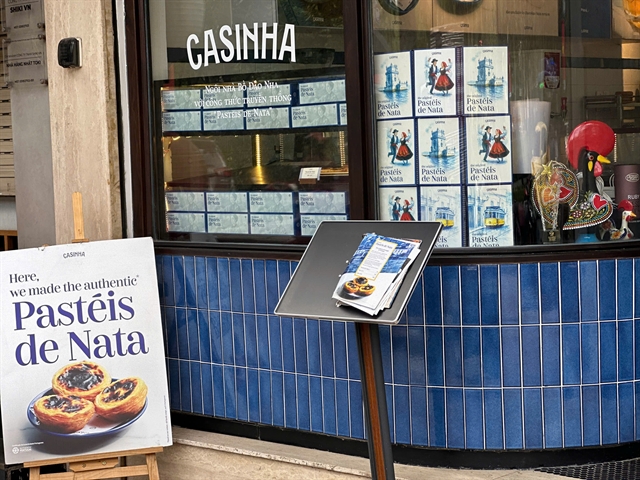 |
| POPPING: The blue tiles adorning the storefront give Casinha a unique vibe. — Photos courtesy of AF Reeves |
The first time I ate a bifana was on a family holiday in the Algarve during Euro 2004. While the hosts’ summer ended in disappointment, mine had only just begun. Within the various tascas and tabernas we occupied for most of our evenings, busy with the match on a TV in the corner, my parents would encourage me to try new things off their plates.
The famous pork roll arrived warm, heavy on the garlic, soaked in something that had likely been simmering all afternoon. I ate it in four bites and asked for another. That was over 20 years ago, and my summer romance with a Portuguese sandwich blossomed into a decades-long love affair with the national cuisine.
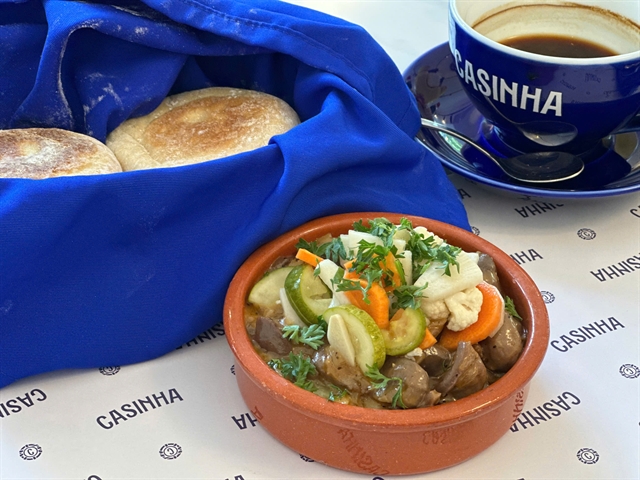 |
| MOELAS: These slow cooked chicken gizzards are adorned with pickles and served with fresh, warm bread. |
Living here complicates things. They say absence makes the heart grow fonder, but Portugal really is half a world away. Long-distance relationships are complicated, and certain necessary steps need to be taken, steps such as visiting some former colonies in the region to keep the flame burning.
I've been to Goa, with its proximity to the ocean, and Macau, where signage still reads in Portuguese. The historical preservation of their old towns takes me all the way back to that holiday and my first bifana. So when I heard a place called Casinha had opened in HCM City, serving the real deal, it was only a matter of time until I visited.
From the outside, Casinha looks parachuted in straight from Europe. Blue and white tiles, their signature pastéis de nata (custard tarts) in the window still warm from the oven, the calm of somewhere you would expect to find a few streets back from a Lisbon tram stop; it captures the feel of Portugal despite its location.
Inside is a long blue banquette running down one wall, with plain tables and chairs opposite, walls adorned by framed photographs referencing Portugal’s long and rich history. It does not really feel like a Saigon café. It does not really feel like a café at all. It feels like a small bistro in Porto, which I suppose is exactly the point.
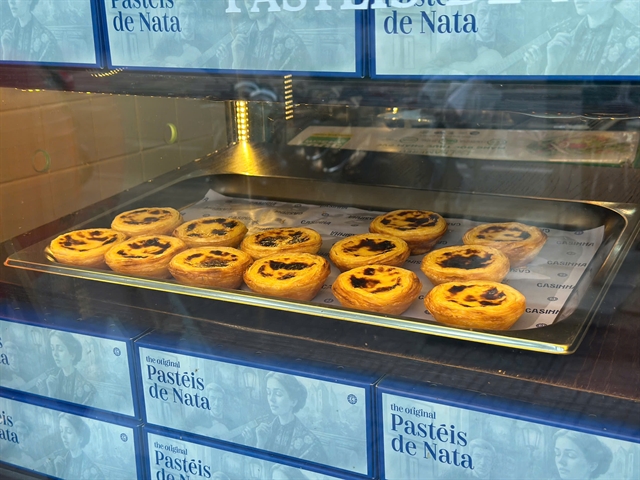 |
| THE SIGNATURE: If you visit Casinha, you must try the pastéis de nata. No excuses. |
Arriving in the late afternoon, I ordered a cheio, an espresso on the longer side, and we started with moelas (VNĐ125,000), chicken gizzards stewed until incredibly soft in tomato and garlic, topped with a tangle of pickled cucumber, carrot, daikon and broccoli. The bread, baked that morning, arrived warm. We ripped it apart and dragged it through the sauce.
Pastéis de bacalhau (salt cod fritters), croquetes de carne (pork croquettes) and rissóis de camarão (shrimp turnovers) cost VNĐ115,000 each and usually come separately, three to a plate.
Faced with only two diners and a long menu, the kitchen was kind enough to put one of each on a sharing plate instead. This sort of off-script gesture can feel rare in Việt Nam and tells you more about the warmth of the place than any of my waxing ever will.
The codfish fritters were golden and salty. The pork croquettes were crispy and properly peppery. The shrimp turnovers had an addictive creamy texture, our enjoyment heightened by the satisfying sound of my knife scraping along each breadcrumbed casing.
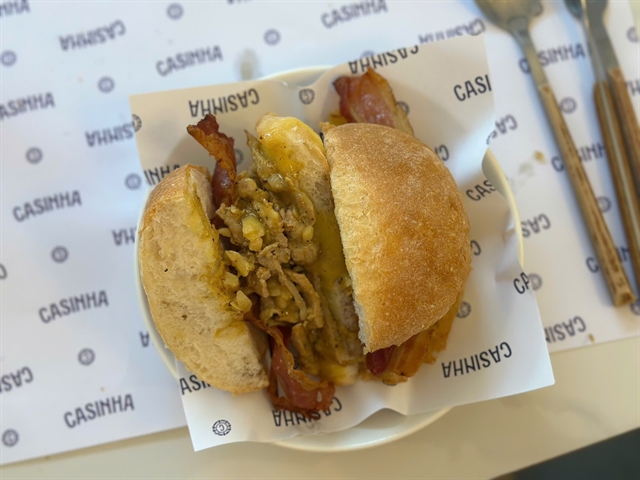 |
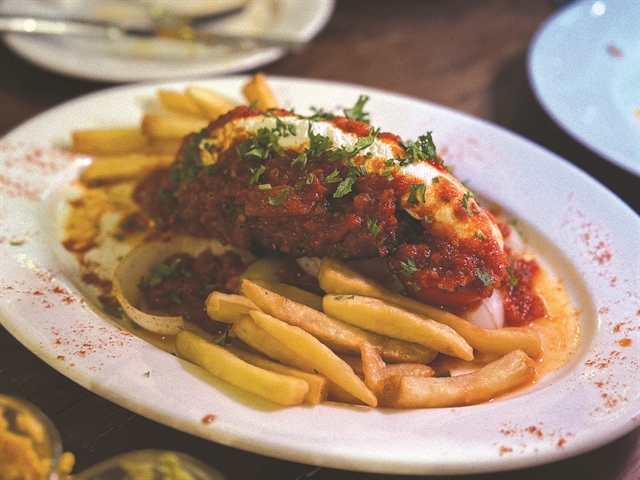
| A LOVE AFFAIR: One of the best sandwiches in the world. This modern take on the bifana adds bacon and cheese alongside the classic pork. |
We moved on. The sapatei'roll (VNĐ195,000), a brioche-bound riff on the classic sapateira recheada (stuffed crab), is the Portuguese answer to the lobster roll and a serious sandwich in its own right, sweet, creamy and rich.
The pica-pau (VNĐ215,000), olives and house pickles with chunks of tender pork in a garlicky pan sauce, seemed dialled down for local palates; fair enough, but a little more kick wouldn’t go amiss. A glass of ginjinha, the Portuguese black cherry liqueur, helped things along.
A dish called the Bifana Gourmet (VNĐ175,000), fattened up with cheese and bacon, was decadent in a modern way. I was not complaining. Something new and fresh is sometimes needed to keep the romance alive.
Caldo verde (VNĐ95,000) is the kale and potato soup that holds Portuguese kitchens together, providing light respite from our gluttony. The bacalhau à brás (VNĐ270,000), shredded salt cod, onions and chopped potatoes bound with eggs, was the only dish I might quibble with. It was lighter than I had hoped, though I will order it again to see if it was an off day or a house preference. Washed down with some white wine and a few glasses of beer, it was nothing short of a feast.
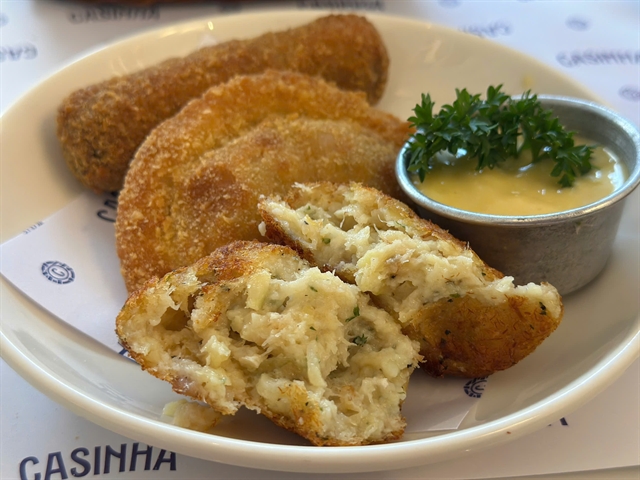 |
| FRITTER THREE TIMES: Pastéis de Bacalhau stuffed with fresh white fish alongside Croquetes de carne and Rissóis de Camarão. |
I unfortunately skipped the chouriço (Portuguese chorizo), usually flambéed at the table. The head chef was still resting after a heavy lunch service and the dish required his hand on the flame, though the sous chef did the rest of the menu proud in his short absence.
There is something strangely comforting about an Iberian afternoon nap landing in a country that takes its own midday rest seriously. Two distinctive cultures, worlds apart, in full agreement on the value of a good lie-down.
Casinha belongs to Rudy Matias and his wife Hạnh Mai, who he informs me has also fallen in love with his country’s food. The two of them started it as a passion project alongside their day jobs, initially a pastéis de nata bakery built around a family recipe Rudy brought from home.
“We like to say that we are a new house whose story, in a way, began 120 years ago,” he tells me. The pastry recipe dates from the 1900s. The bistro is around nineteen months old.
The plan, he assures me, is to stay traditional. No unnecessary reinterpretations, no trendy aesthetics, just the food his mother and grandmother would recognise.
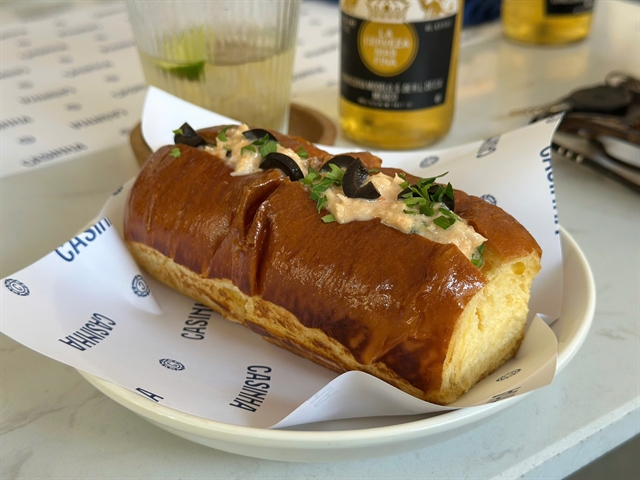 |
| SAPATEI'ROLL: This Portuguese answer to the lobster roll is a delicious brioche-bound house special. |
Until 2021, the train journey from Lisbon to HCM City was widely considered the longest in the world. Considering the sheer time and distance that the origins of this food have travelled to be here, it is remarkably honest and humble, worthy of a long lunch or an entire evening to do the menu justice.
However, if you do one thing, even just passing by for a coffee, order the pastéis de nata. They are the pastry the place was built around, a 100-year-old recipe passed through generations and over continents. Flakey, sweet, custardy goodness, they are genuinely top drawer.
One last note: Casinha’s francesinha, a toasted sandwich layered with a variety of meat and topped with cheese that for my money is the world’s greatest sandwich (sorry, bánh mì), is on the verge of escaping the R&D phase and will shortly emerge as a house secret for those in the know.
If you have read this far, you can consider yourself one of them. Até à próxima! — VNS
------------
CASINHA
Address: 154 Nguyễn Đình Chiểu Street, Xuân Hòa Ward, HCM City
Tel: 098 802 5154
Website: https://www.casinha.co/
Price: VNĐ1.7 million or US$65 (for two, including five or more dishes plus drinks)
Dining companions: Anyone willing to try something new!
Top tip: Don't leave without a pastel de nata, even if you’re saving it for later.
Restaurant Review
 Restaurant Review
 Restaurant Review
 Restaurant Review
 Restaurant Review
 Restaurant Review
 Restaurant Review
 Restaurant Review
 Restaurant Review
 Restaurant Review
 Restaurant Review
 Restaurant Review
 Restaurant Review
 Restaurant Review
 Restaurant Review