.jpg) Opinion
Opinion

Shorter Trips, Familiar Ways to Pay: How Airpaz Supports Flexible Booking with 100+ Payment Methods
1.
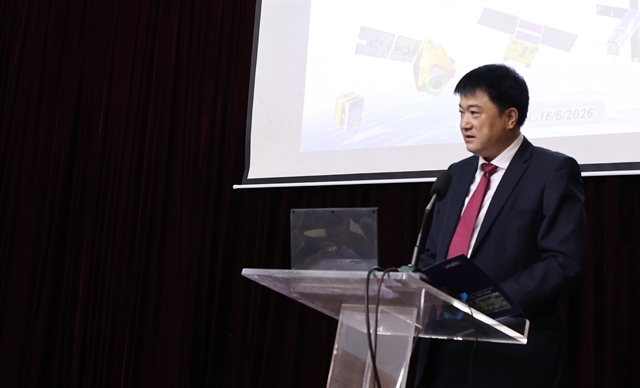 |
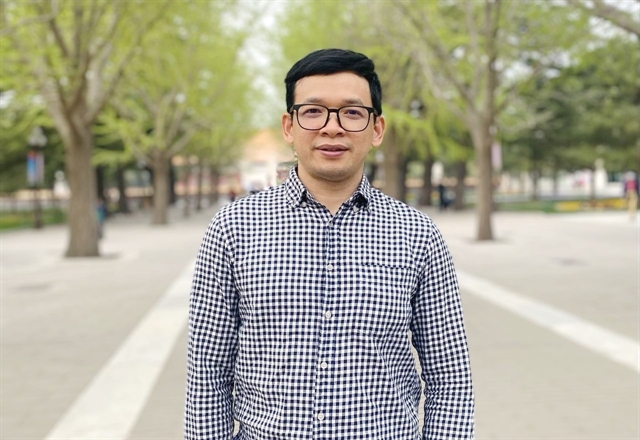
| Professor Chu Hoàng Hà, Vice President of the Vietnam Academy of Science and Technology. — VNA/VNS Photos |
Decades after the war, hundreds of thousands of Vietnamese martyrs remain unlocated or unidentified. Professor Chu Hoàng Hà, Vice President of the Vietnam Academy of Science and Technology, talked to Vietnam News Agency about the scientific hurdles and new technologies behind Việt Nam’s push to identify wartime remains during the 500 Days and Nights Campaign.
What makes DNA identification of martyrs’ remains in Việt Nam particularly difficult compared with international practices and what prospects does new technology open for identifying the fallen and for the 500 Days and Nights Campaign?
The biggest hurdle is severe DNA degradation. Many remains have been buried for decades, in some cases 70-80 years, and Việt Nam’s hot, humid climate accelerates decomposition, leaving DNA fragments typically only 50-70 base pairs long. Standard STR (Short Tandem Repeat) testing, which needs fragments of several hundred base pairs, is largely unusable.
Mitochondrial DNA (mtDNA) survives better because it is abundant and circular, but it is maternally inherited and highly conserved; unrelated individuals may share identical haplotypes, so mtDNA can only support, not determine, identity. Traditionally we would triangulate with archives, including service records, unit logs, time/place of death, hometown, grave maps and witness accounts, but after so long these sources are incomplete or lost, which compounds the scientific problem.
Under a US-funded ODA project, we developed a workflow using more than 5,000 nuclear SNP markers with next-generation sequencing. This NGS-SNP approach reads very short fragments and enables kinship matching up to fourth-degree relatives through both paternal and maternal lines. It is a breakthrough that offers a practical path to restoring names to the fallen.
In the 500 Days and Nights Campaign, what is the significance of building a DNA database of martyrs and their relatives for identifying remains?
It is foundational. First, we will collect biological samples from all unidentified martyrs’ graves nationwide, store them under strict protocols and process identifications progressively.
Second, we aim to gather comprehensive DNA samples from martyrs’ relatives; the Ministry of Public Security’s C06 is tasked with building this relatives’ database via the national population data programme, which flags families with martyrs whose graves are missing or unidentified.
Once DNA data from remains are generated, we will compare them against the relatives’ database to find matches, so having robust relatives’ data is crucial to naming each set of remains. By the end of the campaign, the relatives’ database should be complete. Samples from remains will be archived under the Ministry of National Defence and sent in phases to accredited labs. Data will be standardised and integrated across sources: military records (Ministry of Defence), relatives’ data (Ministry of Public Security), cemetery information (Ministry of Home Affairs) and inputs from veterans, comrades, witnesses and local authorities.
Forensic profiling will be conducted by designated units including the Military Institute of Forensic Medicine, the Institute of Forensic Science, the DNA Testing Centre of the Institute of Biology under the Vietnam Academy of Science and Technology (VAST), and the National Institute of Forensic Medicine, with results provided to the Ministry of Home Affairs to match remains and assign names.
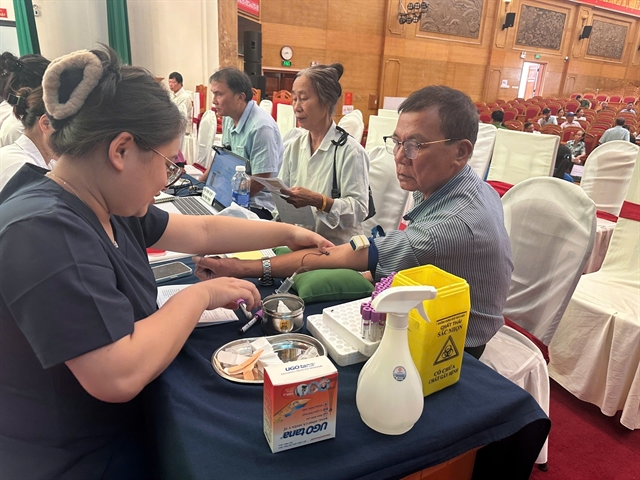 |
| Residents in Vĩnh Thành Commune, Phú Thọ Province, provide samples for DNA testing in hopes of finding the graves of relatives who died in the war. |
What are the main advantages and challenges in implementing the 500 Days and Nights Campaign and how is VAST contributing?
The campaign is backed by strong political commitment and close inter-agency coordination. National Steering Committee 515, led by Deputy Prime Minister Phạm Thị Thanh Trà, brings together the armed forces, the Ministry of Public Security, the Ministry of Home Affairs, VAST, the Ministry of Health and the media.
Key challenges include the wide distribution of cemeteries nationwide, which requires rapid exhumation and sampling; the southern rainy season, which affects fieldwork; and complex logistics in transporting biological samples to the Ministry of National Defence, Hà Nội and accredited forensic labs.
Coordination has been effective. The Ministry of Public Security expects to complete collection of relatives’ samples in 2026 and largely build the relatives’ DNA database, though current analysis mainly uses traditional mitochondrial markers. VAST is piloting a new workflow better suited to degraded samples, but rollout requires technology transfer, staff training and equipment upgrades. With current capacity, only 1,000-2,000 sets of remains can be processed annually. To meet the 200,000-300,000 target by 2030, about five forensic centres, each handling at least 10,000 cases a year, will be needed.
Within Committee 515, VAST leads research and technology development and participates directly in casework through the Institute of Biology’s DNA Testing Centre, working alongside military and national forensic institutions. This mission is both an honor and a responsibility, and a way for scientists to pay tribute to the fallen. — VNS
Opinion
 Opinion
 Opinion
 Opinion
.jpg) Opinion
Opinion
 Opinion
 Opinion
 Opinion
 Opinion
 Opinion
 Opinion
 Opinion
 Opinion
 Opinion
 Opinion