 Opinion
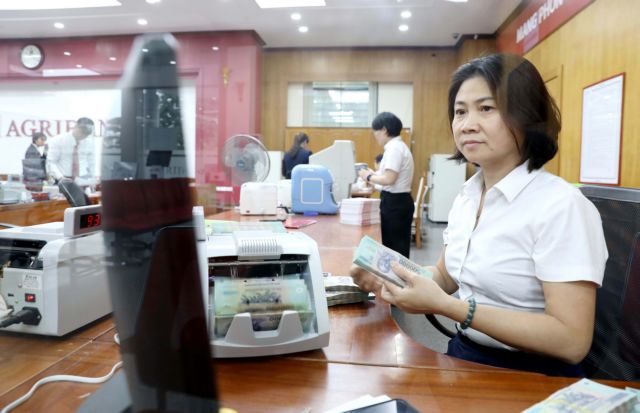
Lending rates cut by up to 3%, to lower borrowing costs for businesses and priority sectors
1.
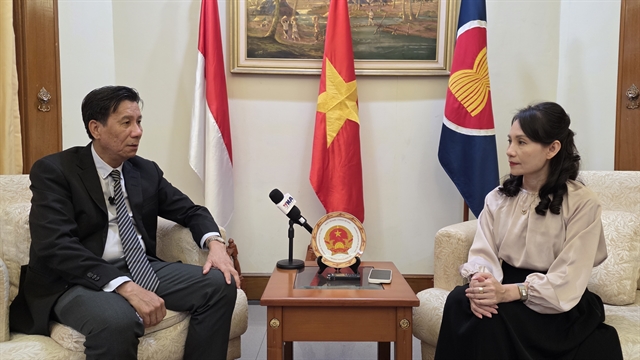 |
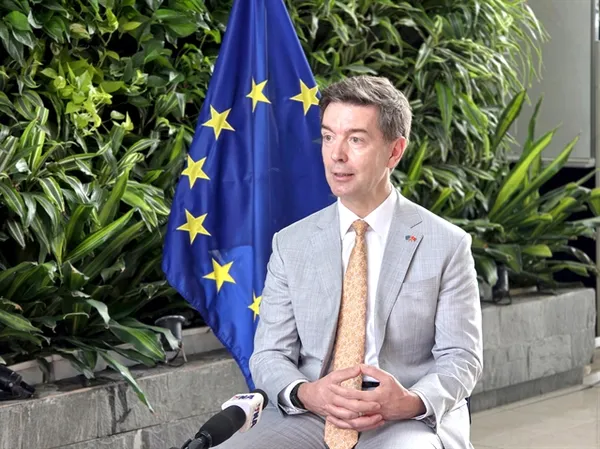
| Vietnamese Ambassador to Indonesia Tạ Văn Thông in the interview with Vietnam News Agency correspondent in Jakarta. — VNA/VNS Photo Minh Thái |
JAKARTA — Việt Nam and Indonesia have significant potential to further expand their Comprehensive Strategic Partnership, according to Vietnamese Ambassador to Indonesia Tạ Văn Thông.
Speaking to the Vietnam News Agency correspondents ahead of Politburo member and Minister of Foreign Affairs Lê Hoài Trung's July 13–14 official visit to Indonesia, where he will co-chair the sixth meeting of the Joint Commission on Bilateral Cooperation, the ambassador said the upgrade of bilateral ties in March 2025 marked the beginning of a new phase in relations between the two Southeast Asian nations.
According to Thông, the elevation of ties reflects the growing political trust between the two countries and the strong development of bilateral cooperation.
He noted that Việt Nam and Indonesia are well positioned to translate the new partnership into concrete outcomes thanks to a solid political foundation laid by President Hồ Chí Minh and Indonesia's first President Sukarno, and nurtured by successive generations of leaders through regular high-level exchanges.
Most recently, Party General Secretary Tô Lâm's State visit to Indonesia in March this year provided fresh momentum for bilateral cooperation, he said.
The ambassador also highlighted the complementary nature of the two economies – Indonesia, with a population of more than 280 million, and Việt Nam's dynamic economy of around 100 million people. Business communities in both countries have played an increasingly active role through major investment projects, including VinFast's electric vehicle manufacturing project in Indonesia and developments by Indonesia's Ciputra Group in Việt Nam.
Despite the positive outlook, Thông said bilateral cooperation also faces challenges stemming from geopolitical and economic uncertainties that have disrupted global supply chains and international trade. Non-tariff barriers and differences in legal regulations remain obstacles that both sides need to address to facilitate market access for businesses.
Regarding Trung's visit and the upcoming meeting of the Joint Commission on Bilateral Cooperation, the ambassador said the mechanism is an important platform for implementing the strategic vision agreed upon by the two countries' senior leaders.
He said the meeting would provide an opportunity to review the implementation of the 2024–28 Action Programme, remove bottlenecks and identify new priorities for cooperation in the changing regional and global context.
The visit also carries added significance as the two countries celebrated the 70th anniversary of diplomatic relations and the 30th anniversary of Vietnam's accession to ASEAN in 1955. It reflects their close coordination in strengthening ASEAN's central role and contributing to regional peace, stability and prosperity, he added.
Looking ahead, Thông expressed confidence that the two countries could achieve their target of raising bilateral trade to US$18 billion by 2028. Two-way trade increased from around $9 billion in 2019 to $16.7 billion in 2024, demonstrating strong growth momentum.
To reach the target, he called for stronger transport and infrastructure connectivity, including additional direct flights and increased air links between the two countries' major economic and tourism centres.
The ambassador also urged both sides to continue addressing non-tariff barriers to facilitate exports of key products such as agricultural goods, seafood and consumer products. Large-scale investment projects, including VinFast's electric vehicle plant in Subang and Indonesian investments in Việt Nam, are expected to create spillover benefits for supporting industries and bilateral trade.
Beyond traditional areas of cooperation, Thông said Việt Nam and Indonesia have considerable scope to work together in emerging sectors aligned with regional and global development trends.
He identified electric vehicle ecosystems, energy transition and the green economy as priority areas that would support both countries' net-zero commitments while strengthening their participation in global green supply chains.
Digital economy, high-tech agriculture and the halal industry also offer promising opportunities, he said, noting that digital technologies could improve productivity and business connectivity, while cooperation in the halal sector would help Vietnamese agricultural and seafood products gain greater access to Indonesia and other Muslim markets.
He also highlighted maritime cooperation and sustainable fisheries, particularly in aquaculture, seafood harvesting and processing, as areas with strong potential for future collaboration.
Thong expressed confidence that, with sustained support from senior leaders and close coordination among ministries, agencies and businesses, the Việt Nam–Indonesia Comprehensive Strategic Partnership would continue to deliver more practical and effective cooperation, benefiting both peoples while contributing to peace, stability and development in the region. — VNA/VNS
Opinion
.jpg) Opinion
Opinion
 Opinion
 Opinion
 Opinion
 Opinion
 Opinion
 Opinion
 Opinion
 Opinion
 Opinion
 Opinion
 Opinion
 Opinion
 Opinion