 Opinion
NA President calls for high-quality legislation to drive national development
1.
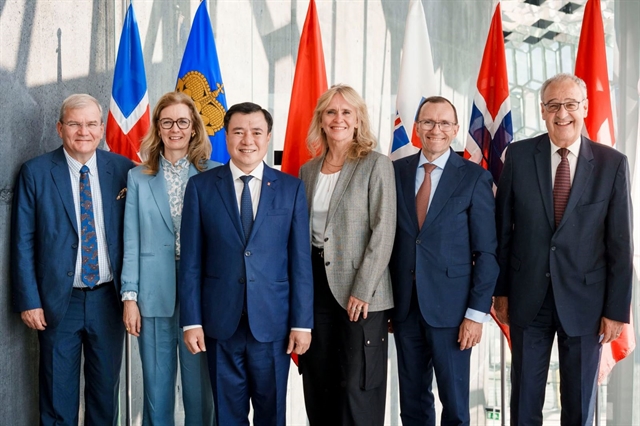 |
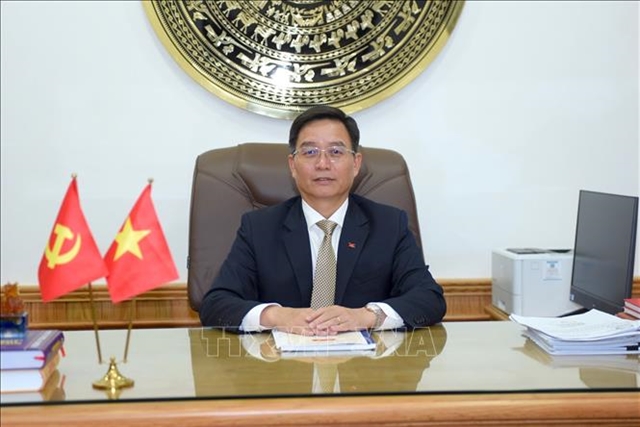
| Deputy Minister of Industry and Trade Nguyễn Sinh Nhật Tân led the Vietnamese delegation to the EFTA Ministerial Meeting in Iceland in late June. — Photo from the Ministry of Industry and Trade |
After more than a decade of negotiations, the freshly concluded Việt Nam–European Free Trade Association (EFTA) Free Trade Agreement – covering the association's four member states of Iceland, Liechtenstein, Norway and Switzerland – is regarded as a new milestone in Việt Nam's strategy to diversify its export markets. In an interview with the press, Deputy Minister of Industry and Trade Nguyễn Sinh Nhật Tân said the deal will lay the foundation for Việt Nam–EFTA economic relations to enter a new phase of development, while creating greater opportunities for exports, investment and the country's transition towards a more sustainable growth model.
After more than a decade of negotiations, Việt Nam and EFTA have officially concluded negotiations on a free trade agreement. What significance does this agreement hold, given the growing uncertainty in global trade and the rise of protectionism?
The conclusion of negotiations on the Việt Nam–EFTA Free Trade Agreement comes at a particularly significant time, as the global economy is facing profound challenges arising from geopolitical tensions, climate change, supply chain disruptions and the increasing use of trade barriers.
Against this backdrop, the successful conclusion of negotiations represents more than the end of a process that has lasted over a decade. It reflects the strong commitment of both Việt Nam and the EFTA member states to an open, free, transparent and rules-based international trading system. It sends a clear message that dialogue, cooperation and economic integration remain the most effective means of promoting growth, creating jobs and improving people's well-being.
The agreement also brings together two highly complementary groups of economies. The EFTA countries possess world-leading strengths in technology, innovation, finance, clean energy and sustainable development, while Việt Nam is one of Asia's most dynamic economies and is increasingly establishing itself as a regional hub for manufacturing, trade and investment.
More importantly, the agreement will provide a solid foundation for Việt Nam–EFTA economic relations to enter a new stage of development, underpinned by a stable, transparent and predictable business environment. This, in turn, will further facilitate the flow of trade, investment, technology and knowledge between the two sides.
The EFTA comprises economies with exceptionally high standards in quality, environmental protection, sustainable development and innovation. What concrete opportunities will this agreement create for Vietnamese businesses, particularly in terms of exports, investment attraction and deeper participation in global value chains?
The agreement will create numerous practical opportunities for the Vietnamese business community.
First, it will help diversify Việt Nam's export markets by enabling Vietnamese products to gain easier access to high-income markets with some of the world's most demanding quality standards, namely Iceland, Liechtenstein, Norway and Switzerland.
In addition, the agreement is expected to attract high-quality investment from EFTA countries into sectors prioritised by Việt Nam, including high technology, manufacturing and processing industries, clean energy, the green transition, innovation and workforce development. Beyond capital, this also presents valuable opportunities to acquire advanced technologies, modern management expertise and sustainable development models.
For Vietnamese enterprises, cooperation with EFTA partners will strengthen competitiveness, facilitate compliance with higher international standards and enable deeper integration into global value chains.
Conversely, with a market of more than 100 million people, a strategic location in the Asia-Pacific region and a network of 17 established free trade agreements, Việt Nam aspires to become a trusted partner and a gateway for EFTA businesses seeking to expand their presence in ASEAN and the wider regional market. This will create long-term opportunities for investment, production and business cooperation, generating mutual benefits for enterprises on both sides.
Following the conclusion of negotiations, what measures will the Ministry of Industry and Trade take to help businesses promptly and effectively utilise this FTA, from disseminating information on commitments and rules of origin to strengthening their capacity to meet the stringent standards of EFTA markets?
The conclusion of negotiations marks a highly important milestone, but this is only the beginning. The success of the agreement will ultimately be measured by the extent to which the business community is able to utilise it and by the tangible benefits it delivers to the economy and the people.
Going forward, the ministry will continue to work closely with relevant ministries, sectors, local authorities and the EFTA member states to complete the legal review process and prepare for the signing and implementation of the agreement in accordance with the agreed roadmap.
At the same time, the ministry will intensify efforts to disseminate information on the agreement's commitments to the business community. It will organise training programmes on rules of origin, technical regulations, quality standards, environmental requirements and sustainable development, while preparing user-friendly guidance materials to help businesses quickly understand and take advantage of the agreement's preferential provisions.
The ministry will also strengthen trade promotion activities, facilitate business matchmaking and support Vietnamese enterprises in integrating more deeply into the supply chains and value chains of EFTA partners. In parallel, it will coordinate with other ministries and agencies to further improve the investment and business environment and enhance the competitiveness of both enterprises and the national economy.
On the Government of Việt Nam's side, we remain committed to advancing institutional reforms, improving the investment and business climate and fully and faithfully implementing the international commitments that have been agreed. These efforts will provide the most favourable conditions for businesses from both Việt Nam and the EFTA countries to maximise the opportunities offered by the agreement.
The Government issued Decree 240/2026/NĐ-CP on June 26, detailing the implementation of a number of provisions on mechanisms and policies to mobilise resources for the development and operation of the Ecosystem for Leveraging Free Trade Agreements and the Sectoral Export Promotion Fund. This decree will further support businesses in making full use of the commitments under the Việt Nam–EFTA Free Trade Agreement. — VNS
Opinion
 Opinion
 Opinion
.jpeg) Opinion
Opinion
 Opinion
 Opinion
 Opinion
 Opinion
 Opinion
 Opinion
 Opinion
 Opinion
 Opinion
 Opinion
 Opinion