 Opinion

Việt Nam steps up fight against counterfeits, IP violations
1.
 |
| Nguyễn Thị Sự (right), deputy general director of Vietnam News Agency, presents flowers to congratulate Associate Professor Dr. Nguyễn Thị Lan Anh on her election as a judge of the International Tribunal for the Law of the Sea for the term 2026-35. — VNA/VNS Photo Lê Đông |
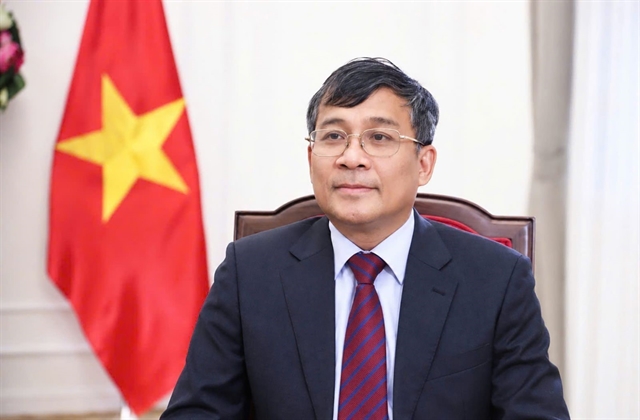
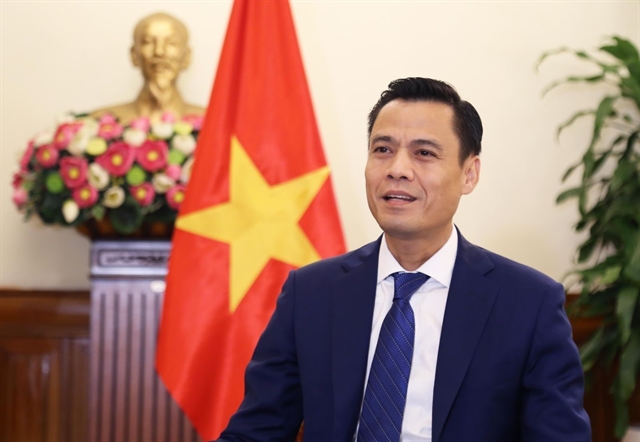
Associate Professor Dr Nguyễn Thị Lan Anh, Vice President of the Diplomatic Academy of Việt Nam, who has become the first Vietnamese national to be elected as a judge of the International Tribunal for the Law of the Sea (ITLOS) with the highest number of votes among candidates from the Asia-Pacific region in the very first round of voting for the 2026-35 term, talks to Vietnam News Agency about the significance of Việt Nam’s first-ever representation on the tribunal and opportunities her election creates for young Vietnamese pursuing careers in diplomacy and international law
The Asia-Pacific region is widely regarded as one of the most fiercely contested regions due to its numerous and often complex maritime disputes. Elections to the International Tribunal for the Law of the Sea are therefore highly competitive. What message did you and your campaign team convey that enabled you to secure the highest number of votes in the first round?
Competition for positions within international organisations dealing with maritime affairs in the Asia-Pacific region has always been intense. The applies not only to elections for the International Tribunal for the Law of the Sea, but also to bodies such as the Commission on the Limits of the Continental Shelf. During the campaign, we conveyed two key messages.
The first centred on Việt Nam itself. We presented Việt Nam as a resilient nation with a proud history, one that cherishes peace, independence and unwavering respect for international law. The commitment has been evident throughout our nation's long struggle for independence and continues today as Việt Nam focuses on national development and prosperity. Such an image of a strong, self-reliant Việt Nam has consistently earned the respect of the international community.
Our second message highlighted Việt Nam as a coastal nation whose existence and development have always been closely intertwined with the sea. From the legendary story of Lạc Long Quân and Âu Cơ onwards, the sea has formed an integral part of Việt Nam's identity. Today, through our strategy for sustainable marine development, Việt Nam continues to demonstrate that it is a nation intrinsically connected to the ocean.
Because of the enduring relationship with the sea, Việt Nam possesses a deep understanding of maritime issues and is well placed to appreciate the interests and aspirations shared by the international community in the governance of the world's oceans.
I believe these two messages, Việt Nam as a resilient, independent nation and Việt Nam as a country inseparably linked to the sea, helped inspire confidence among member states and ultimately led them to entrust Việt Nam with this important responsibility.
Your term begins at a time when the ITLOS is broadening its interpretation of international law to strengthen protection of the oceans, while major powers compete increasingly over the exploitation of mineral resources beneath the high seas. Could you outline the emerging legal challenges facing the world's oceans today?
The sea has always been of fundamental importance to humanity. It covers around 70 per cent of the Earth's surface and has provided immeasurable benefits throughout human history. Historically, the oceans have connected people. Ships were the first means of transporting people and goods across continents, allowing societies to engage with one another through maritime routes.
Today, the sea continues to connect the world in new ways. Submarine cables, for example, carry the internet traffic on which modern society depends. Digital data and global connectivity are transmitted through cables laid on the seabed. The networks are not only vital for individuals but also constitute the backbone of the global digital economy and technological innovation.
The oceans also provide livelihoods. For generations, they have supplied food through fisheries and other marine resources. Now, they become an even more significant driver of economic development. As countries pursue green and digital transitions, demand is rising for critical minerals, many of which are believed to exist beneath the seabed. At the same time, in addressing climate change, the oceans are increasingly viewed as a major carbon sink. Marine ecosystems, particularly coastal vegetation, have enormous potential to absorb carbon dioxide, while new technologies are also being explored to store carbon beneath the seabed.
Yet the oceans face mounting challenges. As the strategic value of marine resources becomes increasingly apparent, competition among states inevitably intensifies, creating new pressures for effective ocean governance. In addition, marine pollution continues to degrade the marine environment. Climate change is driving sea-level rise, ocean warming and acidification. For many countries, rising sea levels are not simply an environmental issue but a matter of national survival.
Against the backdrop, maintaining a stable legal order at sea has become more important than ever. This requires continued reliance on the United Nations Convention on the Law of the Sea (UNCLOS). Often described as the constitution of the oceans, UNCLOS comprises more than 300 articles negotiated over a period of 12 years. In the increasingly challenging circumstances, the convention's importance continues to grow. As the judicial body established under UNCLOS to interpret and apply its provisions, the ITLOS has an increasingly vital role to play.
Implementing UNCLOS effectively has never been straightforward. What challenges do you anticipate facing as you take up your new position on the tribunal?
One of the greatest challenges in international law has always been enforcement. Ensuring that states comply with international law and with the rulings of international courts remains a persistent difficulty, particularly where major powers are concerned.
The first challenge arises from today's increasingly intense geopolitical competition. Every country naturally seeks to advance its own national interests, and in doing so there is sometimes a tendency to disregard international law. So, the questions are how can we overcome the current competition among major powers and how can we maintain the trust of nations in international law and thereby enhance the effectiveness of its enforcement.
A second major challenge lies in the absence of any global authority responsible for enforcing the judgments of international courts. Compliance therefore depends largely on the good faith and voluntary commitment of states, supported by the collective conscience and informed opinion of the international community.
The challenge is how the court can keep pace with the evolving landscape of international law. As new global challenges emerge, the court must be able to adapt its jurisprudence and provide well-reasoned, persuasive interpretations of international law. Only by doing so can it secure the confidence and support of the broad majority of states.
And finally, one challenge is that international law always lags behind life, and because practice is evolving so rapidly, how to interpret the law in a context where the legal provisions are not yet fully developed, and how to apply fundamental principles to interpret specific situations, that too is a challenge.
Despite these challenges, however, I believe we also have considerable advantages. The greatest advantage is the international community's belief in peace and cooperation. International law, together with institutions such as the tribunal, serves as an essential instrument for promoting peaceful relations and cooperation among nations.
What are your priorities over the next nine years in addressing these challenges?
As an elected judge, my work programme will naturally follow that of the tribunal. Whenever the tribunal is asked to hear disputes or provide advisory opinions, and I am assigned to participate in a particular case, I will carry out my duties in accordance with the tribunal's procedures and schedule.
One area in which I can make a personal contribution, however, is by upholding the values that Việt Nam represents – independence, integrity, impartiality and an unwavering commitment to justice, so that it is not just the voice of Việt Nam but also the voice of justice, representing the majority of nations, promoting effective implementation of the UNCLOS and, more broadly, advancing international law as a foundation for peaceful and sustainable ocean governance.
Having been elected as an ITLOS judge for the 2026-35 term, what message would you like to send to young Vietnamese considering careers in diplomacy or international law and how do you hope your election will inspire and create opportunities for developing a new generation of high-calibre international legal experts in Việt Nam?
When people think of diplomacy or international law, they often regard the fields as distant or beyond reach. However, the outcome of the election demonstrates that careers in diplomacy and international law are neither remote nor unattainable for Việt Nam. The opportunities are real. For young people aspiring to become diplomats, I believe that success depends not only on knowledge but also on integrity, a willingness to listen, a readiness to cooperate and a deep respect for the rule of law. These are the qualities that enable individuals to earn credibility and trust on the international stage.
To students of international law, I would encourage you to develop not only strong legal knowledge but also foreign language proficiency, research skills and advocacy skills. I hope that one day international law will no longer be confined to lecture theatres or textbooks but will be recognised as an integral part of everyday life. International law is relevant not only to maritime affairs but also to technology, human rights, artificial intelligence and countless other fields. This means the opportunities available to young Vietnamese are broader than ever before.
I hope young people will embrace an open mindset, continually strengthen their knowledge and professional skills, and never hesitate to engage with the global community. Every individual's success contributes not only to their own achievements but also to enhancing Việt Nam's reputation and standing on the international stage.
About the opportunities for developing a new generation of high-calibre international legal experts in Việt Nam, I think there are many opportunities. First of all, I think the young people will look at the election as a successful example.
They will think that it is something achievable, feasible, and I hope that it will nurture that passion for international law studies. And second, I hope that being a judge will allow me to participate in more educational activities, not just only in Việt Nam, but also around the world. By that way, I think I can contribute myself for the capacity building and also training the young people in legal studies. — VNS
Opinion
 Opinion
 Opinion
 Opinion
 Opinion
 Opinion
 Opinion
 Opinion
 Opinion
 Opinion
 Opinion
 Opinion
 Opinion
 Opinion
 Opinion