.jpg) Opinion
Opinion

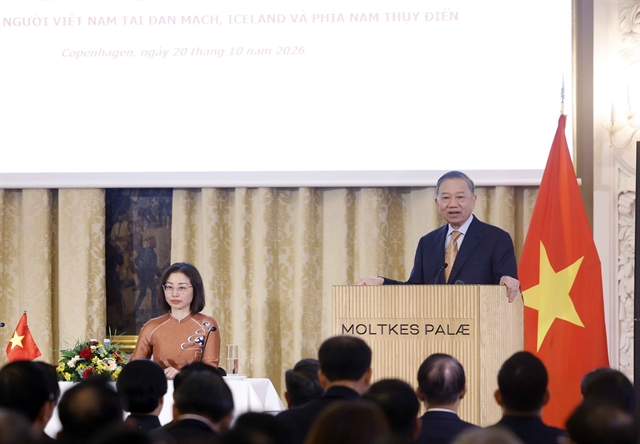
Top leader hails friendship association's role in nurturing Việt Nam–Denmark ties
1.

|
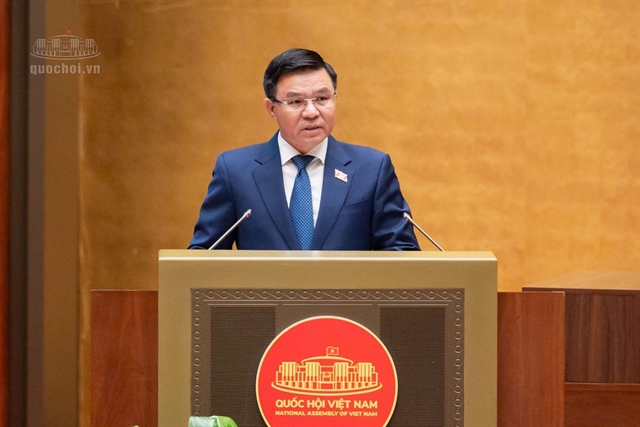
| Lê Quốc Minh, member of the Party Central Committee and Editor-in-Chief of Nhân Dân (The People) Newspaper. — Photo courtesy of Minh |
The Voice of Vietnam (VOV) spoke with Lê Quốc Minh, member of the Party Central Committee, Editor-in-Chief of Nhân Dân (The People) Newspaper, Deputy Head of the Party Central Committee’s Commission for Communication, Education and Mass Mobilisation and Chairman of the Việt Nam Journalists’ Association about the role of key national media organisations in safeguarding the Party’s ideological foundation and new storytelling approaches they should adopt.
Amid the current information explosion and the rapid spread of social media, how do you assess the position and role of key national media agencies in guiding public opinion and protecting the Party’s ideological foundation to help achieve the goals set by the 14th National Party Congress?
Since the internet began developing rapidly, we have entered an era of information abundance.
Over the past three or four years in particular, with the emergence of artificial intelligence (AI) and the strong growth of social media platforms, information can now spread everywhere at an extraordinary speed.
Today, news is no longer created solely by humans. AI systems can automatically generate enormous volumes of content.
Alongside the widespread proliferation of fake news and harmful information, society has moved from a stage where people struggled to distinguish truth from falsehood to one where they no longer know which information to trust, and in some cases, have become sceptical of everything.
This is a dangerous situation. When people doubt everything, useful information, as well as the Party’s and State’s policies and guidelines, becomes even more difficult to spread to the public.
Yet within these challenges lie opportunities.
When audiences are overwhelmed by tsunamis of information, they need reliable anchors they can trust and depend on.
After a period of enthusiasm in which people tried to absorb as much information as possible, audiences are now seeking greater reflection and selectivity.
They expect mainstream media organisations to act as lighthouses, helping them identify the most important information every day and every hour.
At a time when anyone can create content and billions of pieces of information circulate daily on social media, professional media organisations possess a major advantage: original content, authoritative reporting and multi-dimensional perspectives — qualities that individual Facebook or TikTok content creators cannot easily provide.
These are unique opportunities taking place just as we face numerous challenges from communications technology and especially from the development of AI.
In your view, how should major media organisations innovate in terms of content, formats and the use of digital platforms, so that political commentary and content countering false narratives can become more engaging and reach wider audiences, especially young people?
According to the latest studies conducted this year, experts worldwide have concluded that mainstream journalism can no longer chase page views as it once did.
The content that most easily attracts attention is often that which appeals to curiosity, anger or trending topics. There was a period when such content generated massive traffic for media organisations.
However, amid today’s storm of information, there is an overwhelming amount of clickbait, sensational content and even useless or harmful information that nonetheless attracts significant engagement.
Journalism cannot and should not compete in a race for clicks or trends. Instead, it must focus on producing high-quality content.
Media organisations today need to provide explanatory and solution-oriented journalism, constructive guidance and in-depth analysis that distinguishes them from social media platforms.
They must also invest in technology to ensure that quality content can be disseminated more effectively.
AI is a crucial trend. Yet many media organisations are still using AI mainly to reduce routine workloads or, at best, improve productivity.
Relatively few are truly leveraging technology — especially AI — to create new value.
Experts are urging media organisations to go further by making effective use of advanced technologies to expand the reach and impact of their content.
Digital journalism also requires a new approach. Simply combining text, photos, videos and infographics is becoming outdated.
Around the world, media organisations are moving toward new models, such as 'liquid content', which can automatically transform into different formats, such as a short morning briefing, a podcast for commuters or an in-depth evening analysis.
Another emerging trend is treating content as an asset: breaking down interviews into reusable components and attaching metadata so information can be quickly retrieved when needed.
These approaches require new modular content management systems. This is a direction that Vietnamese media organisations should explore.
To counter and guide public opinion in the face of harmful AI-generated content, how should major media organisations coordinate and respond?
There is a well-known saying that fake news travels halfway around the world before the truth has even put on its shoes.
Countering harmful, misleading and false information is therefore an extremely difficult battle.
Recently, many Government agencies, ministries, sectors and even local police units at the commune and ward levels have found creative and engaging ways to communicate policies and laws. This provides valuable lessons for mainstream media organisations as well.
We need storytelling approaches that are more relatable and better tailored to different audiences.
Take Generation Z, for example. They need communication that is trustworthy, transparent and engaging.
Journalism must adapt its writing styles, filming techniques and presentation methods compared with those used five or 10 years ago.
Today, countering misinformation requires sound arguments, scientific evidence and persuasive reasoning.
It cannot rely on one-sided accusations or labelling. This challenge will elevate the profession and compel journalists to keep learning and improving.
When we produce high-quality content that reflects Party principles while effectively integrating technology, information can spread more widely. —VNS
Opinion
 Opinion
 Opinion
 Opinion
 Opinion
 Opinion
 Opinion
 Opinion
 Opinion
 Opinion
 Opinion
 Opinion
 Opinion
 Opinion
 Opinion