 Politics & Law

Singapore Media Festival Returns for its 13th Edition with Refreshed Industry Focus and New Creator Summit
1.
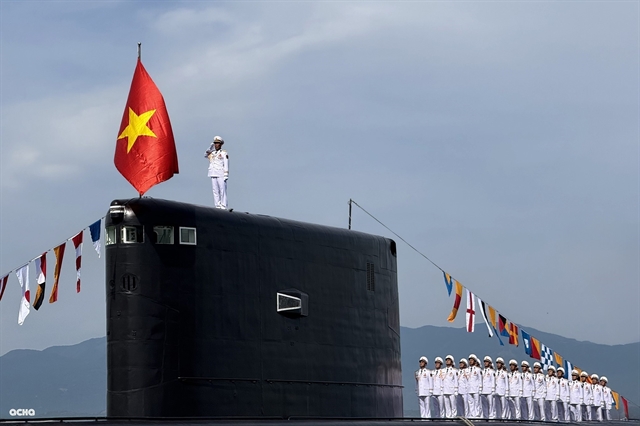 |
| A flag-saluting ceremony aboard a Kilo-class 636 submarine. Photo courtesy of the Việt Nam People’s Navy |
HÀ NỘI — Việt Nam’s new National Security Strategy broadens the concept of national security beyond the protection of sovereignty and the political system, placing security at the heart of sustainable development and extending protection to emerging domains such as cyberspace, data, technology, outer space and low-altitude airspace.
The strategy rejects any trade-off between security and economic growth, stressing that security must help generate resources and momentum for development, while development provides the foundation for lasting security.
It also calls for a shift from protecting individual sectors to safeguarding entire systems, and from managing separate threats to addressing the interaction among increasingly interconnected risks.
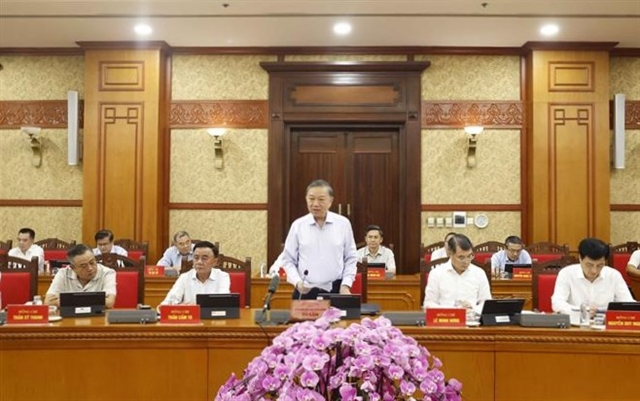
General Lương Tam Quang, Politburo member and Minister of Public Security, outlined the strategy at a national conference convened by the Politburo and the Party Central Committee’s Secretariat on July 29 to study and implement the resolution adopted at the third plenum of the 14th Party Central Committee.
The resolution, one of several strategic documents adopted to translate the goals of the 14th National Party Congress into action, has been published in full to support its nationwide dissemination and implementation.
New security challenges emerge
The report said Việt Nam had made significant progress over the past five years in implementing the national security approach set out by the 13th National Party Congress, building on seven years of implementation of the 2019 National Security Protection Strategy.
Việt Nam is now widely regarded as a peaceful, stable and secure country, and its achievements have drawn interest from others seeking to learn from its experience.
However, significant shortcomings remain. The four major risks identified by the Party have not been fully addressed, while vulnerabilities persist in internal political and economic security, cybersecurity, personnel management and foreign-related affairs.
Security frameworks for emerging domains, including low-altitude airspace, outer space and the maritime domain, are still at an early stage. The country’s capacity to maintain security and public order during complex, large-scale emergencies and in response to non-traditional security threats also remains inadequate.
The international security landscape is undergoing its most far-reaching changes since the end of the Cold War, as strategic competition among major powers increasingly extends to cyberspace, outer space and the maritime domain.
Rapid advances in artificial intelligence and quantum technology, along with the rise of cyber, information and cognitive warfare, are posing unprecedented challenges to national security.
“Safeguarding national security in the new era is not simply about protecting national interests to the greatest possible extent or identifying and effectively addressing risks and challenges across all sectors and domains at the earliest possible stage. It must also enable development, lay the foundations for rapid and sustainable growth, improve people’s quality of life and contribute to the successful implementation of the Resolution of the 14th National Party Congress and the Party’s strategic policies,” Quang said.
The strategy seeks to ensure that, under any circumstances, authorities at all levels continue to function effectively, essential infrastructure remains operational, severe economic disruption is avoided and social order is maintained.
It also sets out the goal of building a disciplined, safe, healthy, civilised, harmonious and progressive society, with human security and people’s well-being at its core.
Together, these objectives are intended to provide a firm foundation for Việt Nam to become a peaceful, independent, democratic, strong, prosperous, civilised and happy socialist country by 2045.
No trade-off between security and growth
The resolution sets out six guiding principles, reaffirming the Party’s absolute and direct leadership over all aspects of national security and the State’s unified management.
Safeguarding national security is defined as a vital and ongoing responsibility of the entire Party, people and armed forces. Heads of Party committees and local administrations bear primary responsibility for addressing security issues in their respective sectors and localities, with the People’s Public Security force playing the leading role.
The resolution also calls for security considerations to be closely integrated into economic, cultural, social and environmental development, as well as foreign affairs. It also reaffirms the Party’s approach to identifying partners and adversaries.
One of its most significant new principles is that national security is a prerequisite for peace, stability, rapid and sustainable development and a better quality of life.
Security must help generate new resources and momentum for development, while development must provide the foundation for lasting security.
“The resolution also broadens the concept of national security. Beyond protecting the Party, State, people, political system, institutions and national sovereignty, it extends protection to the foundations of the country’s development capacity and the stable functioning of its economic, social and technological systems,” Quang said.
Risks must be identified, anticipated and managed from an early stage and throughout the development process.
“The resolution also emphasises the need to strengthen national autonomy and resilience, requiring every development strategy to enhance the country’s ability to safeguard itself. Security must not be sacrificed in pursuit of economic growth,” he said.
It adopts an approach centred on “overall, comprehensive, proactive, inclusive and development-enabling security”.
Under this approach, the security of the political system is paramount. Cultural, ideological, information and communications security is particularly important in strengthening public trust and maintaining social consensus.
Economic, energy, environmental, water and food security provide the foundation, while cybersecurity, data security and technological security take centre stage. Human security remains the ultimate goal.
Transnational organised crime is treated as a national security threat requiring firm action, with offenders dealt with strictly in accordance with Party regulations and State law.
Another new principle is the combination of hard and soft power, firmness in principle and flexibility in approach, with national interests placed above all else. Domestic capabilities are decisive, while external resources play an important supporting role.
Security considerations must be incorporated from the outset into every policy, sector and stage of development. They must also serve as a key criterion when selecting development models, formulating policy and putting it into practice.
The resolution further calls for traditional and modern approaches to be combined, along with preventive capacity-building and regular measures to counter threats.
The focus will shift from protecting individual sectors to safeguarding entire systems, and from managing risks separately to addressing the ways in which they interact.
The approach will also move away from preventing incidents at any cost towards keeping risks within manageable limits, containing crises before they spread or cause strategic damage, and seizing opportunities that may arise from periods of adversity.
Threats to security and public order must be tackled at their roots and at an early stage, before they accumulate, spread or develop into hotspots.
Security objectives extended to emerging domains
Compared with the previous National Security Protection Strategy, the new resolution significantly broadens the scope of its overall objectives.
It sets out seven specific objectives, including ensuring the absolute protection of senior leaders, strategic-level officials and the country’s leading talent; safeguarding every sector on the principle that security must keep pace with development; building a modern people’s security system; strengthening the capacity to respond to traditional and non-traditional security threats; and deepening international cooperation and integration in security.
By 2030, Việt Nam aims to complete reforms towards modern national governance and establish security risk monitoring and early-warning systems.
The country also aims to build a revolutionary, regular, elite and modern People’s Public Security force, complete the transition to post-quantum cryptography for critical digital infrastructure, establish a sovereign national network and use post-quantum cryptographic technology to protect its data systems.
By 2045, Việt Nam aims to develop a fully capable national security system, safeguard security across all sectors and domains by identifying and addressing threats at the earliest possible stage, and rank among the regional and global leaders in human security. The People’s Public Security force and other relevant forces are also expected to be capable of responding to all risks, crises and emerging forms of security threats.
To achieve these objectives, the resolution sets out nine groups of priority tasks and measures.
They include strengthening Party leadership, improving strategic forecasting, anticipating and addressing security threats before they emerge, tackling potential risks at the grassroots level, safeguarding economic, energy, water and environmental security, deepening external relations and international security cooperation, and strengthening the capacity to respond to traditional and non-traditional threats.
For the first time, the resolution establishes separate groups of tasks covering the security of the political system and institutions, security in emerging sectors and domains, responses to new forms of security threats, and a roadmap towards comprehensive human security.
It also identifies public support as one of the pillars of the National Security Strategy.
The Politburo has issued an action programme to implement the resolution based on six clearly defined elements: the person responsible, the task, the timeframe, the responsibility involved, the authority required and the expected result.
Under the programme, the National Assembly’s Party Committee is required to promptly translate the Party Central Committee’s policies into legislation.
The Government, ministries, sectors and local authorities must turn the resolution into programmes and action plans with clearly defined roadmaps and responsibilities. The Việt Nam Fatherland Front and socio-political organisations are tasked with strengthening public communications and oversight while building consensus around the implementation of national security policies. VNS
Politics & Law
 Politics & Law
 Politics & Law
 Politics & Law
 Politics & Law
 Politics & Law
 Politics & Law
 Politics & Law
 Politics & Law
 Politics & Law
 Politics & Law
 Politics & Law
 Politics & Law
 Politics & Law
 Politics & Law


.jpg)