 Opinion

Top Vietnamese leader meets with Belgian Senate Speaker, House President
1.
|
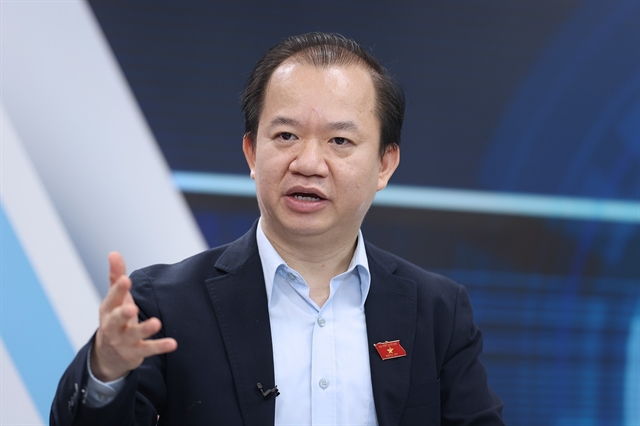
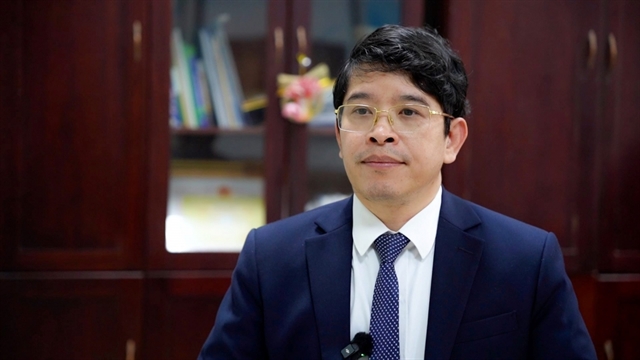
| Bùi Hoài Sơn, a permanent member of the National Assembly's Committee on Culture and Social Affairs. — VNA/VNS Photo |
Bùi Hoài Sơn, a permanent member of the National Assembly's Committee on Culture and Social Affairs, talked with Vietnam News Agency about sweeping grassroots restructuring, and why treating villages as administrative boxes to be reshuffled risks erasing collective memory that no decree can restore.
Below the commune level, Việt Nam organises its communities into thôn (rural hamlets, typically a cluster of households in the countryside or mountainous areas), làng (villages, an older, more culturally loaded word that often overlaps with thôn), and tổ dân phố (urban neighbourhood cells, the city equivalent of a hamlet). These are the units now being merged.
What should policymakers keep in mind to avoid destroying the cultural and social fabric that communities have built up over generations?
A village or a hamlet is not simply a unit of local governance; it is a cultural space, a social institution, an environment where character is formed and collective memory kept alive. If we look at villages purely through the lens of population figures and administrative convenience, we risk overlooking what matters most: the accumulated values of countless generations.
A village holds genealogical records, customary codes, festivals, kinship bonds, memories of the departed and stories passed down around family tables. This is precious social capital, the foundation of cohesion, trust and a community's capacity for self-governance.
In Vietnamese culture, a village is not merely a place of residence; it is a place of belonging. Losing a village name is not simply losing a label. It can mean losing part of a community's cultural identity, weakening the bonds that tie people to their place, their neighbours, and their own history.
Streamlining the administrative apparatus is necessary and has, by and large, achieved its goals nationwide. But streamlining must not mean flattening every cultural distinction. A leaner structure is only truly stronger if it does not impoverish the spiritual life of the people it serves.
Party General Secretary and State President Tô Lâm has emphasised the same point: preserving culture means preserving the roots of development – not simply protecting heritage, but maintaining the spiritual foundation of society, reinforcing national unity and generating the inner strength on which sustainable development depends.
How do we ensure that reorganisation doesn't become a 'mechanical' merger, one that severs the cultural fabric of village life?
The core principle is this: do not rupture collective memory and do not deny people their cultural identity. Some place names may no longer function as independent administrative units, but they must still be honoured as cultural landmarks and living elements of a community's spiritual life. We can reorganise the way a community is administered without abolishing what has become bone and blood in the consciousness of its people.
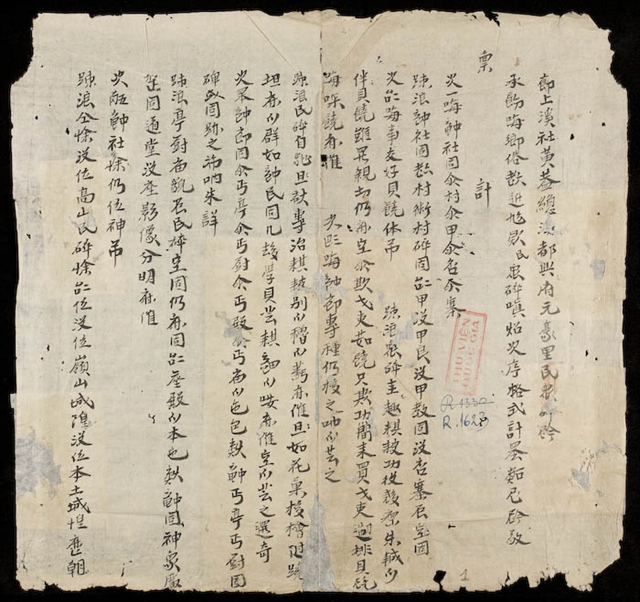
Equally important: do not dismantle traditional cultural institutions that are functioning well. In many villages, communal halls, local festivals, customary codes, clan associations and self-governing groups continue to maintain order, shared values and social cohesion. Merging communities without accounting for these institutions risks producing administrative units that share a name but lack consensus or a mechanism to reconcile their differences.
|
| A village covenant from Thượng Khê Village in the central province of Nghệ An, recording local customs in classical Chinese script, dated June 10, 1911. — Photo lib.nomfoundation.org |
Communities must also never be treated as passive subjects of administrative decisions. Vietnamese village society has endured not only because of top-down governance but of the consent and mutual trust that have always operated from within. A decision that is technically sound but lacks community acceptance can leave cultural wounds that take generations to heal.
What cultural factors should be assessed before any merger is approved?
At minimum, five categories must be examined.
First, the founding history and traditional names of each community – some village names crystallise centuries of history and cannot be discarded for administrative convenience.
Second, the full inventory of tangible and intangible heritage: communal halls, temples, cemeteries, festivals, traditional crafts, and folk knowledge, all of which also underpin community tourism and sustainable local development.
Third, social structures – clan networks, neighbourly bonds and conflict resolution traditions – whose disruption can spark lasting resentment and an us-versus-them divide.
Fourth, existing cultural facilities and whether residents will retain easy access to them after the merger.
And fifth, decisively, the sentiments and genuine consent of the community itself. Village culture cannot be measured by administrative decree. It lives in memory, habit, pride and acceptance.
Should cultural criteria be made a formal, mandatory requirement alongside administrative criteria?
Absolutely. If culture is the spiritual foundation of society and the inner engine of development, then decisions affecting villages cannot rest on administrative criteria alone. A village is a living cultural organism: it houses people, memories, customs, beliefs, heritage and the ethical currents that flow from one generation to the next.
Cultural criteria need not add bureaucratic complexity; properly designed, they make administrative decisions more humane and more durable. In practice, this means assessing the degree of similarity or difference between communities in history, customs, festivals, traditional crafts and the viability of preserving traditional names. Communities with distinctive heritage or a well-defined identity must be evaluated very carefully before any merger or renaming is approved.
Effective governance in the new era must also be discerning governance – governance that sees what does not appear in statistical tables, and respects values that resist quantification but ultimately determine the vitality of a community. A nation that wishes to go far must know how to keep its memory and its identity.
Where should the voices of local residents stand in this process?
At the centre – not tacked on at the end as a box-ticking consultation, but heard from the moment a proposal is being drafted. No one understands a village better than the people who live in it.
Community consent is not merely a condition that makes implementation smoother. It is a cultural barometer of the reorganisation itself. When people feel respected, informed and heard, they stand alongside the authorities. When they feel a decision has been handed down without genuine listening, a distance opens up inside the community that may take a long time to close.
What is needed is substantive dialogue at the grassroots level: explaining why the restructuring is happening, how old names will be preserved, how cultural institutions will be used and whether residents' interests will be affected.
The voices of the elderly, clan heads, artisans and local cultural workers – the custodians of a community's memory – deserve particular weight. Grassroots democracy is not merely a governance requirement. It is a means of protecting culture.
What fundamental solutions would you propose for the long term?
Five are essential. First, require a cultural impact assessment for every restructuring proposal, not to slow the process down, but to make sure streamlining doesn't become erasure.
Second, preserve traditional names through flexible means: signage, cultural spaces, digital maps, festivals and tourism itineraries, so that people do not feel their homeland has been erased from the shared record.
Third, establish genuine community consultation mechanisms and treat consent not as a formality but as the precondition for long-term stability.
Fourth, link restructuring with the renewal of grassroots cultural facilities, so that after a merger, residents have better, not more distant, access to communal life.
Fifth, digitise village heritages such as histories, heritage sites, artisans, customary codes, traditional crafts and community stories. When that knowledge is preserved and made accessible, administrative reorganisation need not mean cultural loss.
Streamlining the apparatus is meant to serve the people better, not to impoverish their cultural life. The Vietnamese village is where the soul of the nation has been distilled. To preserve the spirit of the village while reforming grassroots governance is to preserve the deepest current of Vietnamese culture.
A country that wants to move quickly needs an efficient administration. But a people that wants to go far must know how to hold on to its memory, its identity and the values that have always sustained it. — VNS
Opinion
 Opinion
 Opinion
.jpg) Opinion
Opinion
 Opinion
 Opinion
 Opinion
 Opinion
 Opinion
 Opinion
 Opinion
 Opinion
 Opinion
 Opinion
 Opinion