 Opinion

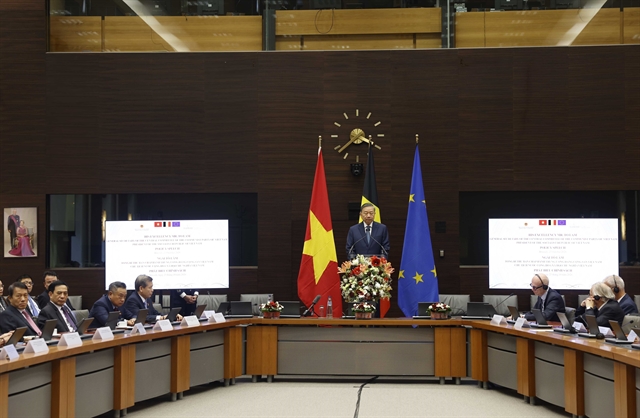
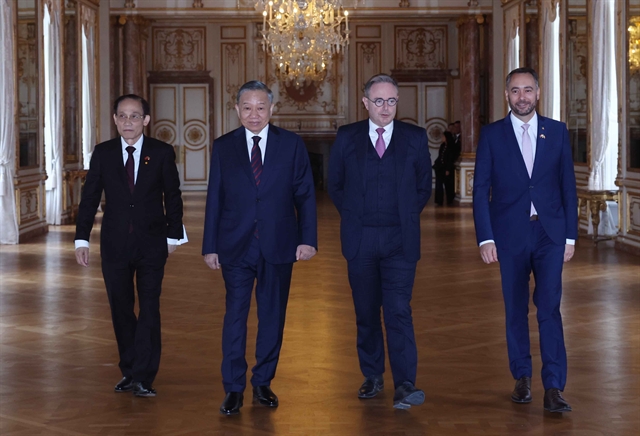
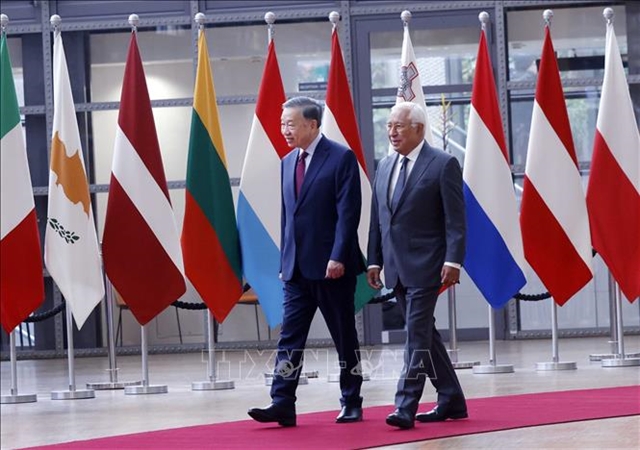
Top Vietnamese leader meets with Belgian Senate Speaker, House President
1.
 |
| Nguyễn Chu Hồi, former Deputy Director-General of the Vietnam Administration of Seas and Islands and Permanent Vice President of the Vietnam Fisheries Society. — VNA/VNS Photo |
As Việt Nam reviews its landmark maritime resolution and drafts a new one, the question of how the country manages and develops its seas has become increasingly important. Nguyễn Chu Hồi, former deputy director-general of the Vietnam Administration of Seas and Islands and Permanent Vice President of the Vietnam Fisheries Society, spoke with the Vietnam News Agency about why traditional approaches to the marine economy are no longer sufficient.
General Secretary and State President Tô Lâm recently chaired a working session to review Resolution 36, during which he called for a fundamental shift in thinking, institutions and development models, and for a new resolution to anchor that shift. How do you read that directive?
It reflects exactly the kind of far-sighted, comprehensive strategic thinking that this moment demands. Việt Nam has always known the value of its seas and islands; they have been central to how we built and defended this country throughout history.
But our use of the sea has been uneven and, in many respects, unsustainable. The 12th Party Central Committee was right to issue Resolution 36. It was a sound and strategically significant decision, and the General Secretary and President has said as much himself.
Eight years on, the record is genuinely mixed. We have made real gains: greater public awareness of the sea's role in national development; stronger policy frameworks; meaningful growth across several maritime industries; expanded coastal infrastructure; better living standards in coastal communities; and solid achievements in maritime defence and security.
But the marine economy has not grown in proportion to Việt Nam's potential or its ambitions, certainly not at the pace the 14th Party Congress resolution calls for.
The bottlenecks are not hard to identify. Maritime governance is fragmented, with agencies working in silos and mandates overlapping. Cross-sector coordination and ecosystem-based spatial management have been slow to develop.
The maritime workforce is dispersed and underprepared, particularly for the demands of deep-sea and offshore operations. The technology content of marine products remains low. And competing interests among actors sharing the same maritime zones continue to generate friction.
Given all of that, the top leader has pushed for an urgent review of Resolution 36 and the drafting of a new resolution, one that opens a new chapter in Việt Nam's maritime development and drives genuine transformation in thinking, institutions and the development model.
How would shifting from a 'maritime economic mindset' to a 'national maritime spatial development mindset' change Việt Nam's economic standing, security posture and approach to sovereignty?
Start with the nature of the sea itself. It is dynamic and inherently transboundary. Marine resources are distributed across space – at the surface, through the water column, on the seabed and beneath it.
Fish stocks and other marine species migrate continuously across zones governed by different legal regimes and different hydrodynamic conditions, yet these zones interact with and affect one another. Marine resource systems are, by their very nature, multi-use, claimed simultaneously by multiple industries.
In practice, though, they are almost always managed sector by sector. The predictable result is perpetual conflict over interests and space within the same maritime zones.
This is the direct consequence of the traditional maritime economic mindset: one that draws down natural capital toward depletion; that puts its own sector first and ignores the rest; that exports raw, minimally processed, low-technology products; and that focuses on extracting material resources while overlooking the service values embedded in marine spatial systems.
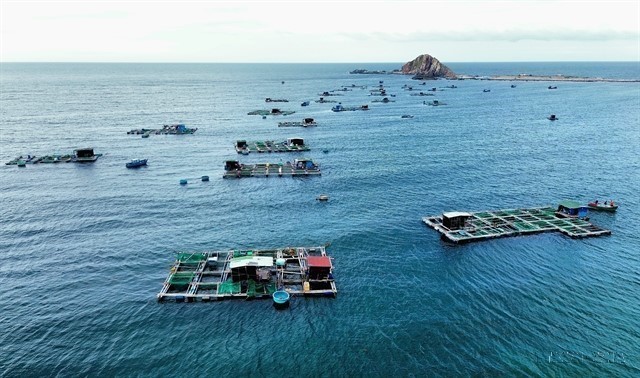 |
| A cage aquaculture operation using new technology to farm lobster and fish off the south-central province of Khánh Hòa, reducing pressure on inshore waters while curbing pollution and ecological conflict. — VNA/VNS Photo |
The maritime spatial mindset starts from the opposite premise. At its core, it is an ecosystem-based approach to maritime governance. It deploys the right tools – marine spatial planning and functional zoning – to resolve competing interests early in the development process, before conflicts calcify. It optimises outcomes for all stakeholders over time, balancing economic growth with defence and security requirements while preserving the integrity of marine spatial systems.
On that foundation, reorganising the maritime economic space makes fast, sustainable, science- and innovation-driven growth achievable rather than aspirational.
What does Việt Nam's legal framework and oversight architecture need to look like to simultaneously open the door to maritime investment and firmly protect national sovereignty and sovereign rights at sea?
A modern national maritime governance model has to be unified and integrated, built on coordination that cuts across sectors, agencies, regions and issue areas.
Marine spatial planning and functional zoning, digital transformation, the green transition, AI and advanced ocean technologies all need to be embedded in how Việt Nam governs and develops its maritime economy.
Coastal communities, island residents and offshore producers must be genuine participants in that governance architecture, not afterthoughts. And we need concrete models for combining sustainable maritime development with early, forward-deployed national defence.
The first and most urgent task is clearing the institutional logjam. That means a thorough review of overlapping and conflicting laws, followed by consolidation into a foundational legal framework comprising the Law of the Sea of Vietnam, the Law on Sea and Island Use, the Law on Marine and Island Environmental Protection, the Law on Marine Conservation and the Law on Marine Science and Technology.
That framework then provides the legal scaffolding for the Government to build the implementing instruments – decrees, circulars, spatial planning guidelines – needed to manage maritime relations and regulate actors in the maritime space in real time, while protecting sovereignty and sovereign rights from the earliest stages and at the greatest distances from shore.
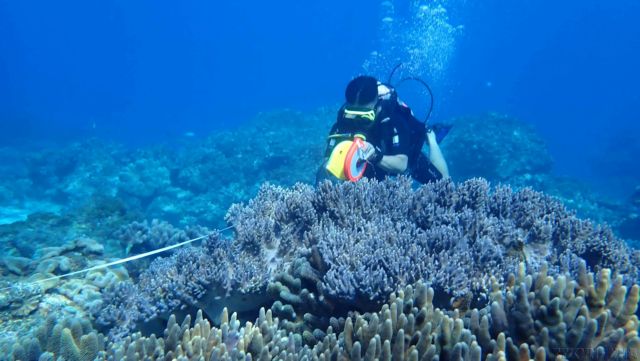 |
| AI-powered coral reef monitoring in the waters off Lý Sơn Special Zone in the central province of Quảng Ngãi, supporting the conservation of pristine marine ecosystems. — VNA/VNS Photo |
Beyond the legal architecture, we need to revisit the model for unified, integrated State management of seas and islands; strengthen multi-agency coordination for maritime management and patrolling; improve investment conditions so that enterprises have genuine entry points into maritime development; and prioritise emerging industries.
These include offshore renewables, such as wind, solar and marine biofuels; conservation-based economies and recreational fisheries; and marine pharmaceuticals, covering both nutritional products and medicines.
The General Secretary and State President has said the new resolution must put concrete shape to the idea of a 'strong maritime nation in the 21st century.' What will actually getting there require?
That goal, a strong maritime nation in the 21st century, is the overarching strategic objective running through Việt Nam's recent maritime resolutions.
Concretely, it means a country with advanced marine science and technology, a highly skilled maritime workforce capable of full international integration, a unified and integrated maritime governance system, a maritime economy that is fast-growing, green and sustainable, and defence and security forces fully capable of protecting Việt Nam's sovereignty, rights and maritime interests.
Institutional reform is necessary but not sufficient. The decisive leap will come from aggressively deploying marine science and technology, digital transformation and AI across every dimension of maritime governance and development. That is how Việt Nam breaks out of its current lag.
The sea offers large and lasting economic returns, but it demands large investment, carries high natural disaster risk and requires that maritime industries, especially deep-sea and offshore operations, follow a clear path of modernisation. Maritime defence and security must be modernised to the point of controlling airspace, surface space and subsea space simultaneously.
None of that is achievable without the vigorous development and successful application of advanced marine technologies, including floating platforms, mobile systems and high-automation capabilities. — VNS
Opinion
 Opinion
 Opinion
.jpg) Opinion
Opinion
 Opinion
 Opinion
 Opinion
 Opinion
 Opinion
 Opinion
 Opinion
 Opinion
 Opinion
 Opinion
 Opinion