 Opinion

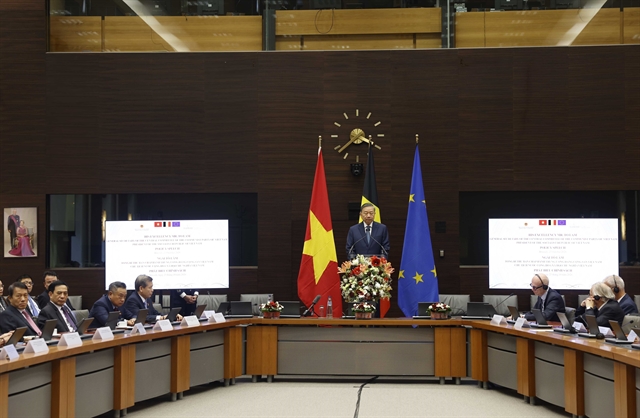
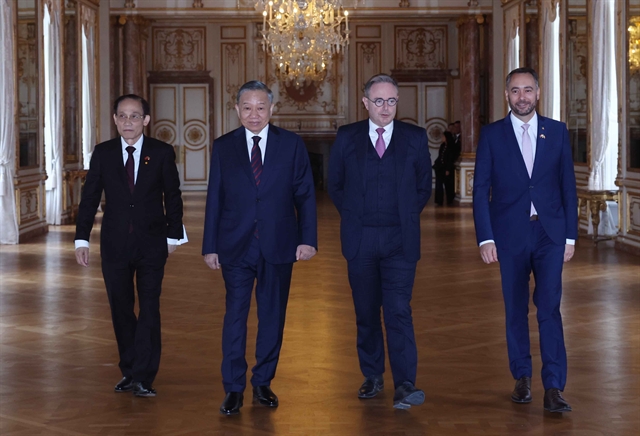
Top Vietnamese leader meets with Belgian Senate Speaker, House President
1.
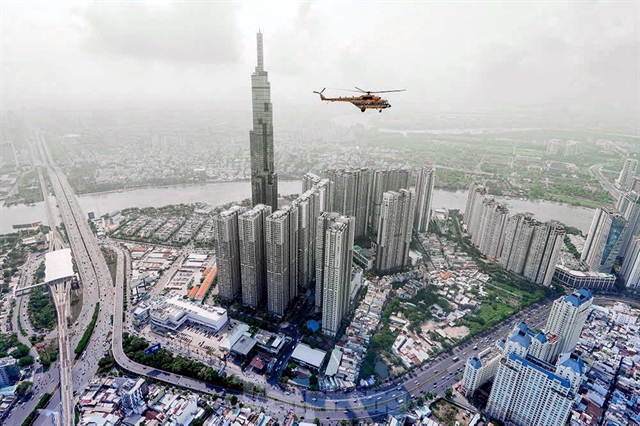 |
| HCM City rises in the new era. — VNA/VNS Photo Thanh Vũ |
Dr Hồ Sỹ Ngọc, from the Institute for Social, Economic and Environmental Research under the Hồ Chí Minh National Academy of Politics, speaks to the Vietnam News Agency about establishing a model of economic growth for Việt Nam in the new era.
Why has establishing a new growth model been identified as a central and urgent task in the documents of the 14th National Party Congress?
Among many growth factors, establishing a new model is necessary to reshape the trajectory of how resources contribute to Việt Nam’s economy. We are facing growing global challenges that require a faster and more sustainable development foundation to realise the nation’s aspiration to rise.
The 14th National Party Congress also clearly identified this as a core task to create the basis for rapid, sustainable development and for realising the nation’s aspiration to rise.
In practice, both theory and international experience show the inevitable trend of shifting from growth driven by capital and labour towards growth driven by technological progress, total factor productivity (TFP) and endogenous factors. Without change, it will be difficult for us to achieve a breakthrough in the new era.
Looking back over the period since Đổi Mới (Renewal), how do you assess the limits of the old growth model?
The post‑Đổi Mới (1986) growth model was largely extensive, relying heavily on inputs such as capital, labour and natural resources. Its limitations are evident in very low capital efficiency. The ICOR (incremental capital‑output ratio) for 2006–2010 was 6.1, and most recently for 2020–2025 this figure has approached 6.5 – the highest level in the past 15 years. This indicates the old model has shown signs of saturation and a waste of investment resources. When land and natural resources are no longer an advantage, change becomes imperative.
Which core pillars should the new growth model be built upon?
In my view, it must rest on four leading pillars.
First, growth founded on a breakthrough in development institutions: this is the 'breakthrough of breakthroughs'. The aim is to remove barriers to free up resources in land, labour and capital. The focus is on reform that is transparent, simplifies business procedures and enforces the law effectively.
Second, growth founded on science, technology and innovation: in the new model, these are no longer external factors but endogenous variables that determine the nature of growth. Applying artificial intelligence (AI), biotechnology and automation will generate exponential improvements in investment efficiency and new value added.
Third, a new model with modern, integrated infrastructure: the principle is 'infrastructure one step ahead' to unlock bottlenecks, reduce logistics costs and strengthen inter‑regional connectivity. This goes beyond transport infrastructure such as highways and seaports to include modernisation of the power grid and digital infrastructure.
Finally, the model must harness the human factor: people are the centre, the agent and the driving force of development. Investing in high‑quality human resources, and awakening patriotism and the aspiration to develop, is the key to optimising productivity in the digital era.
Which institutional bottlenecks should be prioritised for removal?
Removing institutional bottlenecks is the 'breakthrough of breakthroughs', playing a decisive role in releasing all social resources.
First, removing barriers to unlock input resources such as land, capital and labour.
Next, improving the effectiveness of law enforcement, ensuring transparency and stability in the investment and business environment.
Alongside this, accelerating administrative procedure reform to reduce compliance costs for enterprises.
In particular, institutions must be perfected so that the private sector genuinely becomes a major driver of the economy. At the same time, mechanisms should be created to promote science and technology, innovation and deeper international integration.
Moreover, the leading role of public investment should be promoted as 'seed capital' to attract much stronger social resources.
I believe resolving these bottlenecks will not only remove existing barriers but also create a coherent and inclusive institutional system, laying the foundation for Việt Nam’s rapid and sustainable development in the new era.
What are your expectations for this comprehensive transformation of the economy?
The coordinated combination of institutional reform, technological breakthroughs and the mobilisation of human capital will create a new growth ecosystem. This is not only about GDP figures, but the foundation for Việt Nam to realise its aspiration to rise and to build a modern, sustainable nation in the new era.
To achieve this comprehensive transformation, the role of people is crucial. People operate modern means of production. When patriotism and the aspiration to develop are awakened, they become the practical driving force for accumulating human capital. — VNS
Opinion
 Opinion
 Opinion
.jpg) Opinion
Opinion
 Opinion
 Opinion
 Opinion
 Opinion
 Opinion
 Opinion
 Opinion
 Opinion
 Opinion
 Opinion
 Opinion