 Opinion
A turning point for Việt Nam's concert era
1.
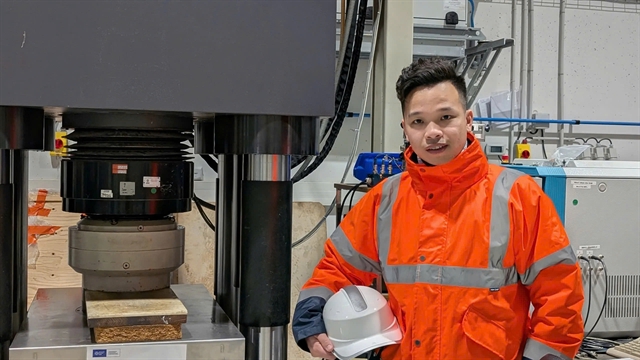 |
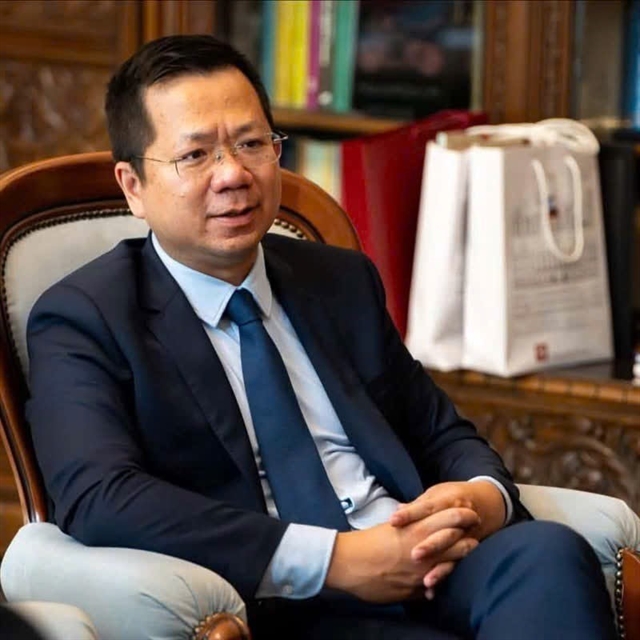
| Dr Trần Lê Hưng inside a laboratory at the Engineering School of Paris at Gustave Eiffel University in France. |
The 13th National Congress of the Hồ Chí Minh Communist Youth Union for the 2026–2031 term officially started in Hà Nội on Thursday morning. For the occasion, Việt Nam News and Law reporters Thu Hằng and Khánh Chi spoke to Dr Trần Lê Hưng, a high-speed rail specialist at the Engineering School of Paris at Gustave Eiffel University in France.
What role do overseas Vietnamese intellectuals play in advancing the nation’s science and technology as well as economic development?
The overseas Vietnamese community is growing increasingly stronger, featuring a vast cohort of young intellectuals working at prestigious universities, research institutes and leading technology corporations worldwide. After accumulating international knowledge and experience across various advanced scientific and technological fields, they possess a profound desire to contribute to their homeland.
This represents a significant endogenous resource for the nation, as many young Vietnamese scientists are leading strategic research groups and serving as vital bridges between Việt Nam and the world. Their international scientific work not only upholds the reputation of Vietnamese intellect, but also provides technological solutions to both global and domestic challenges, such as climate change adaptation, energy security and infrastructure development.
This community of young overseas intellectuals bolsters Việt Nam’s skilled workforce and drives innovation in thinking, management and the country's scientific and technological development. They also contribute to training the next generation and facilitating technology transfer, bringing the world's most advanced solutions to Việt Nam and presenting the country's challenges to the global stage for solutions. This synergy attracts both overseas Vietnamese specialists and international experts to Việt Nam.
You always emphasised the immense potential of overseas Vietnamese intellectuals. What are the biggest barriers currently preventing this resource from being fully utilised?
Existing issues do not stem from a lack of aspiration, but rather from ineffective connection mechanisms, a suboptimal implementation environment and unsynchronised infrastructure. This can be attributed to the fact that the role of Youth Union organisations abroad has not yet been fully leveraged due to various objective and subjective factors. To resolve this, we need to assess and clearly identify Việt Nam’s competitive advantages compared to other nations to strategically focus our investment and attract resources.
Relevant agencies should collaborate with the Hồ Chí Minh Communist Youth Union to develop concrete action plans to dismantle these barriers. This will create a favourable legal and professional corridor to attract and retain Vietnamese talent, especially those who wish to return home to develop their careers.
In your opinion, what should the Youth Union do to serve as a genuine bridge between young Vietnamese scientists worldwide and the nation's development needs, particularly in science, technology and innovation?
Different periods demand different tasks. The Youth Union has performed its duties excellently since its inception. However, as the country enters a new era driven by science and technology, the Youth Union's mission must evolve. We must 'think new and act differently'.
This means promoting the role of a pioneering force; the new generation of youth must not only be ready to take on difficult tasks, but also proactively adapt and transform themselves into the creative subjects of the times.
The idea can be defined as 'intellectual patriotism,' where patriotism is not limited to emotions or pride but is expressed through knowledge, the capacity for action and the ambition to conquer the heights of science and technology.
To achieve this, I expect that in the next term, the Global Network of Young Vietnamese Intellectuals will be reformed to become more substantive. This should be done through clear action programmes tied to the country's specific challenges, alongside coordination mechanisms between the Youth Union, ministries and relevant agencies to mobilise intellectual resources.
Ultimately, this network should become a global knowledge hub that gathers ideas and initiatives for applied research.
You once proposed a 'research bridge' between Việt Nam and overseas scientists. How can this model be implemented, and what benefits would it offer both Vietnamese scientists at home and abroad?
The Research Bridge programme aims to establish a formal interactive channel between domestic science and technology requirements and overseas Vietnamese experts and young scientists. Under this model, domestic research topics and technology transfer needs would be publicly announced to invite participation from the overseas Vietnamese community.
Various forms of collaboration will be encouraged, such as short-term overseas research stints, co-supervision of PhD candidates, guest lecturing or direct technology transfer. Crucially, we must establish clear regulations regarding administrative procedures, working conditions and financial mechanisms to create favourable conditions for this partnership.
This model helps maximise the international expertise and experience of the young Vietnamese diaspora for domestic projects. In other words, we are building a circular knowledge ecosystem — a place where knowledge from global scientific hubs is transferred directly to domestic R&D centres.
Through these connections, young scientists can participate in the domestic value chain despite being far from the homeland, contributing to the modernisation of production processes and the enhancement of national competitiveness.
Furthermore, this research collaboration will generate tangible economic value and strengthen national unity, effectively blurring geographical boundaries through the enduring bond of knowledge.
What message would you like to convey to young Vietnamese people studying and working abroad who desire to contribute to their homeland?
Contributing to the nation is not merely an obligation or a duty; it is a right belonging to every Vietnamese citizen, as it affirms our role in shaping the nation’s future.
I am personally deeply aware of my own responsibility and mission in the cause of building and defending the Fatherland. I always aspire to dedicate my intellect and energy to specific, breakthrough projects that serve as the backbone of Việt Nam’s development.
Contributing personal efforts to the nation’s collective success is a matter of great honour and pride. It is how each individual inherits the achievements of previous generations while pioneering a future for those who follow. This embodies our nation’s noble tradition: 'When drinking water, remember the source.'
By working together to build the country, we express our profound gratitude to the generations who sacrificed their youth and their lives so that today’s Vietnamese youth can stand on par with the great powers of the world.
For young Vietnamese intellectuals abroad, your role is even more vital, as you serve as the crucial bridge between Việt Nam and the world. As our country enters a new era, the overseas Vietnamese community represents an essential internal strength of the nation.
I urge you to maintain your political mettle, remain conscious of your responsibilities and constantly ask how you can best contribute. Alongside millions of young people at home, let us remain steadfast in our faith in the Party, united in the mission to build and protect our Fatherland. VNS
Opinion
 Opinion
 Opinion
 Opinion
 Opinion
 Opinion
 Opinion
 Opinion
 Opinion
 Opinion
 Opinion
 Opinion
 Opinion
 Opinion