 Opinion

Lacquer painting exhibition brings 62 works to HCM City
1.
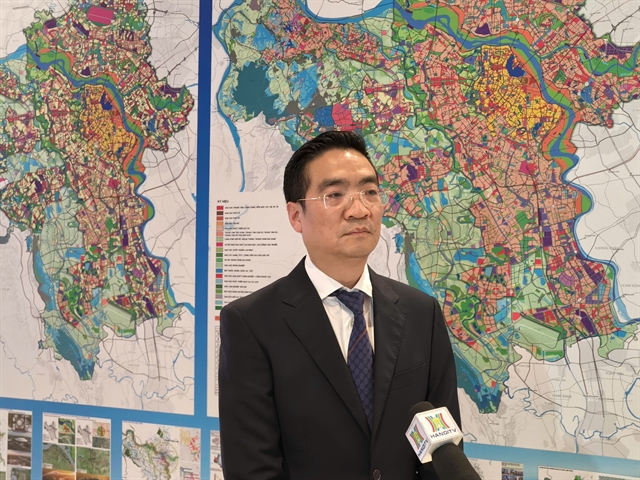 |
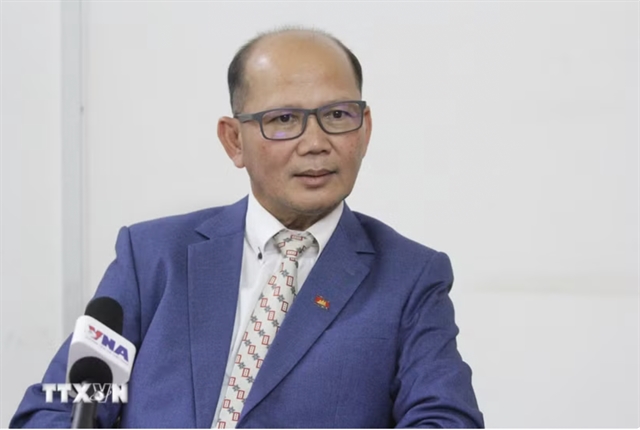
| Nguyễn Trọng Kỳ Anh, director of the Hà Nội Department of Planning and Architecture, speaks with the press following the unveiling of the Hà Nội Capital Master Plan with a 100-year vision. VNS Photo Khánh Linh |
After the unveiling of the Hà Nội Capital Master Plan with a 100-year vision, Director of the Hà Nội Department of Planning and Architecture Nguyễn Trọng Kỳ Anh spoke with the press about the plan's groundbreaking features and how the city intends to rapidly translate its long-term vision into tangible projects.
What are the most significant breakthroughs in the newly announced 100-year master plan for Hà Nội?
Urban planning has traditionally stayed one step ahead of development, but implementation has often been constrained because infrastructure failed to keep pace with urban expansion. The new master plan fundamentally changes that approach.
One of its most notable innovations is the introduction of a multi-layered urban structure. The city will prioritise the completion of its backbone infrastructure network, particularly by expanding the metro system and completing radial roads and ring roads.
This infrastructure is designed not only to address transport challenges, but also to support a new model of urban development. Hà Nội will grow vertically as well as horizontally, making more efficient use of land resources while strengthening connectivity across the city.
The plan seeks to optimise land use, increase the efficiency of urban space, reduce pressure on surface development and prioritise public spaces, parks and waterways. The new urban structure will also enhance resilience to climate change and ease traffic congestion and flooding, while preserving and promoting the city's cultural and historical heritage during the development process.
Another major innovation is the introduction of the low-altitude economy as a new development sector.
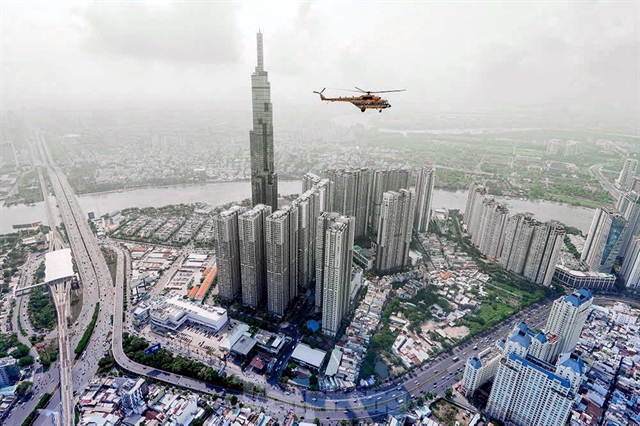
For the first time, the plan incorporates management and economic use of airspace below 1,000 metres. Hà Nội intends to designate pilot zones for urban air mobility, including electric vertical take-off and landing air taxis, drones and smart urban monitoring technologies.
This low-altitude space represents a new frontier for development, supporting not only air mobility but also telecommunications, communications infrastructure and unmanned aerial systems. By planning this airspace from the outset, Hà Nội will be well positioned to adopt emerging transport and service technologies while creating new drivers of socio-economic growth.
The master plan also embraces the philosophy of ‘forest within the city, city within the forest’, combined with the concept of ‘villages within the city, city within the villages’. The objective is to strike a balance between urban expansion and rural preservation, ensuring that modern development does not come at the expense of Hà Nội's rural landscapes or cultural identity. This people-centred approach is intended to make the capital an even more liveable city.
Digital transformation and the digital economy also form a central pillar of the master plan.
Modern digital technologies will underpin planning management through comprehensive data systems, while the digital economy will increasingly be integrated across all sectors of Hà Nội's socio-economic development.
A master plan only creates value if it is effectively implemented. How does Hà Nội intend to turn this vision into reality?
That is the biggest challenge we face today – transforming a planning document into real projects that drive development.
To achieve this, Hà Nội is making full use of the special mechanisms provided under the revised Capital Law and resolutions adopted by the municipal People's Council.
Previously, preparing technical infrastructure plans could take two to three years. Under the new framework, the city will begin implementing five major technical infrastructure planning projects as early as this September.
District-level and functional zoning plans will also be launched this year, with preparation time expected to be reduced by 30 to 50 per cent compared with current procedures.
Thanks to the Capital Law and Resolution 63 of the Hà Nội People's Council, different levels of planning can now be prepared simultaneously rather than sequentially. This parallel approach is expected to accelerate investment flows and eliminate lengthy administrative delays.
For detailed 1:500 planning schemes, Hà Nội will also be allowed to begin project preparation before completing all design task procedures, shortening the approval process by an additional two to three months and enabling projects to move forward more quickly.
In terms of urban development, the city will prioritise multi-functional urban areas capable of meeting a range of needs simultaneously, including resettlement housing, social housing, rental housing, old apartment redevelopment and broader urban renewal.
At the same time, Hà Nội will continue investing heavily in technical infrastructure, particularly the metro network and road transport system, to strengthen connectivity between the capital and neighbouring provinces across the capital region.
The city also plans to apply digital technologies extensively to planning management, enabling real-time monitoring and supervision while reducing the risk of arbitrary planning adjustments during implementation.
How will the city address resettlement during urban redevelopment projects?
Hà Nội will identify and prepare resettlement areas before launching major urban renewal projects.
The city is currently studying multiple potential locations based on proposals from its 126 local administrative units. By developing resettlement areas with modern infrastructure and high-quality living environments in advance, residents will be able to clearly see the benefits of relocation, helping minimise disputes and build public support for redevelopment projects.
The 100-year master plan also extends beyond Hà Nội's administrative boundaries by positioning the capital within a broader regional development framework.
Many of the city's longstanding urban challenges will be addressed through stronger regional connectivity. The metro system and expressway network will form the backbone linking Hà Nội with neighbouring provinces, creating a more integrated and sustainable regional economic space.
Ultimately, all of the city's planning efforts and institutional reforms are directed towards a single objective: transforming ambitious blueprints into reality and enabling Hà Nội to achieve a new stage of development in the decades ahead. — VNS
Opinion
 Opinion
 Opinion
 Opinion
 Opinion
 Opinion
 Opinion
 Opinion
 Opinion
 Opinion
 Opinion
 Opinion
 Opinion
 Opinion
 Opinion