 Opinion
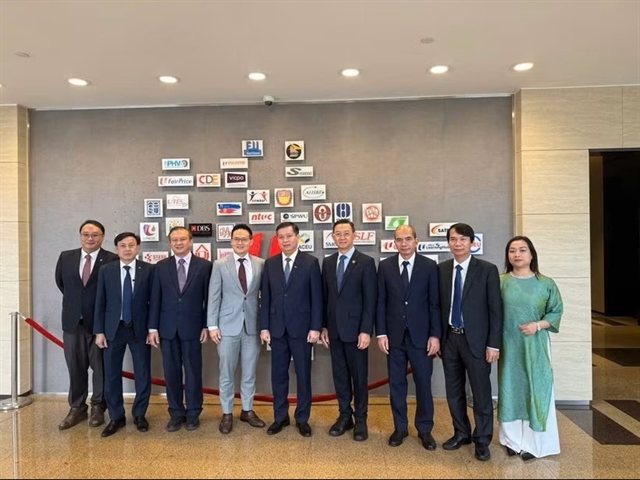
Việt Nam, Singapore promote cooperation through Party-to-Party channel
1.
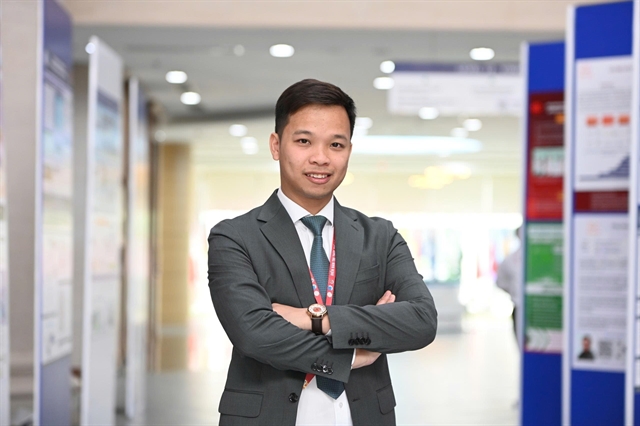 |
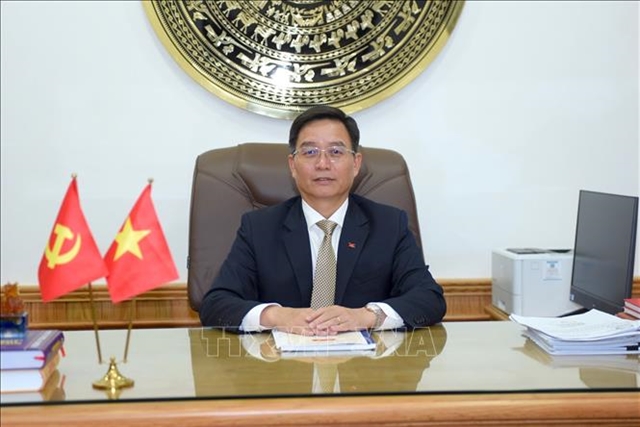
| Associate Professor Dr Trần Lê Hưng from Gustave Eiffel University in France. — VNA/VNS Photo |
Associate Professor Dr Trần Lê Hưng from Gustave Eiffel University in France says Việt Nam should focus on training skilled workers, enhancing international integration and building a connected innovation ecosystem to meet General Secretary and State President Tô Lâm’s vision for youth. In a recent interview with the press, he shared key skills and reforms required as well as current gaps.
What core competencies must Vietnamese youth develop to fulfil Lâm's call to build a generation that "practises lifelong learning, masters science and technology, leads in innovation and digital transformation and integrates internationally"?
In my view, the direction set by the top leader is more than a call to build a workforce; it is a blueprint for a generation of global citizens rooted in Vietnamese identity. Young Vietnamese must be confident in knowledge, upright in character and grounded in culture to integrate without losing their roots.
Key skills include a research mindset and lifelong learning, along with the ability to continually update knowledge, learn quickly and adapt to rapid scientific and technological change. Interdisciplinary thinking is crucial; young people should connect fields to solve complex real-world problems rather than remain confined to narrow specialisms.
Proficiency in international academic communication, including writing papers, presenting research and debating in foreign languages, is essential for deeper engagement with the global scientific community. Deeper integration also demands cultural and political resilience: youth must preserve national identity and values so they project a confident, responsible Việt Nam abroad.
As a young scientist working abroad, what advantages do Vietnamese youth have when entering the global science and technology community?
Vietnamese youth stand out for diligence, rapid adaptability and a strong drive to improve in study and research. Recent education reforms have produced a generation that is more dynamic and more confident internationally.
Many Vietnamese students have won top prizes at international competitions and play active roles in global research and academic programmes. The network of young Vietnamese scholars overseas is expanding, becoming more tightly connected and delivering substantive cooperation.
Another major advantage is the roughly six million Vietnamese living overseas, including many young intellectuals at leading universities, research institutes and technology firms.
That is a vital homegrown resource. They bring international knowledge and experience and serve as bridges to the global scientific network, opening up opportunities for research collaboration, innovation and technology transfer.
What is the biggest gap Vietnamese youth must narrow in the international scientific arena?
The gap is not capability or ambition, but the mechanisms and environment to unlock it. Many young scholars who want to collaborate with or return to Việt Nam face hurdles in research infrastructure, funding rules and the academic climate. Networks are fragmented and unsystematic, so cooperation often rests on personal ties.
Young people also need stronger independent research skills, critical thinking and a scientific culture. The chase for publication counts persists, which can hurt quality and raise integrity concerns.
The priority is to build a well-trained generation with firm research ethics, people who think independently and take responsibility for the knowledge they create, so they can serve the public and make a substantive contribution to global science.
How should universities, research institutes and businesses change to develop skilled personnel?
We need a substantive, coherent innovation ecosystem. Resolution 71-NQ/TW set out a State–school–enterprise model, which is right. But it should expand to a five-part model by adding researchers and investors to complete the ecosystem.
Universities must reform teaching, link theory with practice and help students understand real workplaces. Labs should be used effectively and connected with industry to move research into application.
Businesses should treat R&D as a long-term strategy and move deeper into technology value chains. Talent policies must be backed by working conditions, research facilities and competitive incentives, not just appeals to patriotism. Above all, we need mechanisms that make universities, institutes, enterprises and investors work together in practice, not just on paper.
What are your expectations for connecting young Vietnamese intellectuals worldwide?
The priority is a real mechanism to harness young Vietnamese talent globally. As I said before, the diaspora can be a major resource with about six million people, many working in cutting-edge science and technology.
Their willingness to contribute is not the issue, it is the mechanisms to make it happen. I propose a 'Research Bridge' programme that publicises domestic research and tech-transfer needs to link with overseas experts, enabling joint research, PhD co-supervision, visiting lectureships and technology transfer.
We also need clear rules on funding, procedures and working conditions to build trust for long-term cooperation. I hope the Youth Union becomes a hub for the innovation ecosystem, bridging start-ups, universities, institutes and businesses at home and abroad.
Ultimately, the system that includes universities, institutes, enterprises and investors must operate substantively, not just via MoUs. The overseas Vietnamese network should serve as a two-way bridge, bringing international standards to Việt Nam and showcasing Vietnamese scientific capacity to the world.
Once these bridges are built, I believe every young Vietnamese person, wherever they are, can contribute to national development with knowledge, creativity and responsibility. — VNS
Opinion
 Opinion
.jpeg) Opinion
Opinion
 Opinion
 Opinion
 Opinion
 Opinion
 Opinion
 Opinion
 Opinion
 Opinion
 Opinion
 Opinion
 Opinion
 Opinion