 Opinion
Việt Nam, Singapore promote cooperation through Party-to-Party channel
1.
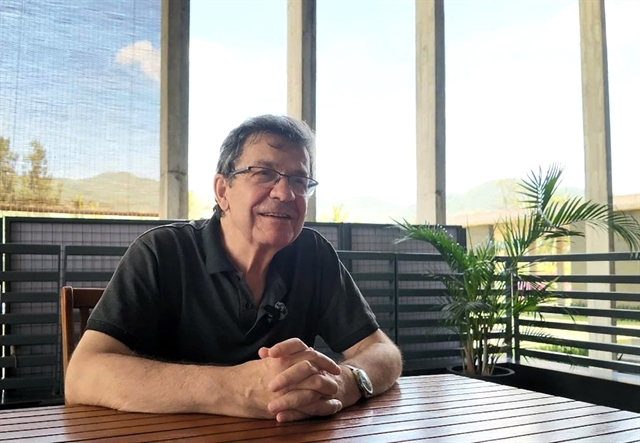 |
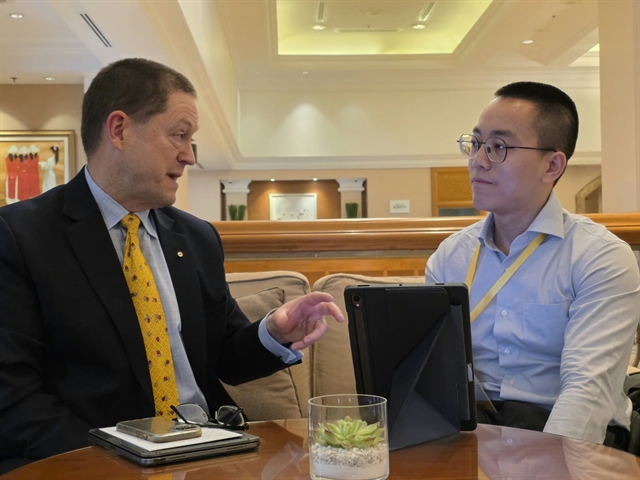
| Professor Jean-François Joanny, a theoretical physicist from the Collège de France. Photo ICISE |
On the sidelines of the International Conference on 'Soft Matter, Fluids and Interfaces' (SFI 2026) in Gia Lai Province from June 29 – July 3, Professor Jean-François Joanny, a theoretical physicist from the Collège de France and head of the Organising Committee, spoke to Việt Nam News reporter Khánh Chi about soft matter, fluids, and the future of scientific collaboration in Việt Nam.
Prof Joanny has made significant contributions to soft matter physics before expanding his research into biophysics, aiming to describe biological phenomena through the lens of modern physics.
The concepts of ‘soft matter’ and ‘fluids’ may sound highly academic, yet they are ubiquitous in our daily lives. Could you share some breakthrough applications from this field in healthcare and environmental protection?
The first thing I want to say is that soft matter is indeed everywhere in our everyday life. Soap is soft matter. Your medicine might be made of colloidal particles, which are also soft matter. Polymers and plastics, all these things fall under this category.
Most of what we use daily is soft matter. Furthermore, and this is the area where I am mostly working now, biological systems are also soft matter. That is quite obvious when you think about it; they are more complicated because they are living, but they are a natural extension of soft matter science. I don’t claim that soft matter physics will solve all the problems of biology, but it can bring a different perspective to many biological questions.
As far as environmental questions are concerned, there is a trend toward using water-based solvents and materials that are water-soluble. There is a lot of research into using natural soaps and similar biodegradable substances.
I think there is much to be done here. The more scientists work on environmental questions, the more we will progress toward having environment-friendly objects. Soft matter, much like in biology, provides an excellent approach to solving these challenges.
At SFI 2026, scientists presented their latest research findings. Could you highlight some of the most recent results and their practical applications?
During the opening days of the conference, we saw many presentations regarding flows in soft matter. Soft objects flow in a very different way because they deform as they move. This is vital for everyday applications, though it can be very complicated.
During the event, for example, there were many talks related to chemical engineering where researchers take real-world problems and try to describe them quantitatively.
This year, we have specifically emphasised the aspect of 'flowing soft matter'. These systems are often non-intuitive, think of objects like molten plastics. It is very difficult to find nice theories to describe them, and it is even harder to go down to molecular descriptions because they are so complex. Scientists have to be very clever to navigate this, and it remains a fascinating field of research.
The conference brings together many of the world's leading scientists. What are the latest trends or technologies in 'interfaces' that are expected to transform material or energy production over the next five to 10 years?
For the next ten years, I see a major shift toward environmental questions. Scientists are increasingly taking these issues into account, which will lead to the development of 'friendlier' materials.
For instance, soft matter scientists have traditionally worked a lot on polymers, but today the pressing question is the ubiquity of plastics. How do you degrade these plastics? How do you break them down in a way that does not pollute the environment? These are the questions being raised now, and many people are working on solutions. I hope research continues strongly in this direction.
How does the conference promote academic exchange and strengthen the connection between the Asia-Pacific scientific community and international researchers?
One of the main motivations for hosting a conference in Việt Nam is that scientists from Southeast Asia, South Korea and India have told us they often miss out on the major worldwide conferences because they are too far away. We wanted to involve people from Việt Nam and its neighbouring countries who have a high demand for these exchanges.
We now have a very nice framework for organising these meetings, which leads to direct collaborations. My hope is that this helps the community in Southeast Asia get better connected to the global soft matter community.
There are very talented people doing science in these countries. By hosting a local conference where high-level international experts participate, we can help them expand their research. It also puts young local researchers in direct contact with world-class scientists.
As evidenced by SFI 2026, we have gathered approximately 60 professors, researchers, and postgraduates from 18 countries and territories. Many of these participants are world-leading scientists in the field, representing prestigious institutions in the US, the UK, the Netherlands, France and beyond.
What is the significance of hosting such a specialised international conference in Việt Nam for the local scientific community?
This time, we had ten Vietnamese researchers registered. Last time, there were only three or four. This growth is something we should continue to work on, going deeper into the Vietnamese scientific community and understanding what their specific needs are. It is a very good sign for the future of the conference. VNS
Opinion
 Opinion
.jpeg) Opinion
Opinion
 Opinion
 Opinion
 Opinion
 Opinion
 Opinion
 Opinion
 Opinion
 Opinion
 Opinion
 Opinion
 Opinion
 Opinion