 Politics & Law
Đắkrông Nature Reserve records 35 new bird species
1.
|
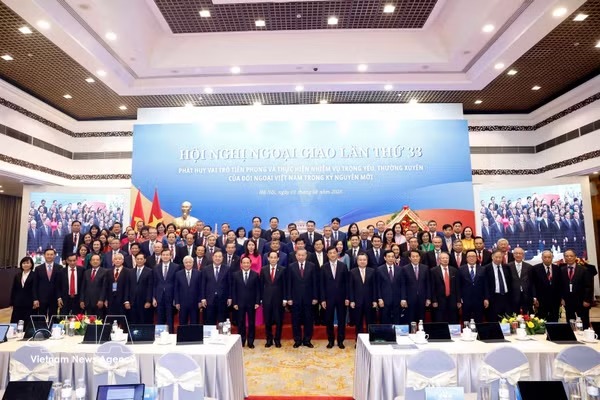
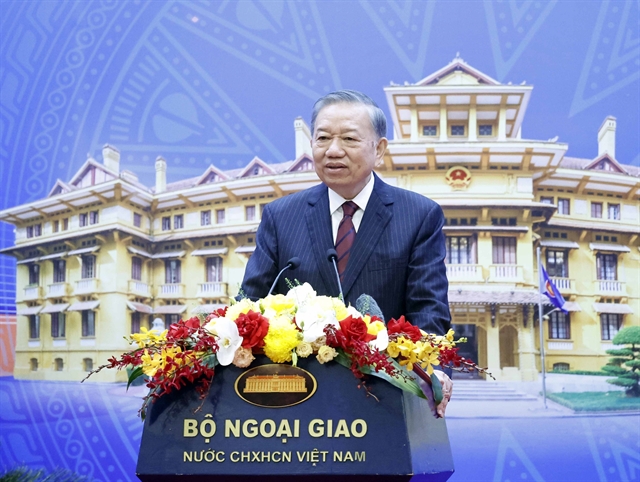
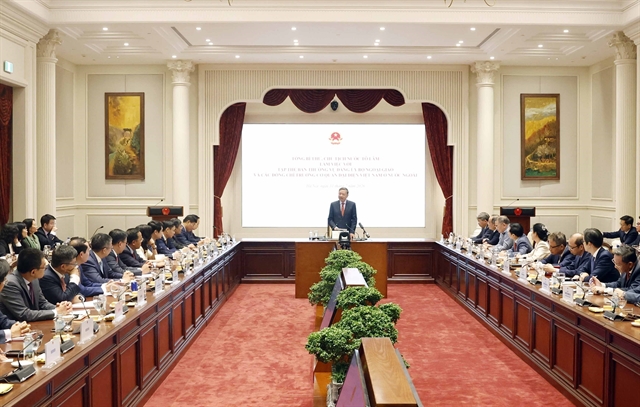
| Party General Secretary and State President Tô Lâm (centre, first row) and other delegates at the 33rd Diplomatic Conference. — VNA/VNS Photo |
HÀ NỘI — Politburo member, Deputy Prime Minister and Minister of National Defence Phan Văn Giang and Politburo member, Minister of Public Security Lương Tam Quang underscored the need to strengthen coordination among ministries, sectors, and localities to safeguard a peaceful and stable environment for national development, while addressing the ongoing 33rd Diplomatic Conference.
In his presentation on promoting the pioneering role and implementing the crucial and regular task of Vietnamese diplomacy in the new era, General Giang noted that in the context that the world is undergoing rapid and complex changes, marked by strategic competition among major powers, conflicts and instability in various regions, the 14th National Party Congress identified external relations and international integration, together with defence and security, as three crucial and regular tasks in national construction and defence.
Việt Nam must consistently pursue its foreign policy of independence, self-reliance, self-strengthening, peace, friendship, cooperation and development, and diversification and multilateralisation of external relations, while promoting deep, comprehensive and effective international integration to safeguard the national interests to the fullest extent on the basis of international law and the United Nations Charter, he said.
Regarding the need for closer coordination among the Ministries of National Defence, Foreign Affairs and Public Security, as well as other ministries, sectors and localities, Giang outlined seven key tasks. These include ensuring consistent implementation of the Party's foreign policy, strengthening strategic research and policy advice, and effectively organising high-level diplomatic activities and delegation exchanges to bolster political and strategic trust.
He also called for closer coordination in monitoring, assessing and forecasting developments to avoid passivity or surprises; and enhanced coordination in international integration and defence diplomacy, including the reception of foreign naval ship visits, and the organisation of border defence friendship exchanges and the Việt Nam Defence Expo. Greater attention should also be paid to personnel development, improving the effectiveness of defence and military attaché networks and forces participating in UN peacekeeping operations.
The official also urged agencies to improve the institutional and legal framework for foreign relations and international integration, ensuring consistency, practicality and feasibility.
Giang expressed his confidence that with the Party's leadership and the concerted efforts of the entire political system and the diplomatic sector, Việt Nam's external relations and international integration will achieve further successes in the new era.
Meanwhile, General Quang highlighted the role of the People's Public Security Force in security-related external relations and international integration, contributing to safeguarding national interests and strengthening Việt Nam's position in the international arena.
Since 2025, the force has signed 73 international treaties and agreements on security and public order, expanded cooperation between local police forces and foreign partners, and proposed initiatives to improve the effectiveness of criminal apprehension that were adopted by ASEAN member states at the 47th ASEAN Summit.
He also highlighted Việt Nam's successful hosting of the signing ceremony of the UN Convention against Cybercrime (Hà Nội Convention), which, with a record number of participating countries, marked an important contribution to global efforts to address transnational challenges.
The Ministry of Public Security has also strengthened international cooperation in combating drug-related crimes, online gambling and illegal immigration, while helping build a "security belt from afar" and preparing for higher-level participation in UN peacekeeping operations.
For the coming period, Quang said the ministry will focus on strengthening security from an early stage and from afar, protecting Vietnamese citizens and organisations abroad, enhancing strategic policy advice, and promoting selective technology transfer in key sectors.
He affirmed that the effectiveness of foreign relations should not be measured by the number of visits or agreements signed, but by their substantive contributions to implementing the Resolution of the 14th National Party Congress and the country's strategic development goals. — VNA/VNS
Politics & Law
 Politics & Law
 Politics & Law
 Politics & Law
 Politics & Law
 Politics & Law
 Politics & Law
 Politics & Law
 Politics & Law
 Politics & Law
 Politics & Law
 Politics & Law
 Politics & Law
 Politics & Law
 Politics & Law
.jpg)