 Politics & Law
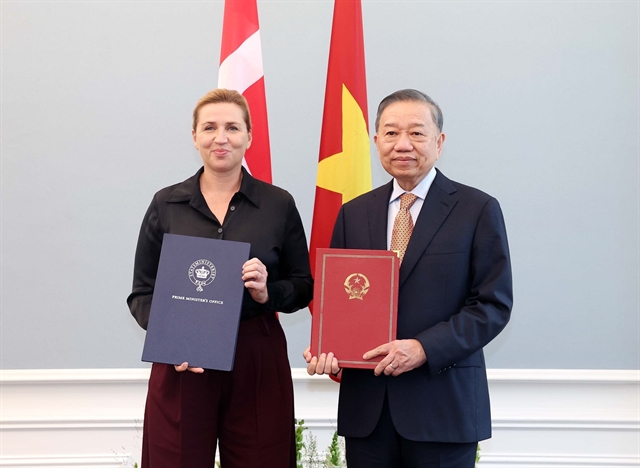
Việt Nam, Denmark issue joint statement on establishment of Comprehensive Strategic Partnership
1.
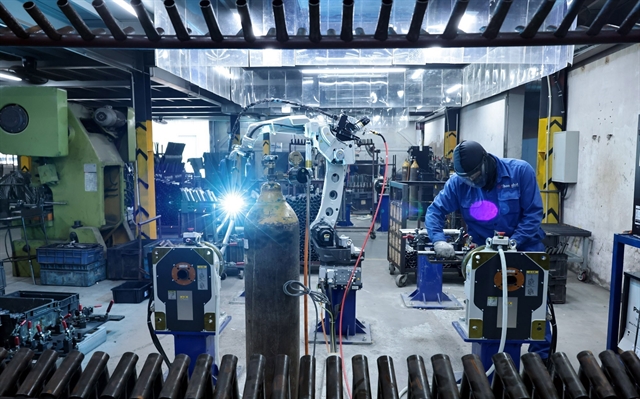 |
| A robotic arm welds bicycle frames at a factory in Hà Nội. Productivity, technology and innovation are expected to underpin Việt Nam's next phase of economic growth. — VNA/VNS Photo |
HÀ NỘI — Việt Nam's next stage of development will demand more than faster growth — it will require a fundamental rethink of how the country is governed, how its economy is organised and where its competitive strengths will come from.
At the meeting of the Central Committee of the Communist Party of Việt Nam last week, Party General Secretary and State President Tô Lâm outlined four "strategic shifts" that he said should guide the country's transformation in the years ahead.
The shifts, as the top leader outlined, are: strengthening the party's leadership and the operational quality of the state apparatus; unifying governance across the country's development space to make more effective use of national resources; adopting a development model built on productivity, knowledge, technology and human capital; and strengthening the country's ability to anticipate risks, withstand shocks and safeguard national security.
Two officials offered their own interpretation of what these shifts mean in practice.
Bùi Hoài Sơn, a member of the National Assembly's Committee for Culture and Social Affairs, focused on the shift toward governing capacity and on what it means to govern the country's development space as an integrated whole.
Bùi Thị An, chairwoman of the Hanoi Association of Female Intellectuals, focused on the growth-model shift – what it will actually take to hit this year's growth target and sustain double-digit growth over time.
New direction
Sơn argues that with the restructuring of the state apparatus now largely complete, the top leader is pushing the party to move beyond "streamlining the apparatus" toward "strengthening leadership and governing capacity" – a shift, in Sơn's view, from reforming structures to substantively reforming how the political system actually works.
Streamlining is a necessary step, he argues, but not an end in itself. A leaner bureaucracy with fewer layers doesn't automatically work better. If decisions still take too long, accountability remains unclear, coordination is patchy, and staff are not up to the job, the reform will fall short of its goals.
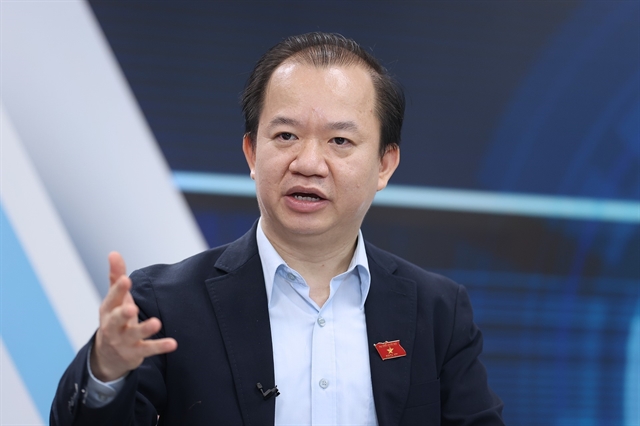 |
| Bùi Hoài Sơn, a member of the National Assembly's Committee for Culture and Social Affairs. — VNA/VNS Photo |
The point the top leader was making, in Sơn's reading, is that a new organisational chart has to translate into a genuinely new ability to act – a party that leads more effectively, a state that governs better, a system that responds faster and a public that is served better.
He describes governing capacity in this new phase as more than setting the right policy direction. It also means being able to anticipate problems, turn policy into workable rules, carry out and monitor implementation, and adjust course when needed – along with the judgment to prioritise the right issues, mobilise resources across society and tackle new problems with no precedent to draw on.
That, he says, has major implications for how officials are selected and evaluated: it's not enough for them to have the right political credentials; they also need to be able to execute, be willing to take responsibility, be comfortable working with data, engage directly with the public, and deliver concrete results.
Making reform work
A leaner apparatus shouldn't mean overworked staff, drawn-out procedures, or responsibility getting passed from one office to the next. As Sơn puts it, the key question is shifting from how the system is organised to what value it creates for the country and its people, which he calls the deepest measure of the reform's success.
Asked how that kind of capacity might actually be measured, Sơn points to a case in point: the two-tier local government model that has now been in place for about a year.
Judging its success purely by reduced staff numbers or administrative savings, he says, tells only part of the story. Those figures matter, but what matters more is the quality of how the system actually functions and the real value it delivers, including how smoothly the bureaucracy runs, the quality of service to citizens and businesses, and the caliber of staff, especially at the commune and ward level, measured by whether people are in roles that match their skills, how well they work digitally, their attitude toward public service, and their sense of initiative and individual accountability.
He says the model should also be judged by its outcomes and by public trust: whether local economies have grown more dynamic, whether resources have been freed up, whether social welfare has improved, and whether people feel that government is closer to them, understands them better, and serves them more effectively.
That, he says, is what real effectiveness looks like.
One development space
Sơn also addresses the second of the shifts – moving from managing the country by administrative boundaries to governing its development space as a whole – which he calls a fundamental change in how development itself is conceived.
Economic activity, population movement, transport, the environment, culture, data and production chains, he notes, don't stop at provincial lines. When each locality plans and allocates resources purely within its own borders, development gets carved up, investment gets duplicated, localities end up competing unproductively with one another, and the country loses efficiency overall.
Unified governance, in this framing, means treating the country as a single system – one in which regions, localities and cities are tied together by economic corridors, transport links, logistics networks, supply chains, urban-rural ecosystems, and shared cultural and natural landscapes.
In practice, that reshapes how planning gets done. Development plans can't be based on administrative boundaries alone; they need to reflect each locality's function, its comparative advantages, how well it connects to others, and its role within the country as a whole.
A transport corridor, a river basin, a heritage site, an industrial hub or a tourist region should be managed as a coherent whole rather than carved up piecemeal across different jurisdictions.
It should also make investment go further, Sơn says, as not every locality needs its own airport, seaport, industrial park or convention centre. What matters is building a network where localities complement each other rather than duplicate each other's efforts, avoiding the scattershot spending that leaves infrastructure underused.
And it should push regional cooperation to become something real – backed by clear responsibilities, shared resources and data, and joint projects – rather than staying at the level of largely symbolic cooperation agreements.
But the legislator is careful to note that unifying governance doesn't mean flattening local identity. Each cultural region, community and locality, he says, should still draw fully on its own character, strengths and resources to add to the country's overall strength. The goal, as he puts it, is unity in vision and shared resources, paired with diversity in identity and development models.
Growth reimagined
The third of the shifts – adopting a development model built on productivity, knowledge, technology and human capital – is the focus of An's comments on the speech.
She notes that the top leader's address described GDP growth of 8.18 per cent in the first half of the year as a positive outcome, while acknowledging that hitting the full-year target of at least 10 per cent remains a demanding task.
 |
| Bùi Thị An, chairwoman of the Hanoi Association of Female Intellectuals. — VNA/VNS Photo |
The top leader called for the country to meet that 2026 target while laying the groundwork for sustained double-digit growth, maintaining macroeconomic stability, unblocking investment, clearing a backlog of stalled projects, strengthening enterprises, and safeguarding jobs and incomes.
An calls this the right call, and a necessary one given current conditions. In her assessment, double-digit growth will only be sustainable if it's driven by productivity, innovation and a more skilled workforce – not by resource extraction or capital expansion, the traditional drivers of growth.
The priority areas she identifies include science and technology, innovation, digital transformation and artificial intelligence; a green and circular economy; a higher-skilled workforce; and growth of the private sector and an innovation-driven business ecosystem.
Realising these, she argues, will also require continued institutional reform, a better investment climate, and clearing bottlenecks in land policy, administrative procedure and infrastructure.
For science, technology and digital transformation to actually show up in productivity numbers, the expert says the single most important shift is moving away from a control-and-manage mindset toward one focused on enabling growth.
That, in her view, means reforming institutions to welcome innovation while managing the risks that come with it, expanding regulatory "sandbox" schemes that let new ideas be piloted outside existing rules, increasing R&D investment, building closer ties between Government, business, research institutes and universities, and creating mechanisms to commission research, bring it to market, and protect the intellectual property behind it. — VNS
Politics & Law
 Politics & Law
 Politics & Law
 Politics & Law
 Politics & Law
 Politics & Law
 Politics & Law
 Politics & Law
 Politics & Law
 Politics & Law
 Politics & Law
 Politics & Law
 Politics & Law
 Politics & Law
 Politics & Law