 Opinion
LOAN Foundation awards scholarships to disadvantaged students on 10th anniversary
1.
As the Việt Nam Atomic Energy Institute (VINATOM) marks its 50th anniversary, Najat Mokhtar, Deputy Director General and Head of the Department of Nuclear Sciences and Applications at the International Atomic Energy Agency (IAEA), spoke with Việt Nam News reporter Kiều Trinh about how nuclear science is advancing sustainable development, why investing in human capacity is crucial to Việt Nam's nuclear future and the country's growing role in regional cooperation.
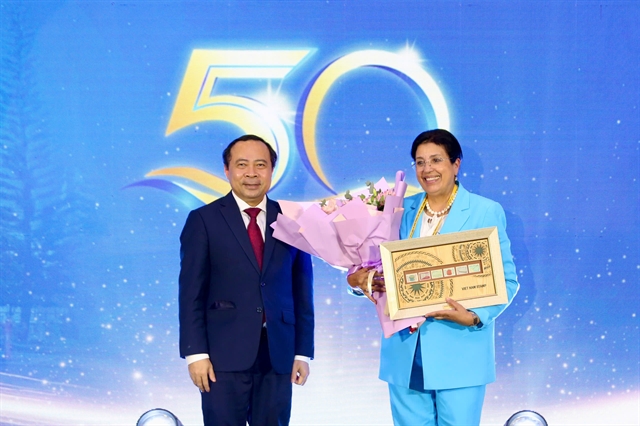 |
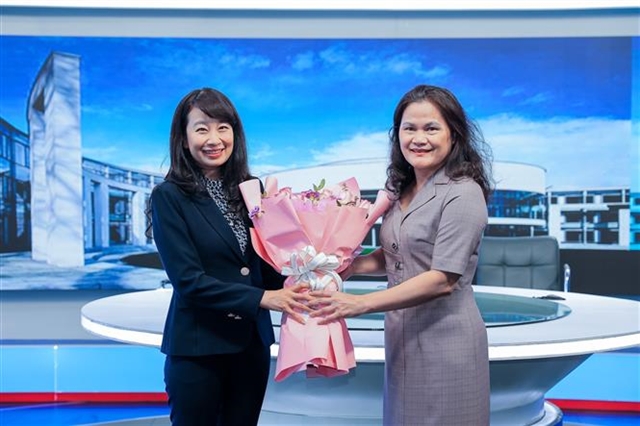
| Minister of Science and Technology Vũ Hải Quân presents a commemorative gift to IAEA Deputy Director General Najat Mokhtar at the 50th anniversary celebration of the Việt Nam Atomic Energy Institute (VINATOM). — VNS Photo Kiều Trinh |
In your view, which area of nuclear science holds the greatest potential to support Việt Nam's sustainable development over the next 10 to 20 years?
Nuclear science already contributes to many aspects of people's daily lives in Việt Nam. We have seen excellent examples in agriculture, including the development of high-quality rice varieties, demonstrating how nuclear science and technology can strengthen food security.
The same applies to industry. Technologies such as radioisotopes, radiotracers and non-destructive testing help ensure the safety of infrastructure, including bridges, hospitals and schools.
Healthcare is another important area. Nuclear medicine, radiotherapy and accurate dosimetry play a vital role in the early diagnosis and treatment of diseases such as cancer and cardiovascular conditions, ensuring that patients receive the correct radiation dose.
These applications will remain essential for many decades to come. To sustain them, we need people. It is encouraging to see Việt Nam investing in the next generation of scientists and engineers, while also building the capacity to train future experts. The IAEA will continue to support Việt Nam in advancing nuclear technology for food security, healthcare, water resources, ocean health and environmental monitoring — all of which are fundamental to sustainable development.
As Việt Nam prepares to restart its nuclear power programme, what should be the country's top priorities to ensure it is developed safely, effectively and with public confidence?
The decision to develop nuclear power belongs to Việt Nam, and the IAEA stands ready to support the country throughout that journey, just as we have done with many other member states.
The first priority is developing a highly skilled workforce. This includes not only nuclear engineers, but also specialists in nuclear safety, nuclear security and nuclear applications across sectors such as agriculture and healthcare.
Public communication is equally important. People need to understand why nuclear power is safe, how it is regulated and how it can benefit society.
Once Việt Nam finalises its plans, the IAEA will continue working closely with the Government to build the necessary human capacity and institutional framework. Workers are the key to success.
The IAEA has worked closely with Việt Nam for decades. From your perspective, what has made the partnership between the IAEA and VINATOM such a successful model for regional cooperation?
Our partnership spans 50 years, and I have personally worked with Vietnamese scientists for more than two decades.
What has impressed me most is their dedication and professionalism. Việt Nam has steadily strengthened its scientific capacity because it has talented people who are committed to using science to support national development.
The success of our cooperation is built on trust. Việt Nam consistently delivers on the commitments we make together, and the IAEA is equally committed to delivering on ours.
This mutual trust has enabled successful collaboration in agriculture, healthcare, industry and many other fields. As we look ahead to the next 50 years, we are not starting from scratch. We already have many success stories; our task now is to scale them up.
Việt Nam is among the countries most vulnerable to climate change. How can nuclear and isotopic techniques help Việt Nam and other countries adapt to these challenges and build greater climate resilience?
Climate change is affecting agriculture, water resources and the health of our oceans. We can no longer rely on traditional approaches. Science and innovation must play a central role, and nuclear science offers many practical solutions.
For example, nuclear techniques can help develop crop varieties that are more resilient to harsh conditions and require less water. The sterile insect technique can protect crops from destructive pests, while irradiation technologies help preserve food and reduce post-harvest losses.
Việt Nam already has significant expertise in these areas. I often cite Việt Nam as an example of excellence in food irradiation wherever I travel.
The country also has strong capabilities in ocean monitoring, water resource management and studying ocean acidification. The knowledge is already here. The next step is to scale up these technologies so they can benefit more people.
As Việt Nam expands its international cooperation in nuclear science and technology, what role do you see the country playing in advancing regional collaboration and sharing its expertise with other nations?
Việt Nam has already demonstrated its leadership by sharing expertise with neighbouring countries.
For several years, the country has worked with the IAEA to support Laos and Cambodia, particularly in healthcare, through trilateral cooperation programmes. These initiatives have produced tangible results.
Việt Nam also plays an active role in the Regional Cooperative Agreement, which brings together more than 20 countries across Asia and the Pacific to exchange knowledge, learn from one another and implement joint projects.
I believe Việt Nam has an important role to play in advancing regional cooperation and helping strengthen nuclear science and technology across the region. —VNS
Opinion
 Opinion
 Opinion
 Opinion
.jpeg) Opinion
Opinion
 Opinion
 Opinion
 Opinion
 Opinion
 Opinion
 Opinion
 Opinion
 Opinion
 Opinion
 Opinion
.jpg)