 Opinion
Second Vietnamese National Solidarity Festival in Japan set for Nov 14–15
1.
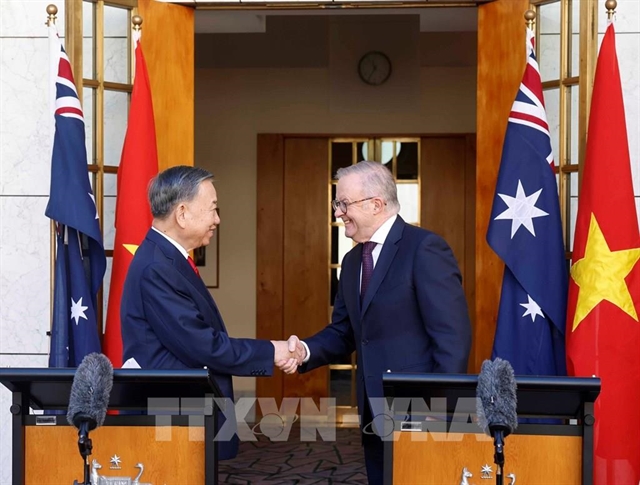 |
| Party General Secretary and State President Tô Lâm and Prime Minister of Australia Anthony Albanese following their talks on August 11. VNA/VNS Photo |
With three joint statements and seven cooperation documents signed, the state visit to Australia by General Secretary and President Tô Lâm, marked an important shift from establishing a comprehensive framework to delivering concrete outcomes. Professor Trần Thọ Đạt, chairman of the Việt Nam-Australia Friendship Association, talked to Việt Nam News reporter Nguyễn Khánh Chi about the significance of the visit.
What specific action plans and programmes will the Việt Nam-Australia Friendship Association (VAFA) implement to fulfil the commitments reached by both sides during the visit, regarding VAFA’s missions?
The visit marked an important shift from establishing a comprehensive framework to delivering concrete outcomes. The three joint statements and seven cooperation documents have broadened the agenda considerably, covering not only traditional areas but also defence and security, trade, agriculture, science and technology, innovation, energy transition and human resource development.
VAFA’s responsibility is to build the social partnerships that help translate those commitments into sustained cooperation among universities, research institutes, businesses, professional associations and local communities.
During the 2025-30 term, we intend to focus on five connected areas: education and knowledge exchange; science, technology and innovation; green and digital transformation; business and professional networking; and community engagement, particularly among young people and alumni.
We will give priority to a number of initiatives with clear partners and measurable outcomes. One example is the CEVAW (Centre of Excellence for the Elimination of Violence Against Women) research initiative, in which VAFA is helping connect Monash University with Vietnamese partners to study school violence and gender-based violence among young people. It illustrates how people-to-people relations can mobilise international knowledge and resources to address a practical social issue in Việt Nam.
The essential task after the visit is therefore implementation: turning high-level political trust into institutional links, joint projects and benefits that people can see.
Leaders from both sides recognised the strong and deepening people-to-people ties at the heart of the bilateral relationship. What is your assessment of this and what is the role of the Association in fostering and building even deeper connections between the people of our two nations?
Việt Nam-Australia relations are supported not only by common interests between the two governments, but also by an unusually broad social foundation.
Australia is home to a large and increasingly influential Vietnamese community. Meanwhile, more than 160,000 Vietnamese have graduated from Australian educational institutions, including over 7,500 Australia Awards alumni. Thousands of students, academics, entrepreneurs and family members move between the two countries every year. These are not peripheral links. They are a form of strategic capital.
Government agreements may open the door, but it is people who give a bilateral relationship continuity, substance and resilience. Alumni connect universities and workplaces. Scientists generate new knowledge. Businesses create jobs and commercial links. Families and communities deepen mutual understanding. Young people carry the relationship into the next generation.
VAFA can add value by connecting these separate communities into a more coherent network. We should not attempt to replace the work of universities, companies or professional bodies. Our comparative advantage lies in identifying shared needs, bringing the right partners together, building trust and helping good ideas move from initial contact to practical cooperation.
The next stage should therefore move beyond ceremonial exchanges. We need more joint research, professional networks, youth initiatives, community projects and enduring institution-to-institution relationships. The depth of the partnership should ultimately be measured not only by the number of visits, but also by the number and quality of lasting connections created between people and institutions.
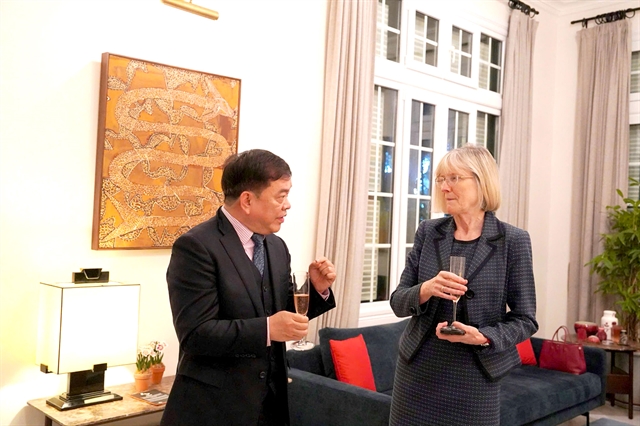 |
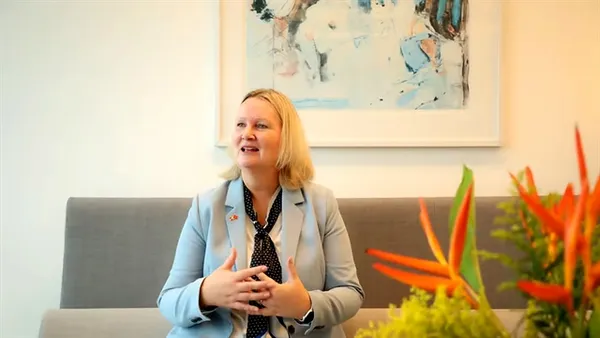
| Professor Trần Thọ Đạt is with Australian Ambassador to Việt Nam Gillian Bird during the Australian Day ceremony hosted by the embassy on January 26, 2026. Photo courtesy of Prof. Trần Thọ Đạt |
In your capacity as the Chairman of the VAFA, what is the role of 'people-to-people diplomacy' in advancing Việt Nam’s international integration?
People-to-people diplomacy is one of the three pillars of Việt Nam’s comprehensive and modern diplomacy, alongside Party and State diplomacy. Its distinctive contribution is to give international relations a durable social foundation.
International integration is sometimes understood mainly in terms of signing agreements, entering markets or participating in multilateral institutions. Those are indispensable, but they are not sufficient. Effective integration also requires trust, mutual understanding, social acceptance and the capacity of people and institutions to work across national boundaries.
People-to-people diplomacy operates precisely in this space. It helps transform formal relations into working relationships among scholars, entrepreneurs, students, artists, professionals and communities. It can also address issues that governments alone cannot resolve, such as climate resilience, public health, education, gender equality and social inclusion.
In my view, its role is changing. It should continue to nurture friendship, but friendship today must also become a development resource. A friendship association should be able to connect knowledge, expertise, finance and international experience with Việt Nam’s practical development needs.
This does not mean making people-to-people diplomacy narrowly economic or project-driven. Its deeper purpose remains the building of trust and mutual respect. But that trust becomes stronger when cooperation produces genuine public value. The CEVAW initiative is one illustration: the relationship between Việt Nam and Australia is expressed through a collaborative effort to improve the safety and well-being of young people.
In this sense, people-to-people diplomacy does not simply accompany international integration; it helps make integration more inclusive, socially grounded and sustainable.
In addition to activities in tourism, education, culture, and science, the Association also facilitates business networking and trade promotion. Could you elaborate on this aspect, particularly as both countries aim for US$20 billion in bilateral trade turnover in the near future?
The $20 billion target is achievable, but reaching it should not be viewed merely as increasing the volume of existing trade. The more important question is the quality and structure of bilateral economic engagement.
The two economies are highly complementary. Australia has strengths in energy, critical minerals, agriculture, education, finance, advanced technologies and professional services. Việt Nam offers a dynamic market, competitive manufacturing capacity, a growing digital economy and an increasingly important position in regional supply chains.
The next phase should focus on linking these strengths in areas such as clean energy, critical-mineral value chains, high-tech agriculture, food processing, digital services, logistics, education technology and climate-resilient infrastructure. We should also encourage more two-way investment and cooperation among small and medium-sized enterprises, rather than relying only on large corporations and commodity trade.
VAFA is not a trade-promotion agency, but it can address several practical gaps that often prevent opportunities from becoming transactions. These include a lack of trusted contacts, limited market information, insufficient understanding of regulations and difficulties in identifying reliable local partners.
The Association can convene focused business dialogues, connect enterprises with experts and alumni, support links between industry associations and introduce potential partners to the appropriate trade and investment agencies. Our role is best understood as that of a trusted connector.
The goal should therefore be not only $20 billion in trade, but a more diversified, technology-intensive and resilient economic partnership that creates value, skills and sustainable growth in both countries.
During the 2025-2030 term, what specific initiatives will VAFA undertake to effectively leverage the network of more than 160,000 Vietnamese alumni and experts who have lived, studied, and worked in Australia, in order to create a solid foundation and further deepen the friendship between the people of our two countries?
The alumni community is one of the greatest assets in the bilateral relationship, but its potential remains dispersed. The central task is to transform a large number of individual connections into an organised network for cooperation.
VAFA intends to work with the Australian Embassy, alumni organisations, universities, professional associations and Vietnamese communities in Australia on several initiatives.
First, we propose developing a voluntary map of alumni and experts by sector, institution and area of expertise. This would help identify the right people for research collaboration, policy dialogue, business advice, mentoring and community projects.
Second, we want to establish thematic networks in areas where both countries have complementary strengths, including education, healthcare, digital technology, green transition, agriculture, public policy and business. These networks should be active working communities, not simply lists of names.
Third, VAFA can organise an annual Việt Nam-Australia Knowledge and Innovation Forum, bringing together alumni, young professionals, researchers and businesses to develop joint initiatives. Selected proposals could be supported through partnerships with universities, companies and development organisations.
Fourth, greater attention should be given to younger alumni and current students. Mentoring, internships, innovation challenges and professional exchanges can help build a new generation of leaders who understand both countries and are committed to the relationship.
Finally, alumni should be encouraged to contribute not only as participants in events, but also as initiators and leaders of projects. Their knowledge of both societies allows them to translate ideas across institutional and cultural boundaries.
If this network is effectively mobilised, the more than 160,000 alumni will not simply be a powerful legacy of educational cooperation. They will become a living intellectual, professional and social infrastructure for the Việt Nam-Australia Comprehensive Strategic Partnership. VNS
Opinion
 Opinion
 Opinion
 Opinion
 Opinion
 Opinion
 Opinion
 Opinion
 Opinion
 Opinion
 Opinion
 Opinion
 Opinion
 Opinion
 Opinion