 Environment

84 individuals investigated for transnational online frauds
1.
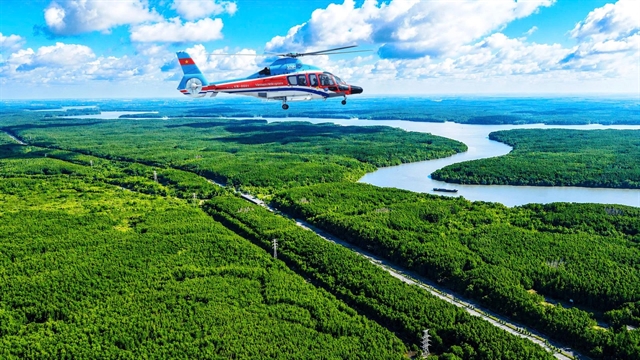 |
| Cần Giờ mangrove forest seen from above. — VNA/VNS Photos |
HCM CITY — Việt Nam’s green transition is accelerating, with the State, businesses and citizens aligning to create a stable 'three-legged stool' for sustainable growth.
Cần Giờ in HCM City offers a vivid case of the green transition in practice. Low-lying and encircled by rivers and the sea, it is among the city’s most climate-exposed areas. Alongside moves into renewable energy and a greener economy, strict conservation of its mangrove ecosystem is treated as a prerequisite for development.
According to Dr Huỳnh Đức Hoàn, head of the HCM City Protective Forest Management Board, the Cần Giờ mangroves act as an ecological shield, mitigating climate impacts, curbing erosion, and protecting coastal communities.
Mangroves absorb and store large volumes of carbon, much of it locked long-term in waterlogged soils and sediments, an asset for cutting greenhouse gas emissions and developing a future carbon credit market.
Local green livelihood models, from floating solar over shrimp ponds and harvesting nipa palm sap to eco-tourism, are creating economic value while easing pressure on the mangroves.
Across the country, major cities such as Hà Nội and Đà Nẵng are taking the lead in cutting emissions, adapting to climate change and building smart cities.
Nguyễn Trung Kiên, Northern Region Executive Director of An Cường Wood Joint Stock Company, said the company is developing low-emission materials, optimising energy use and automation, and conducting greenhouse gas inventories under ISO 14064-1, independently verified. Its integrated management systems meet ISO 9001, ISO 14001 and ISO 45001, helping control emissions and improve efficiency. The firm is also adopting clean energy, including rooftop solar.
“An Cường is steadfast on the path to Net Zero and sees it as central to our sustainability strategy,” Kiên told Tin tức và Dân tộc (News and Ethnic Affairs) newspaper.
“Our comprehensive ESG approach embeds emissions reduction across materials, operations, and community initiatives.”
Public behaviour is shifting too.
Trần Trung Nghĩa of Hà Nội’s Phúc Lợi Ward said his family saves energy, has installed solar power and minimises plastic waste.
“Changing consumption mindsets and using clean, green energy directly helps cut emissions and protect our living environment,” he said.
Challenges remain.
Phạm Thị Trúc Hoa Quỳnh from the Ministry of Finance’s Institute of Strategy and Policy on Finance said that green transition efforts are still fragmented and lack the coherence needed to fully unlock productivity and efficiency gains.
Việt Nam’s institutional framework and ecosystem for green transition are not yet robust, while many firms face financing hurdles.
To turn the transition into a growth engine, Deputy Minister of Agriculture and Environment Lê Công Thành said it must sit at the centre of the new growth model, with resources mobilised through green credit, green bonds, sustainable finance, a carbon market and environmental economic tools.
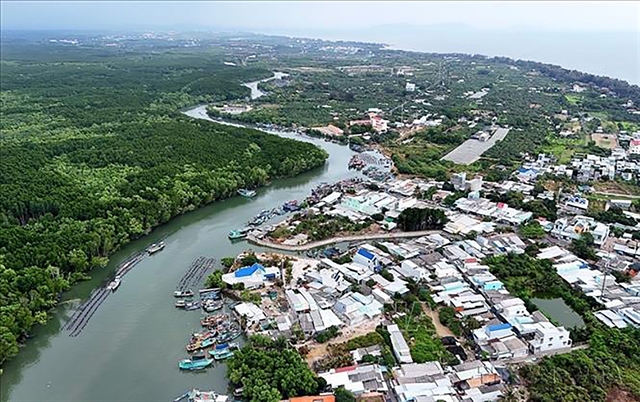 |
| Cần Giờ has been designated a separate coastal eco-urban development zone. |
Clear policies, funding, criteria, and incentives are essential to spur technological upgrades, cleaner transport and lower emissions.
“The green transition is not a fixed destination but a continuous journey of innovation,” he said.
“Each locality and enterprise must act, no waiting on the sidelines.”
Quỳnh recommended completing a coherent legal and institutional framework, strengthening business support during implementation and developing green finance and sustainable financial instruments.
No longer just an environmental story, the green transition now directly shapes economic development, production, consumption and national competitiveness, officials said.
Progress depends on coordinated action. The State sets institutions, standards and enabling policies, businesses innovate, boost energy efficiency and deliver greener products and services and citizens shift consumption, choose cleaner transport, save energy and cut plastic waste. When all three move together, the green transition can become a durable trend. — VNS
Environment
 Environment
 Environment
 Environment
 Environment
 Environment
 Environment
 Environment
 Environment
 Environment
 Environment
 Environment
 Environment
 Environment
 Environment